
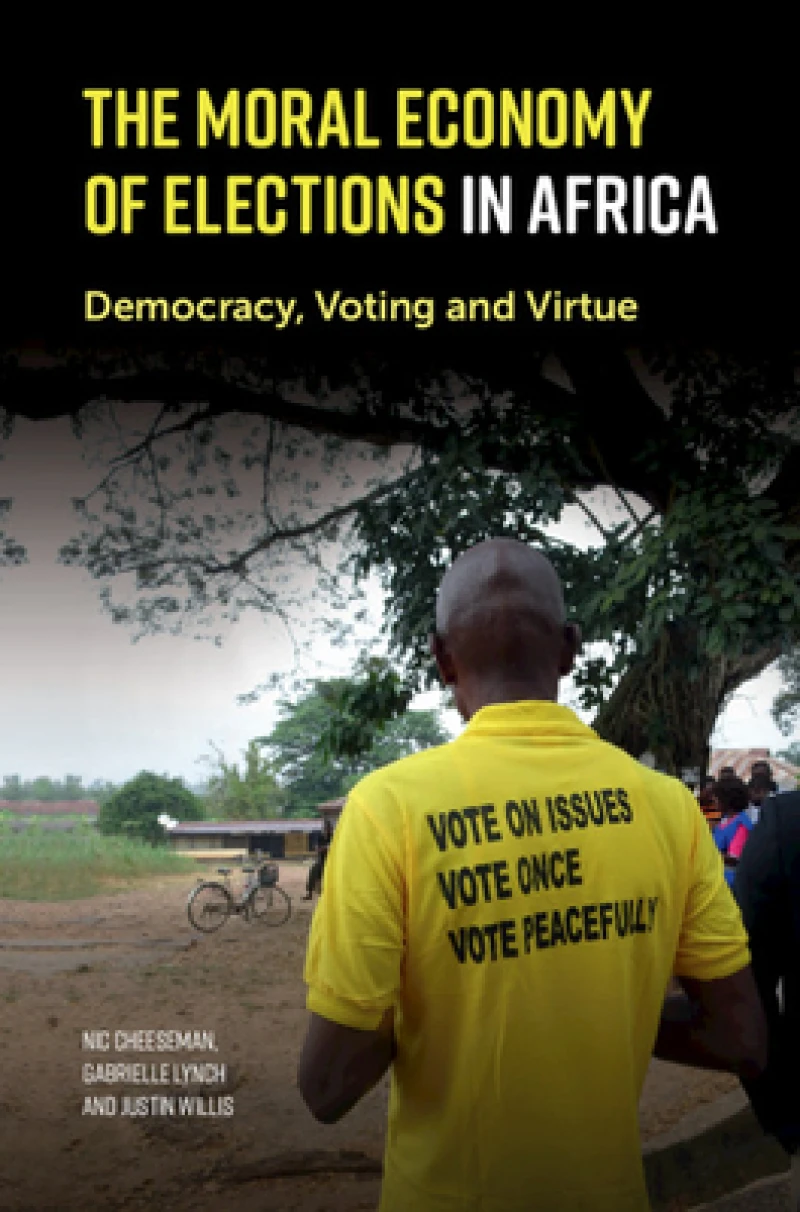
The Moral Economy of Elections in Africa : Democracy, Voting and Virtue
Book Details
Format
Hardback or Cased Book
ISBN-10
110841723X
ISBN-13
9781108417235
Publisher
Cambridge University Press
Imprint
Cambridge University Press
Country of Manufacture
GB
Country of Publication
GB
Publication Date
Feb 18th, 2021
Print length
376 Pages
Weight
690 grams
Dimensions
23.00 x 15.50 x 2.50 cms
Ksh 18,700.00
Manufactured on Demand
0 in stock
Delivery Location
Delivery fee: Select location
Secure
Quality
Fast
Elections have long been seen as a way to foster democracy, development and security in Africa. This study of elections in Ghana, Kenya and Uganda over the last sixty years offers a radical approach to look at the ideas and behavior of participants in elections to demonstrate why elections have not transformed politics as was hoped.
Do elections turn people into democratic citizens? Elections have long been seen as a way to foster democracy, development and security in Africa, with many hoping that the secret ballot would transform states. Adopting a new approach that focusses on the moral economy of elections, Nic Cheeseman, Gabrielle Lynch and Justin Willis show how elections are shaped by competing visions of what it means to be a good leader, bureaucrat or citizen. Using a mixed-methods study of elections in Ghana, Kenya and Uganda, they explore moral claims made by officials, politicians, civil society, international observers and voters themselves. This radical new lens reveals that elections are the site of intense moral contestation, which helps to explain why there is such vigourous participation in processes that often seem flawed. Demonstrating the impact of these debates on six decades of electoral practice, they explain why the behaviour of those involved so frequently transgresses national law and international norms, as well as the ways in which such transgressions are evaluated and critiqued – so that despite the purported significance of ''vote-buying'', the candidates that spend the most do not always win.
Get The Moral Economy of Elections in Africa by at the best price and quality guaranteed only at Werezi Africa's largest book ecommerce store. The book was published by Cambridge University Press and it has pages.

