
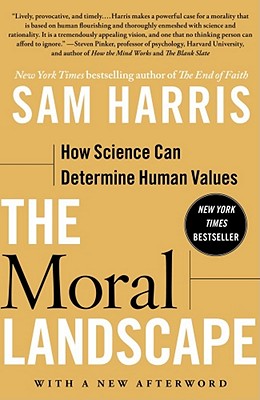
The Moral Landscape : How Science Can Determine Human Values
by
Sam Harris
Book Details
Format
Paperback / softback
ISBN-10
143917122X
ISBN-13
9781439171226
Publisher
Free Press
Imprint
Free Press
Country of Manufacture
GB
Country of Publication
GB
Publication Date
Sep 13th, 2011
Weight
308 grams
Dimensions
14.00 x 21.20 x 2.40 cms
KSh 3,400.00
Werezi Extended Catalogue
Delivery in 12 days
1 copies in stock
Delivery Location
Delivery fee: Select location
Delivery in 12 days
Secure
Quality
Fast
New York Times bestselling author Sam Harris’s first book, The End of Faith, ignited a worldwide debate about the validity of religion. In the aftermath, Harris discovered that most people—from religious fundamentalists to non-believing scientists—agree on one point: science has nothing to say on the subject of human values. Indeed, our failure to address questions of meaning and morality through science has now become the primary justification for religious faith.
In this highly controversial book, Sam Harris seeks to link morality to the rest of human knowledge. Defining morality in terms of human and animal well-being, Harris argues that science can do more than tell how we are; it can, in principle, tell us how we ought to be. In his view, moral relativism is simply false—and comes at an increasing cost to humanity. And the intrusions of religion into the sphere of human values can be finally repelled: for just as there is no such thing as Christian physics or Muslim algebra, there can be no Christian or Muslim morality. Using his expertise in philosophy and neuroscience, along with his experience on the front lines of our “culture wars,” Harris delivers a game-changing book about the future of science and about the real basis of human cooperation.
In this highly controversial book, Sam Harris seeks to link morality to the rest of human knowledge. Defining morality in terms of human and animal well-being, Harris argues that science can do more than tell how we are; it can, in principle, tell us how we ought to be. In his view, moral relativism is simply false—and comes at an increasing cost to humanity. And the intrusions of religion into the sphere of human values can be finally repelled: for just as there is no such thing as Christian physics or Muslim algebra, there can be no Christian or Muslim morality. Using his expertise in philosophy and neuroscience, along with his experience on the front lines of our “culture wars,” Harris delivers a game-changing book about the future of science and about the real basis of human cooperation.
Get The Moral Landscape by Sam Harris at the best price and quality guaranteed only at Werezi Africa's largest book ecommerce store. The book was published by Free Press.
Customers Who Bought This Also Bought

Wisdom of No Escape
KSh 1,800.00

Supreme Gift
KSh 2,700.00

Alchemist
KSh 3,600.00

Start Where You Are New Ed
KSh 1,800.00
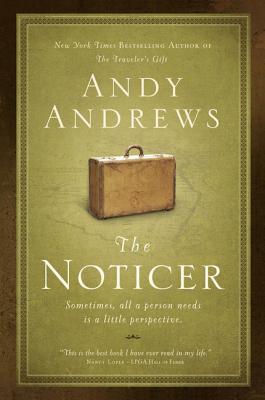
The Noticer
KSh 2,700.00
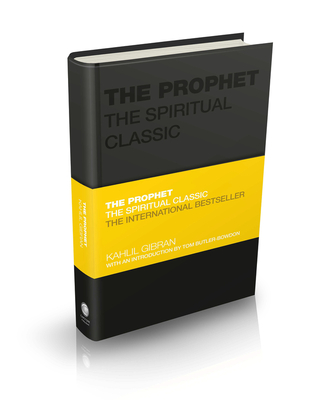
The Prophet – The Spiritual Classic
KSh 2,150.00

Conversations with My Rabbi
KSh 3,050.00
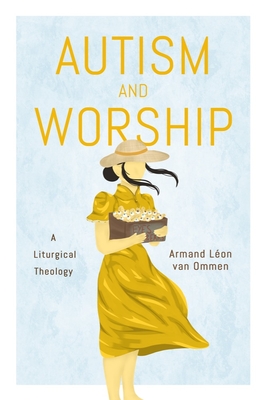
Autism and Worship
KSh 6,500.00
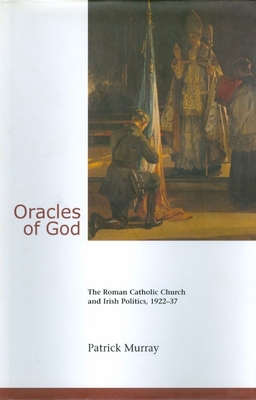
Oracles of God: The Roman Catholic Church and Irish Politics, 1922-37
KSh 9,250.00
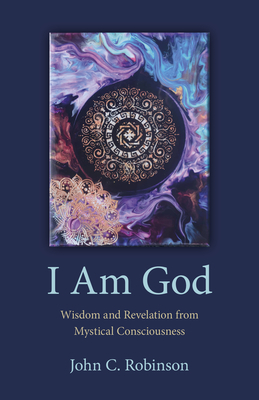
I Am God – Wisdom and Revelation from Mystical Consciousness
KSh 1,800.00
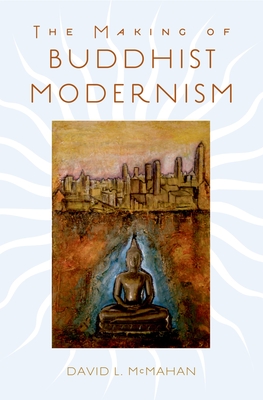
The Making of Buddhist Modernism
KSh 8,650.00
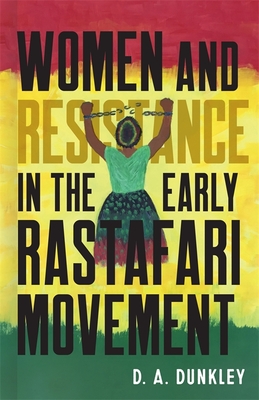
Women and Resistance in the Early Rastafari Movement
KSh 6,500.00
More by Sam Harris
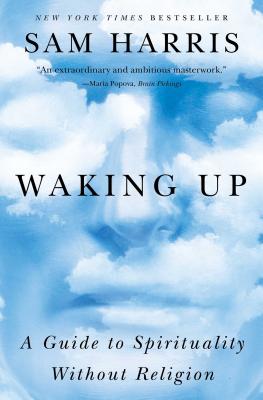
Waking Up
KSh 3,400.00

Ham: Slices of a Life
KSh 3,600.00
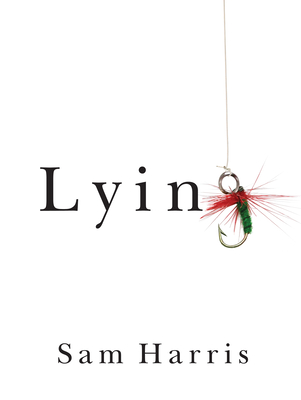
Lying
KSh 2,150.00
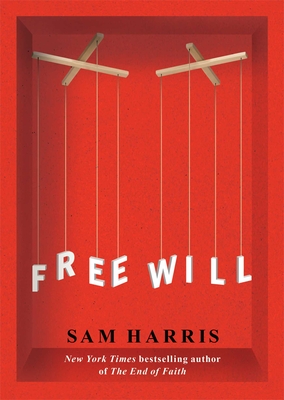
Free Will
KSh 1,450.00

Letter to a Christian Nation
KSh 2,700.00

Making Sense
KSh 2,000.00
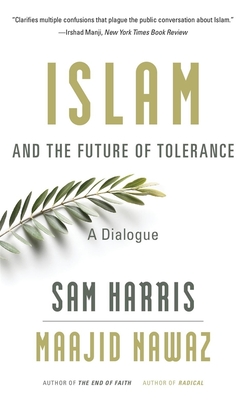
Islam and the Future of Tolerance – A Dialogue
KSh 3,050.00

Four Horsemen
KSh 3,050.00

Moral Landscape
KSh 2,000.00

Waking Up
KSh 2,000.00

The End of Faith
KSh 1,800.00
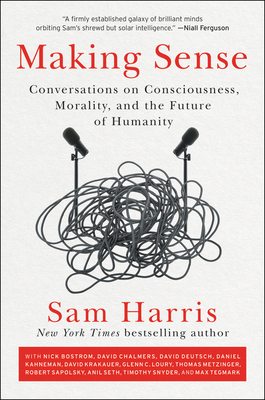
Making Sense
KSh 3,250.00
