
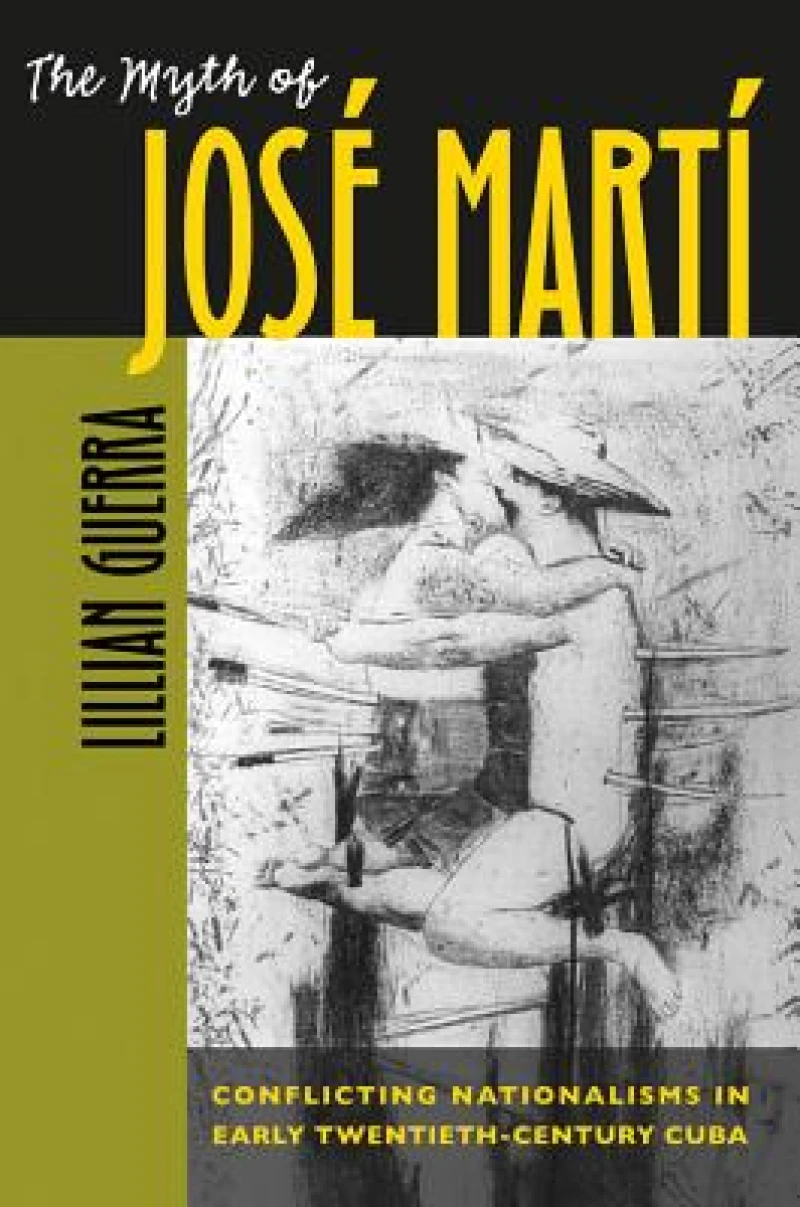
The Myth of José Martí : Conflicting Nationalisms in Early Twentieth-Century Cuba
New
Book Details
Format
Paperback / Softback
Book Series
Envisioning Cuba
ISBN-10
0807855901
ISBN-13
9780807855904
Edition
New
Publisher
The University of North Carolina Press
Imprint
The University of North Carolina Press
Country of Manufacture
US
Country of Publication
GB
Publication Date
Mar 31st, 2005
Print length
328 Pages
Weight
450 grams
Dimensions
23.20 x 15.70 x 1.90 cms
Ksh 6,300.00
Werezi Extended Catalogue
0 in stock
Delivery Location
Delivery fee: Select location
Secure
Quality
Fast
Lillian Guerra argues that political violence and competing interpretations of the ""social unity"" proposed by Cuba's revolutionary patriot, Jose Marti, reveal conflicting visions of the nation - visions that differ in their ideological radicalism and in how they cast Cuba's relationship with the United States.
Focusing on a period of history rocked by four armed movements, Lillian Guerra traces the origins of Cubans'' struggles to determine the meaning of their identity and the character of the state, from Cuba''s last war of independence in 1895 to the consolidation of U.S. neocolonial hegemony in 1921. Guerra argues that political violence and competing interpretations of the ""social unity"" proposed by Cuba''s revolutionary patriot, Jose Marti, reveal conflicting visions of the nation - visions that differ in their ideological radicalism and in how they cast Cuba''s relationship with the United States. As Guerra explains, some nationalists supported incorporating foreign investment and values, while others sought social change through the application of an authoritarian model of electoral politics; still others sought a democratic government with social and economic justice. But for all factions, the image of Marti became the principal means by which Cubans attacked, policed, and discredited one another to preserve their own vision over others''. Guerra''s examination demonstrates how competing historical memories and battles for control of a weak state explain why polarity, rather than consensus on the idea of the ""nation"" and the character of the Cuban state, came to define Cuban politics throughout the twentieth century.
Get The Myth of José Martí by at the best price and quality guaranteed only at Werezi Africa's largest book ecommerce store. The book was published by The University of North Carolina Press and it has pages.

