
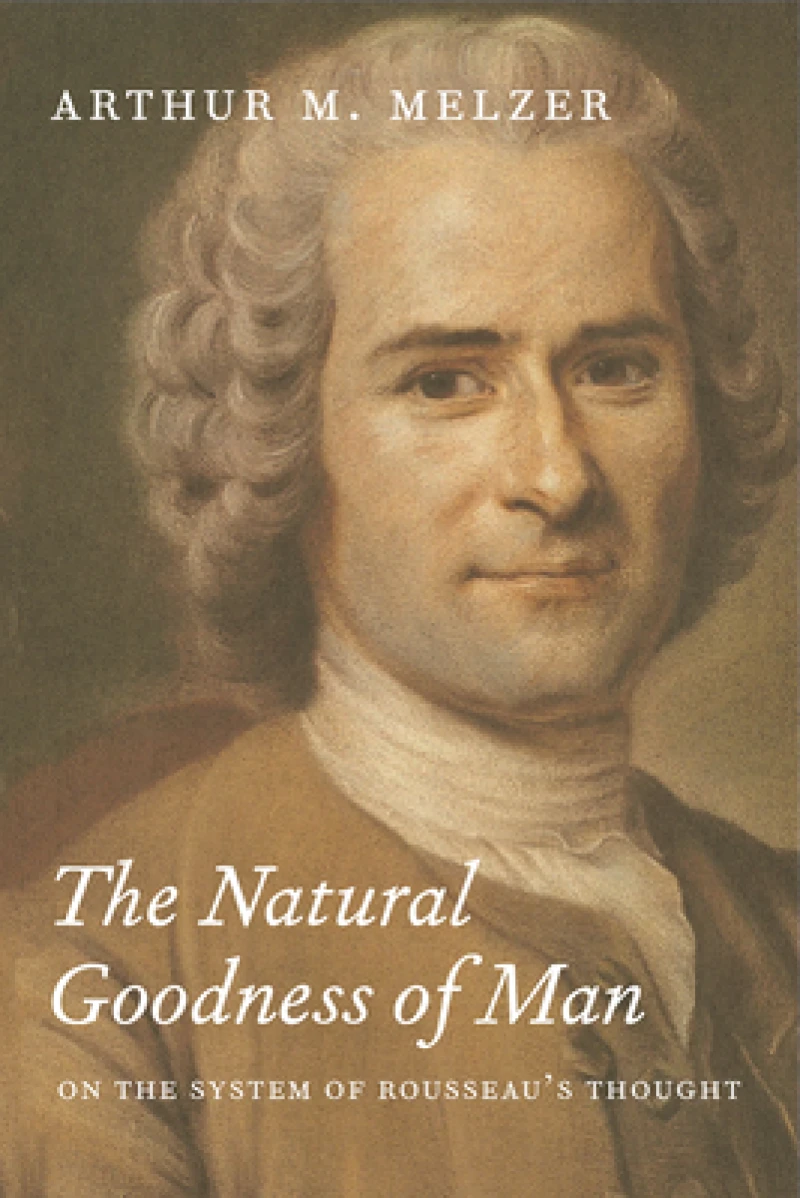
The Natural Goodness of Man : On the System of Rousseau's Thought
Book Details
Format
Paperback / Softback
ISBN-10
0226519791
ISBN-13
9780226519791
Publisher
The University of Chicago Press
Imprint
University of Chicago Press
Country of Manufacture
US
Country of Publication
GB
Publication Date
Jul 7th, 2016
Print length
328 Pages
Weight
490 grams
Dimensions
15.40 x 22.90 x 2.20 cms
Product Classification:
History of Western philosophy
Ksh 4,550.00
Werezi Extended Catalogue
0 in stock
Delivery Location
Delivery fee: Select location
Secure
Quality
Fast
The true key to all the perplexities of the human condition, Rousseau boldly claims, is the “natural goodness of man.” It is also the key to his own notoriously contradictory writings, which, he insists, are actually the disassembled parts of a rigorous philosophical system rooted in that fundamental principle. What if this problematic claim—so often repeated, but as often dismissed—were resolutely followed and explored? Arthur M. Melzer adopts this approach in The Natural Goodness of Man. The first two parts of the book restore the original, revolutionary significance of this now time-worn principle and examine the arguments Rousseau offers in proof of it. The final section unfolds and explains Rousseau’s programmatic thought, especially the Social Contract, as a precise solution to the human problem as redefined by the principle of natural goodness. The result is a systematic reconstruction of Rousseau’s philosophy that discloses with unparalleled clarity both the complex weave of his argument and the majestic unity of his vision. Melzer persuasively resolves one after another of the famous Rousseauian paradoxes–enlarging, in the process, our understanding of modern philosophy and politics. Engagingly and lucidly written, The Natural Goodness of Man will be of interest to general as well as scholarly readers.
Get The Natural Goodness of Man by at the best price and quality guaranteed only at Werezi Africa's largest book ecommerce store. The book was published by The University of Chicago Press and it has pages.

