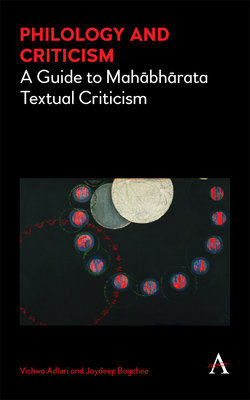
The Nay Science : A History of German Indology
Book Details
Format
Hardback
ISBN-10
0199931348
ISBN-13
9780199931347
Publisher
Oxford University Press Inc
Imprint
Oxford University Press Inc
Country of Manufacture
US
Country of Publication
GB
Publication Date
Jul 24th, 2014
Print length
512 Pages
Weight
854 grams
Dimensions
24.40 x 16.60 x 3.20 cms
Product Classification:
Hindu sacred textsCriticism & exegesis of sacred texts
KSh 29,450.00
Temporarily out of stock, due soon
0 in stock
Delivery Location
Delivery fee: Select location
Secure
Quality
Fast
In The Nay Science, Vishwa Adluri and Joydeep Bagchee undertake a careful and rigorous hermeneutical approach to nearly two centuries of German philological scholarship on the Mahabharata and the Bhagavad Gita.
Vishwa Adluri and Joydeep Bagchee undertake a careful and rigorous hermeneutical approach to nearly two centuries of German philological scholarship on the Mahabharata and the Bhagavad Gita. Analyzing the intellectual contexts of this scholarship, beginning with theological debates that centered on Martin Luther''s solefidian doctrine and proceeding to scientific positivism via analyses of disenchantment (Entzauberung), German Romanticism, pantheism (Pantheismusstreit), and historicism, they show how each of these movements progressively shaped German philology''s encounter with the Indian epic. They demonstrate that, from the mid-nineteenth century on, this scholarship contributed to the construction of a supposed "Indo-Germanic" past, which Germans shared racially with the Mahabharata''s warriors. Building on nationalist yearnings and ongoing Counter-Reformation anxieties, scholars developed the premise of Aryan continuity and supported it by a "Brahmanical hypothesis," according to which supposedly later strata of the text represented the corrupting work of scheming Brahmin priests. Adluri and Bagchee focus on the work of four Mahabharata scholars and eight scholars of the Bhagavad Gita, all of whom were invested in the idea that the text-critical task of philology as a scientific method was to identify a text''s strata and interpolations so that, by displaying what had accumulated over time, one could recover what remained of an original or authentic core. The authors show that the construction of pseudo-histories for the stages through which the Mahabharata had supposedly passed provided German scholars with models for two things: 1) a convenient pseudo-history of Hinduism and Indian religions more generally; and 2) a platform from which to say whatever they wanted to about the origins, development, and corruption of the Mahabharata text. The book thus challenges contemporary scholars to recognize that the ''''Brahmanic hypothesis'''' (the thesis that Brahmanic religion corrupted an original, pure and heroic Aryan ethical and epical worldview), an unacknowledged tenet of much Western scholarship to this day, was not and probably no longer can be an innocuous thesis. The ''''corrupting'''' impact of Brahmanical ''''priestcraft,'''' the authors show, served German Indology as a cover under which to disparage Catholics, Jews, and other ''''Semites.''''
Get The Nay Science by Joydeep Bagchee, Vishwa Adluri at the best price and quality guaranteed only at Werezi Africa's largest book ecommerce store. The book was published by Oxford University Press Inc and it has 512 pages.
Customers Who Bought This Also Bought

Ka
KSh 2,350.00

Ardor
KSh 2,350.00

Shower of Divine Compassion
KSh 3,650.00

Sri Brihad Bhagavatamrita
KSh 14,400.00
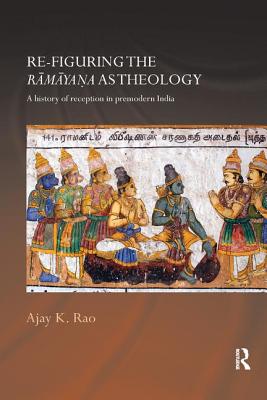
Re-Figuring the Ramayana As Theology
KSh 9,200.00

Bhagavad Gita
KSh 1,250.00

Canonical Texts
KSh 12,600.00

Bhagavad Gita - Som Den Er (Norwegian Language)
KSh 5,650.00

Hinduism
KSh 6,100.00

Living Gita
KSh 3,100.00

Valmiki Ramayana
KSh 3,600.00

The English Bhagavad Gita
KSh 30,950.00