
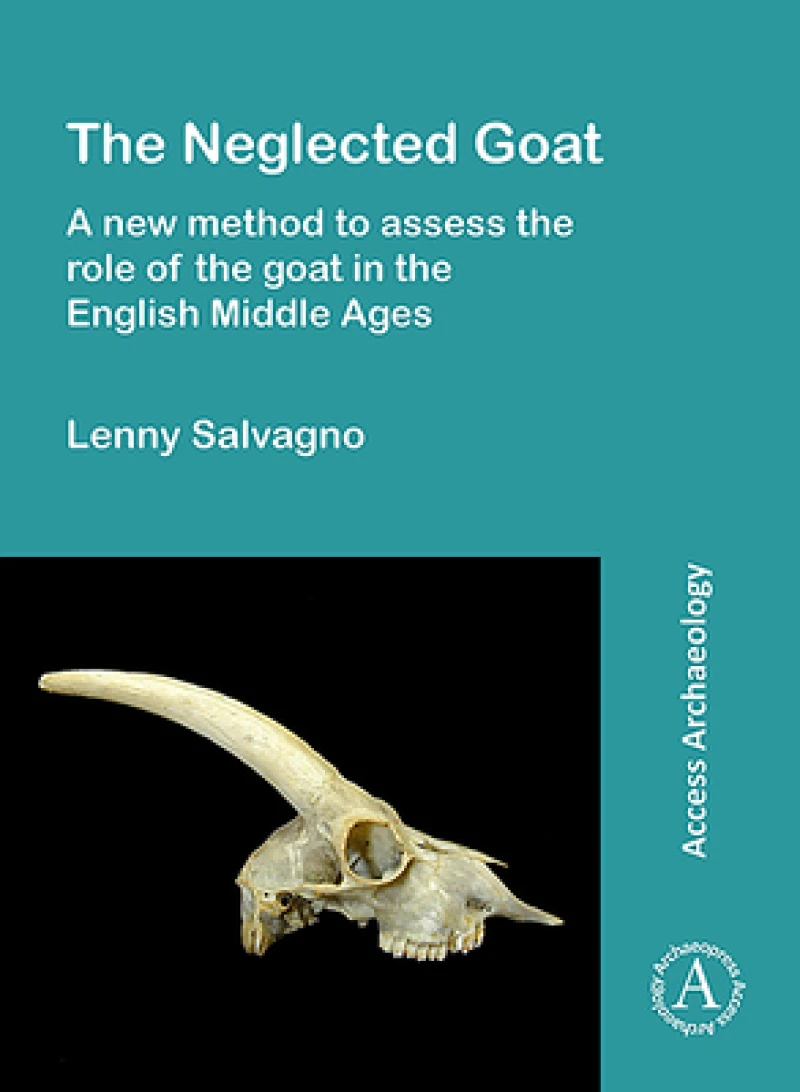
The Neglected Goat: A New Method to Assess the Role of the Goat in the English Middle Ages
Book Details
Format
Paperback / Softback
ISBN-10
1789696291
ISBN-13
9781789696295
Publisher
Archaeopress
Imprint
Archaeopress
Country of Manufacture
GB
Country of Publication
GB
Publication Date
Apr 23rd, 2020
Print length
888 Pages
Weight
2,508 grams
Dimensions
20.30 x 27.60 x 4.00 cms
Ksh 23,550.00
Werezi Extended Catalogue
Delivery in 14 days
1 copies in stock
Delivery Location
Delivery fee: Select location
Delivery in 14 days
Secure
Quality
Fast
Based on a combination of morphological and biometrical analyses, this book provides a new, objective and transparent methodology to distinguish between sheep and goat post cranial bones in the archaeological record. Additionally, on the basis of the newly proposed approach, it reassesses the role of the goat in medieval England.
Distinguishing between the bones of sheep and goats is a notorious challenge in zooarchaeology. Several methods have been proposed to facilitate this task, largely based on macro-morphological traits.
This approach, which is routinely adopted by zooarchaeologists, although still valuable, has also been shown to have limitations: morphological discriminant traits can differ in different sheep/ goat populations and a correct identification is highly dependent upon experience, as well as the availability of appropriate reference collections and the degree to which a researcher is prepared to ‘risk’ an identification.
The Neglected Goat provides a new, more objective and transparent methodology, based on a combination of morphological and biometrical analyses, to distinguish between sheep and goat post cranial bones. Additionally, on the basis of the newly proposed approach, it reassesses the role of the goat in medieval England.
There are several historical and archaeological questions concerning the role of this animal that have so far remained unanswered: why is the goat commonly recorded in the Domesday Book, when it appears to be so scarce in the contemporary archaeological record? Is the goat under-represented in the archaeological record or over-represented in the Domesday Book? Why is this animal, when identified in English medieval animal bone assemblages, almost exclusively represented by horncores?
Through the investigation of a number of English sheep and goat medieval assemblages, this study sheds light on these questions, and suggests that the goat was indeed rarer than the Domesday Book suggests.
This approach, which is routinely adopted by zooarchaeologists, although still valuable, has also been shown to have limitations: morphological discriminant traits can differ in different sheep/ goat populations and a correct identification is highly dependent upon experience, as well as the availability of appropriate reference collections and the degree to which a researcher is prepared to ‘risk’ an identification.
The Neglected Goat provides a new, more objective and transparent methodology, based on a combination of morphological and biometrical analyses, to distinguish between sheep and goat post cranial bones. Additionally, on the basis of the newly proposed approach, it reassesses the role of the goat in medieval England.
There are several historical and archaeological questions concerning the role of this animal that have so far remained unanswered: why is the goat commonly recorded in the Domesday Book, when it appears to be so scarce in the contemporary archaeological record? Is the goat under-represented in the archaeological record or over-represented in the Domesday Book? Why is this animal, when identified in English medieval animal bone assemblages, almost exclusively represented by horncores?
Through the investigation of a number of English sheep and goat medieval assemblages, this study sheds light on these questions, and suggests that the goat was indeed rarer than the Domesday Book suggests.
Get The Neglected Goat: A New Method to Assess the Role of the Goat in the English Middle Ages by at the best price and quality guaranteed only at Werezi Africa's largest book ecommerce store. The book was published by Archaeopress and it has pages.

