
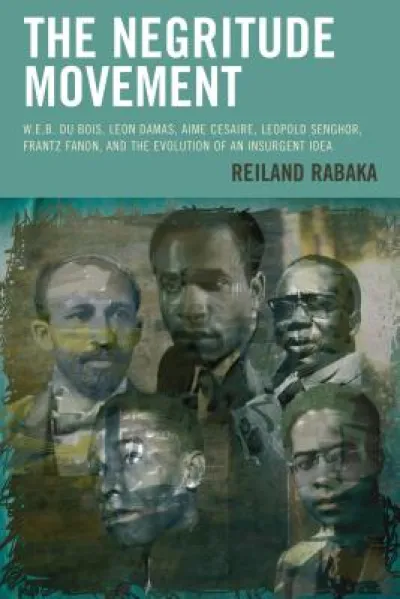
The Negritude Movement : W.E.B. Du Bois, Leon Damas, Aime Cesaire, Leopold Senghor, Frantz Fanon, and the Evolution of an Insurgent Idea
Book Details
Format
Paperback / Softback
Book Series
Critical Africana Studies
ISBN-10
1498511376
ISBN-13
9781498511377
Publisher
Bloomsbury Publishing Plc
Imprint
Lexington Books
Country of Manufacture
GB
Country of Publication
GB
Publication Date
Apr 27th, 2016
Print length
534 Pages
Weight
676 grams
Dimensions
15.40 x 22.70 x 3.60 cms
Product Classification:
History of ideasBlack & Asian studiesSociology
Ksh 13,100.00
Manufactured on Demand
0 in stock
Delivery Location
Delivery fee: Select location
Secure
Quality
Fast
The Negritude Movement provides readers with not only an intellectual history of the Negritude Movement but also its prehistory (W.E.B. Du Bois, the New Negro Movement, and the Harlem Renaissance) and its posthistory (Frantz Fanon and the evolution of Fanonism).
The Negritude Movement provides readers with not only an intellectual history of the Negritude Movement but also its prehistory (W.E.B. Du Bois, the New Negro Movement, and the Harlem Renaissance) and its posthistory (Frantz Fanon and the evolution of Fanonism). By viewing Negritude as an “insurgent idea” (to invoke this book’s intentionally incendiary subtitle), as opposed to merely a form of poetics and aesthetics, The Negritude Movement explores Negritude as a “traveling theory” (à la Edward Said’s concept) that consistently crisscrossed the Atlantic Ocean in the twentieth century: from Harlem to Haiti, Haiti to Paris, Paris to Martinique, Martinique to Senegal, and on and on ad infinitum. The Negritude Movement maps the movements of proto-Negritude concepts from Du Bois’s discourse in The Souls of Black Folk through to post-Negritude concepts in Fanon’s Black Skin, White Masks and The Wretched of the Earth. Utilizing Negritude as a conceptual framework to, on the one hand, explore the Africana intellectual tradition in the twentieth century, and, on the other hand, demonstrate discursive continuity between Du Bois and Fanon, as well as the Harlem Renaissance and Negritude Movement, The Negritude Movement ultimately accents what Negritude contributed to arguably its greatest intellectual heir, Frantz Fanon, and the development of his distinct critical theory, Fanonism. Rabaka argues that if Fanon and Fanonism remain relevant in the twenty-first century, then, to a certain extent, Negritude remains relevant in the twenty-first century.
Get The Negritude Movement by at the best price and quality guaranteed only at Werezi Africa's largest book ecommerce store. The book was published by Bloomsbury Publishing Plc and it has pages.

