
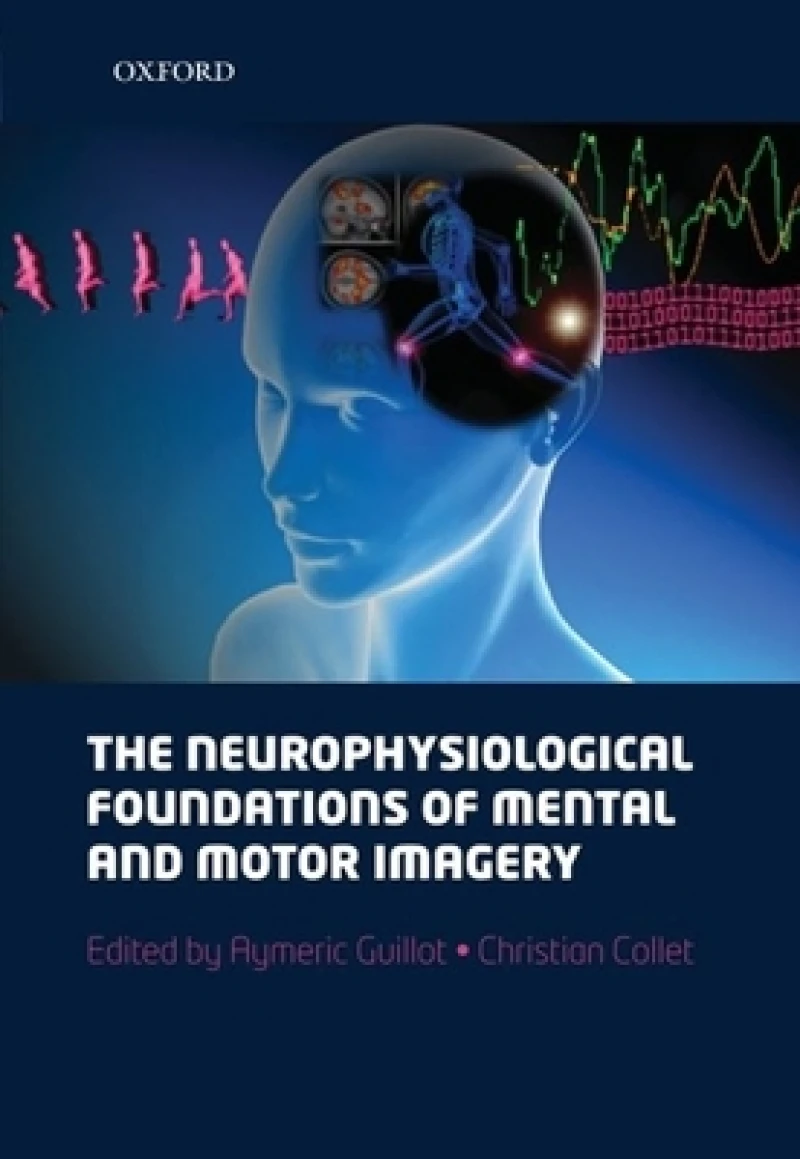
The neurophysiological foundations of mental and motor imagery
Book Details
Format
Hardback or Cased Book
ISBN-10
0199546258
ISBN-13
9780199546251
Publisher
Oxford University Press
Imprint
Oxford University Press
Country of Manufacture
GB
Country of Publication
GB
Publication Date
Jan 14th, 2010
Print length
320 Pages
Weight
780 grams
Dimensions
25.20 x 17.90 x 2.10 cms
Ksh 25,700.00
Manufactured on Demand
0 in stock
Delivery Location
Delivery fee: Select location
Secure
Quality
Fast
Mental imagery is the ability to form perceptual-like representations of objects or events on the basis of information stored in memory. This book is a state-of-the-art review of the field of mental imagery, showing its application in the fields of rehabilitation, learning, and sport, and exploring the neural bases of mental and motor imagery.
Mental imagery is the ability to form perceptual-like representations of objects or events on the basis of information stored in memory. Motor imagery is often used when the human body is involved, where subjects imagine the body moving or manipulating objects. The use of mental practice, including motor imagery for the rehabilitation of patients with cerebral motor impairments, is one of the most active areas in the field of motor imagery research. Such data provide evidence for imagery as a method in stroke rehabilitation, leading to reliable reconstruction of neural networks and thus to functional recovery. In recent years, our understanding of imagery has advanced greatly thanks to functional imaging studies using, for example, PET and fMRI. There is now ample evidence that a common neural substrate (albeit not identical) underlies mental imagery and visual perception, on the one hand, and motor performance and motor imagery, on the other. This book, the first of its kind, examines three main aspects of mental imagery. In the first part, the chapters address the neural basis of mental and motor imagery, the relationships between mental imagery and perception, and between motor imagery and physical execution. In the second part, the chapters focus on the evaluation of mental/motor imagery accuracy, including both central and peripheral nervous system recordings. The final chapters address the effects of mental practice on motor recovery after stroke. Providing a state of the art review along with in-depth summaries, meta-analyses, and research syntheses, this book will be important for those in the fields of cognitive neuroscience, physiology, and rehabilitation.
Get The neurophysiological foundations of mental and motor imagery by at the best price and quality guaranteed only at Werezi Africa's largest book ecommerce store. The book was published by Oxford University Press and it has pages.

