
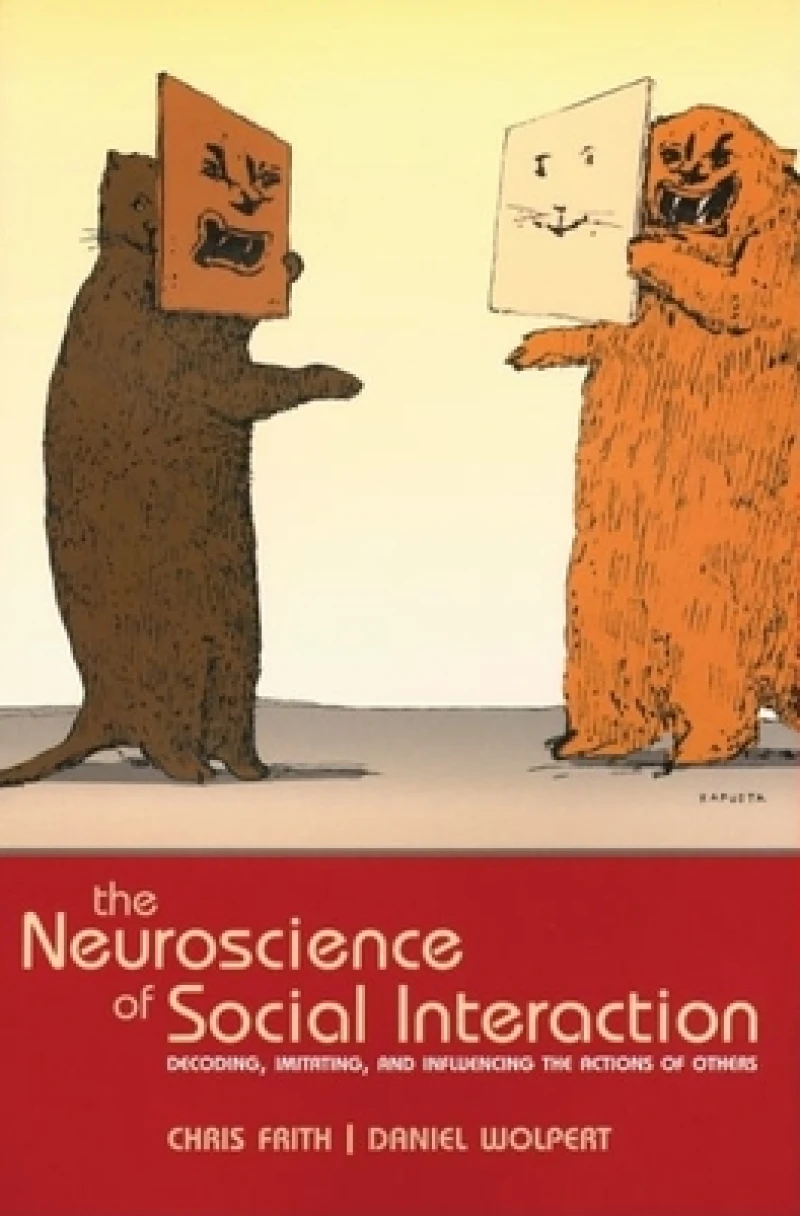
The Neuroscience of Social Interaction : Decoding, imitating and influencing the actions of others
Book Details
Format
Paperback / Softback
ISBN-10
0198529260
ISBN-13
9780198529262
Publisher
Oxford University Press
Imprint
Oxford University Press
Country of Manufacture
GB
Country of Publication
GB
Publication Date
Jan 8th, 2004
Print length
360 Pages
Weight
572 grams
Dimensions
23.30 x 15.70 x 1.30 cms
Ksh 21,300.00
Manufactured on Demand
0 in stock
Delivery Location
Delivery fee: Select location
Secure
Quality
Fast
Human beings have the unique ability to mentalize, that is to perceive and communicate mental states such as beliefs and desires. One of the problems in science is to uncover the biological mechanisms underlying mentalizing and to show how these mechanisms evolved. This book aims to uncover the biological mechanisms underlying social interactions.
Humans, like other primates, are intensely social creatures. One of the main functions of our brains is to enable us to be as skilful in social interactions as we are in our interactions with the physical world. Any differences between human brains and those of our nearest relatives, the great apes, are likely to be linked to our unique achievements in social interaction and communication rather than our motor or perceptual skills. Unique to humans is the ability to mentalise (or mind read), that is to perceive and communicate mental states, such as beliefs and desires.A key problem facing neuroscience is to uncover the biological mechanisms underlying our ability to read other minds and to show how these mechanisms evolved. To solve this problem we need to do experiments in which people (or animals) interact with one another rather than behaving in isolation. Such experiments are now being conducted in increasing numbers and many of the leading exponents of such experiments have contributed to this volume. ''The Neuroscience of Social Interactions'' will be an important step in uncovering the biological mechanisms underlying social interactions - undoubtedly one of the major programmes for neuroscience in the twenty-first century.
Humans, like other primates, are intensely social creatures. One of the major functions of our brains must be to enable us to be as skilful in social interactions as we are in our interactions with the physical world (e.g. recognising objects and grasping them). Furthermore, any differences between human brains and those of our nearest relatives, the great apes, are likely to be linked to our unique achievements in social interaction and communication rather than our motor or perceptual skills. Unique to humans is the ability to mentalise (or mind read), that is to perceive and communicate mental states, such as beliefs and desires.A key problem facing science is to uncover the biological mechanisms underlying our ability to read other minds and to show how these mechanisms evolved. To solve this problem we need to do experiments in which people (or animals) interact with one another rather than behaving in isolation. Such experiments are now being conducted in increasing numbers and many of the leading exponents of such experiments have contributed to this volume. ''The Neuroscience of Social Interactions'' will be an important step in uncovering the biological mechanisms underlying social interactions - undoubtedly one of the major programmes for neuroscience in the 21st century.
Get The Neuroscience of Social Interaction by at the best price and quality guaranteed only at Werezi Africa's largest book ecommerce store. The book was published by Oxford University Press and it has pages.

