
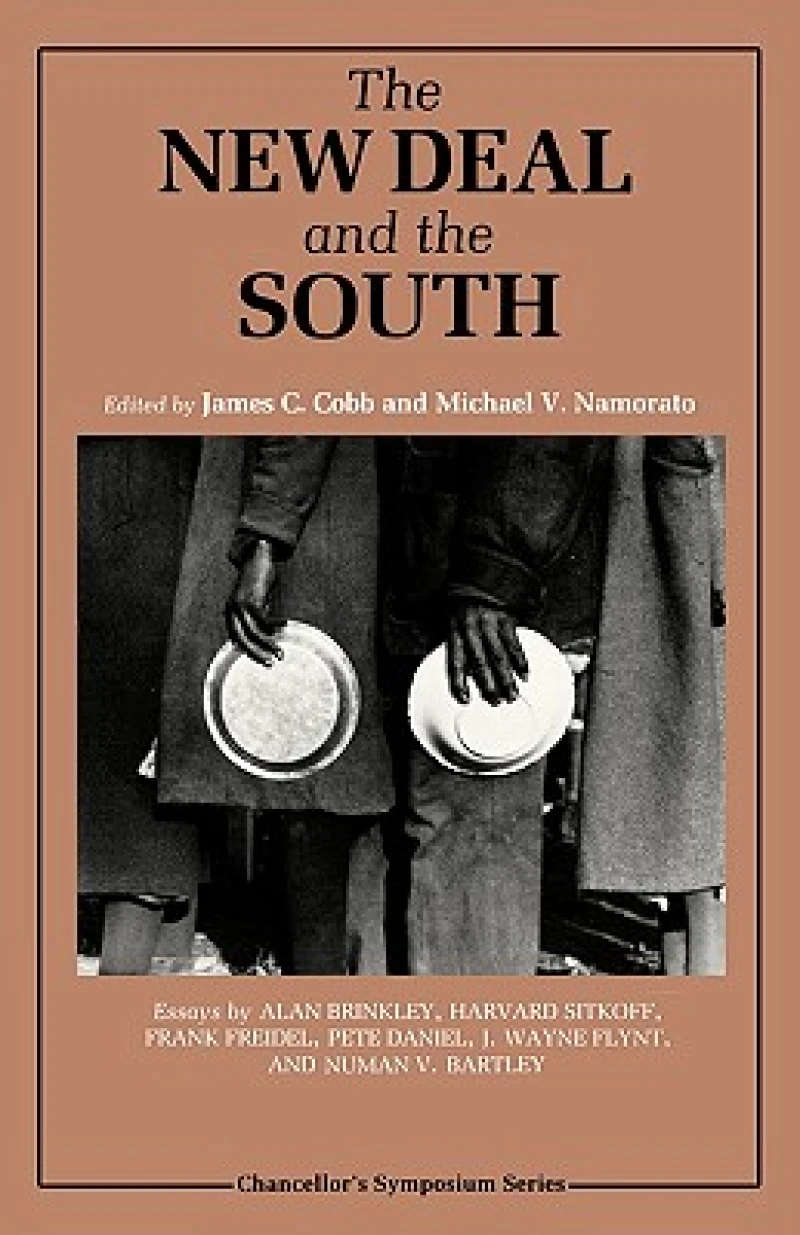
The New Deal and the South
Book Details
Format
Paperback / Softback
ISBN-10
1604738677
ISBN-13
9781604738674
Publisher
University Press of Mississippi
Imprint
University Press of Mississippi
Country of Manufacture
US
Country of Publication
GB
Publication Date
Jul 30th, 2010
Print length
184 Pages
Weight
282 grams
Dimensions
15.30 x 21.70 x 1.20 cms
Product Classification:
Literary essaysGeneral & world history20th century history: c 1900 to c 2000
Ksh 4,900.00
Werezi Extended Catalogue
0 in stock
Delivery Location
Delivery fee: Select location
Secure
Quality
Fast
With essays by Alan Brinkley, Harvard Sitkoff, Frank Freidel, Pete Daniel, J. Wayne Flynt, and Numan V. BartleyThe New Deal and the South represents the first comprehensive treatment of the impact of the Roosevelt recovery program on the South. In essays dealing with the New Deal's overall effect on the South, its influence on southern agriculture, labor, blacks, and politics, and its significance as a turning point in the region's history, the contributors provide readers with an opportunity to develop a more complete understanding of an era which a number of historians now mark as the period in which the New South actually began to become new. Each of the essays in this collection was presented at the Ninth Annual Chancellor's Symposium on Southern History, held in October 1983, at the University of Mississippi. In the introductory essay, Frank Freidel identifies the New Deal period as one of the most important phases in the modernization of the South, one which linked the wishful thinking of the New South era to the much-publicized contemporary Sunbelt South. Pete Daniel describes the New Deal's role in the mechanization, consolidation, and corporatization of southern agriculture, a phenomenon that swept thousands of southerners from the land and paved the way for an all-out crusade to industrialize the region. In his analysis of the New Deal's impact on southern labor, Wayne Flynt assesses what the New Deal did and did not mean for southern industrial workers. Alan Brinkley stresses the tensions induced in southern politics during the New Deal era, particularly those caused by the Democratic Party's increased responsiveness to blacks and organized labor. Harvard Sitkoff, in surveying the New Deal's impact on black southerners, cites the limited nature of that impact but points to the seeds of future progress sown by the Roosevelt Administration and its policies. In the concluding essay Numan V. Bartley emphasizes the collapse of a paternalistic labor system and the shift of power from small town to urban elites and suggests that the years 1935–1945 may soon be seen as the ""crucial decade"" in southern history. The New Deal and the South provides both the serious student and the general reader with an up-to-date assessment of one of the most critical transitional periods in southern history.
The New Deal and the Southedited by James C. Cobb and Michael V. Namoratoessays by Alan Brinkley, Harvard Sitkoff, Frank Freidel, Pete Daniel, J. Wayne Flynt, and Numan V. BartleyThe New Deal and the South represents the first comprehensive treatment of the impact of the Roosevelt recovery program on the South. In essays dealing with the New Deal''s overall effect on the South, its influence on southern agriculture, labor, blacks, and politics, and its significance as a turning point in the region''s history, the contributors provide readers with an opportunity to develop a more complete understanding of an era which a number of historians now mark as the period in which the New South actually began to become new. Each of the essays in this collection was presented at the Ninth Annual Chancellor''s Symposium on Southern History, held in October 1983, at the University of Mississippi. In the introductory essay Frank Freidel identifies the New Deal period as one of the most important phases in the modernization of the South, one which linked the wishful thinking of the New South era to the much-publicized contemporary Sunbelt South. Pete Daniel describes the New Deal''s role in the mechanization, consolidation, and corporatization of southern agriculture, a phenomenon that swept thousands of southerners from the land and paved the way for an all-out crusade to industrialize the region. In his analysis of the New Deal''s impact on southern labor, Wayne Flynt assesses what the New Deal did and did not mean for southern industrial workers. Alan Brinkley stresses the tensions induced in southern politics during the New Deal era, particularly those caused by the Democratic Party''s increased responsiveness to blacks and organized labor. Harvard Sitkoff, in surveying the New Deal''s impact on black southerners, cites the limited nature of that impact but points to the seeds of future progress sown by the Roosevelt Administration and its policies. In the concluding essay Numan V. Bartley emphasizes the collapse of a paternalistic labor system and the shift of power from small town to urban elites and suggests that the years 1935-1945 may soon be seen as the "crucial decade" in southern history. The New Deal and the South provides both the serious student and the general reader with an up-to-date assessment of one of the most critical transitional periods in southern history. James C. Cobb is a professor of history at the University of Georgia.Michael V. Namorato is a professor of history at the University of Mississippi.
Get The New Deal and the South by at the best price and quality guaranteed only at Werezi Africa's largest book ecommerce store. The book was published by University Press of Mississippi and it has pages.

