
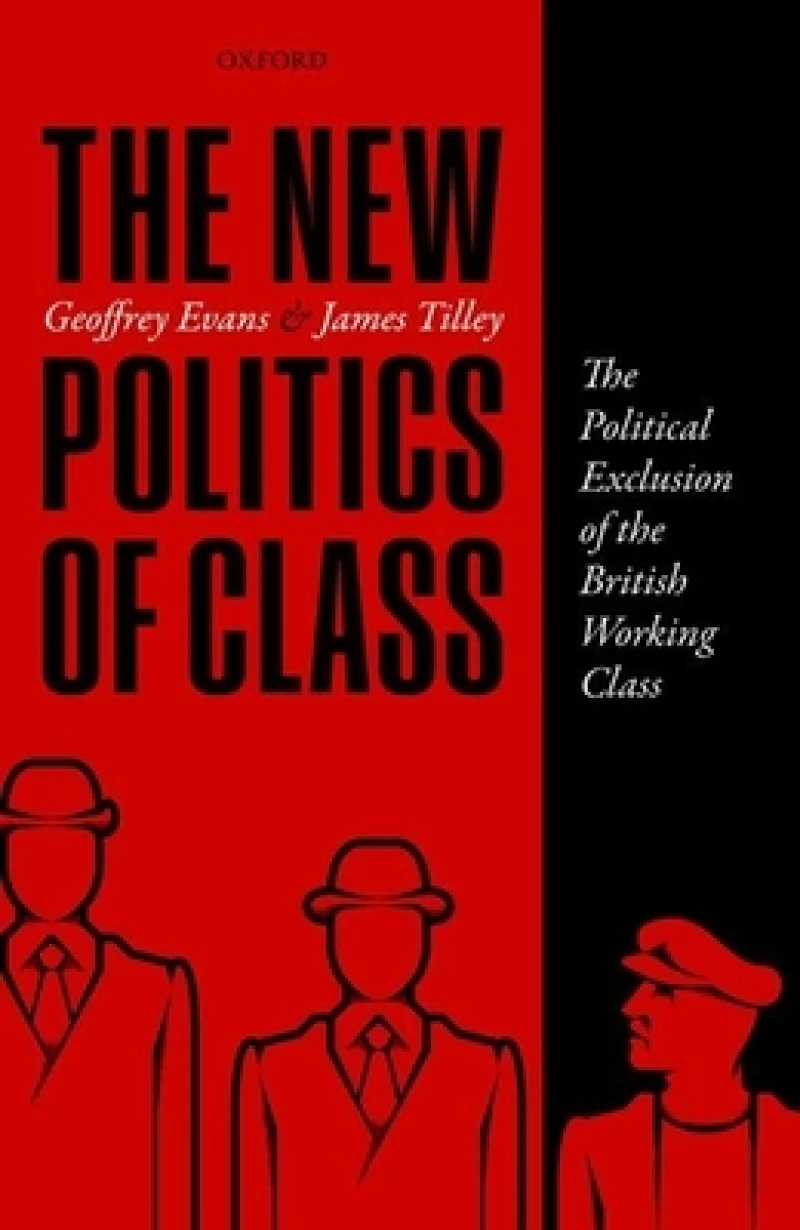
The New Politics of Class : The Political Exclusion of the British Working Class
Book Details
Format
Hardback or Cased Book
ISBN-10
0198755759
ISBN-13
9780198755753
Publisher
Oxford University Press
Imprint
Oxford University Press
Country of Manufacture
GB
Country of Publication
GB
Publication Date
Feb 23rd, 2017
Print length
252 Pages
Weight
506 grams
Dimensions
16.30 x 24.10 x 2.20 cms
Product Classification:
Social classesSocial classesPolitical structure & processesPolitical structure and processes
Ksh 10,450.00
Manufactured on Demand
Delivery in 14 days
1 copies in stock
Delivery Location
Delivery fee: Select location
Delivery in 14 days
Secure
Quality
Fast
The British working class has become politically disenfranchised, this book explains how and why. This book explores the politics of class in Britain over the last 70 years. It shows how changing class sizes have set in train a process that has led to working class people not voting.
This book explores the new politics of class in 21st century Britain. It shows how the changing shape of the class structure since 1945 has led political parties to change, which has both reduced class voting and increased class non-voting.This argument is developed in three stages. The first is to show that there has been enormous social continuity in class divisions. The authors demonstrate this using extensive evidence on class and educational inequality, perceptions of inequality, identity and awareness, and political attitudes over more than fifty years. The second stage is to show that there has been enormous political change in response to changing class sizes. Party policies, politicians'' rhetoric, and the social composition of political elites have radically altered. Parties offer similar policies, appeal less to specific classes, and are populated by people from more similar backgrounds. Simultaneously the mass media have stopped talking about the politics of class. The third stage is to show that these political changes have had three major consequences. First, as Labour and the Conservatives became more similar, class differences in party preferences disappeared. Second, new parties, most notably UKIP, have taken working class voters from the mainstream parties. Third, and most importantly, the lack of choice offered by the mainstream parties has led to a huge increase in class-based abstention from voting. Working class people have become much less likely to vote. In that sense, Britain appears to have followed the US down a path of working class political exclusion, ultimately undermining the representativeness of our democracy. They conclude with a discussion of the Brexit referendum and the role that working class alienation played in its historic outcome.
Get The New Politics of Class by at the best price and quality guaranteed only at Werezi Africa's largest book ecommerce store. The book was published by Oxford University Press and it has pages.

