
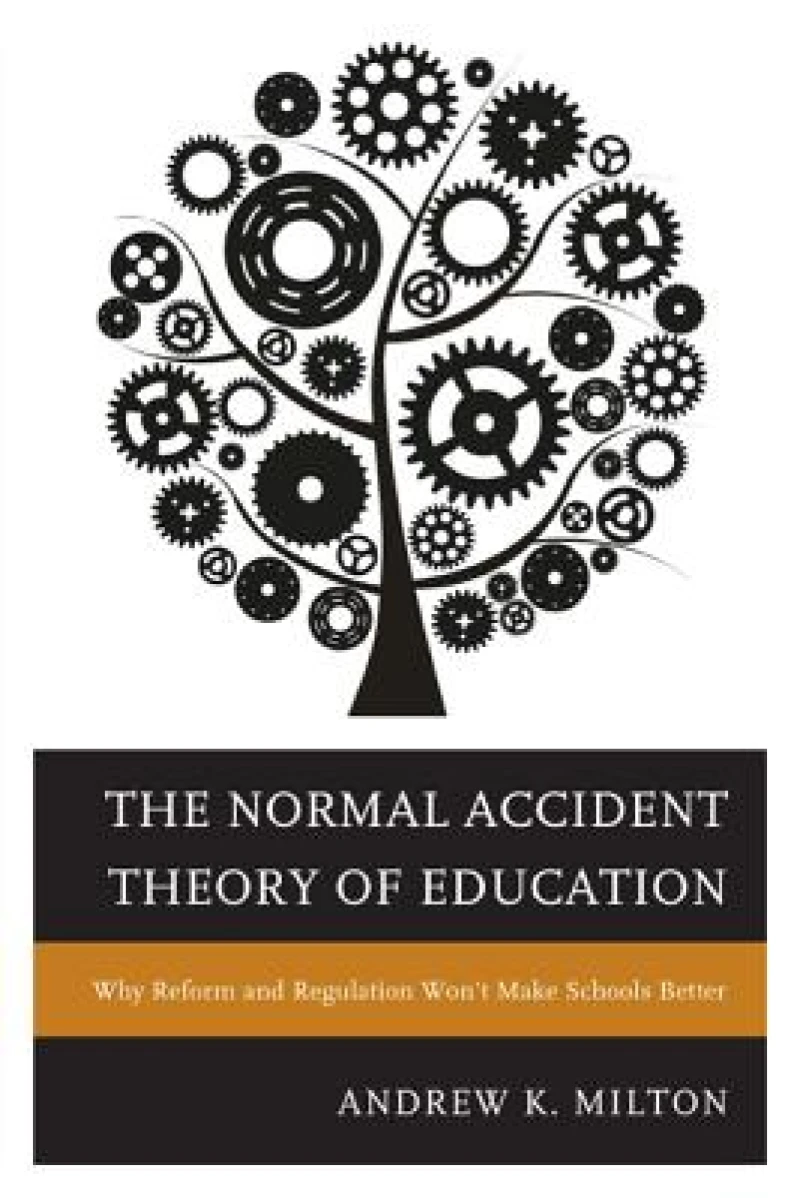
The Normal Accident Theory of Education : Why Reform and Regulation Won’t Make Schools Better
Book Details
Format
Paperback / Softback
ISBN-10
1475806582
ISBN-13
9781475806588
Publisher
Bloomsbury Publishing Plc
Imprint
Rowman & Littlefield Publishers
Country of Manufacture
GB
Country of Publication
GB
Publication Date
Apr 1st, 2014
Print length
146 Pages
Weight
236 grams
Dimensions
22.70 x 15.30 x 1.10 cms
Product Classification:
Educational strategies & policy
Ksh 5,750.00
Manufactured on Demand
0 in stock
Delivery Location
Delivery fee: Select location
Secure
Quality
Fast
Much of the current debate about education too often resembles the blind men describing an elephant--apprehending only a particular part of the situation or the process, many analysts tell an evocative but incomplete story. The so-called ‘reform’ discussion proceeds with a lack of depth about the nuances and realistic limitations in the institutional order of school.This book argues that as regulation of schools moves further up the bureaucratic hierarchy (first to state departments of education then to the national department of education) the legal and institutional requirements get more intensive but less concretely useful in class rooms. This bureaucratization serves to ‘tighten’ the organizational environment, thereby increasing the risk of normal accidents. The increasing governmental management, in other words, makes it more likely that schools will ‘fail’ to meet their goals. Analyses of education are too often developed for public consumption in a fast-moving political world. This book examines some of the deeper organizational reasons why things don’t work so well in school, as well as a look at some of things that do work. Most importantly, the book will explain how the social and cultural expectations of what schools can do may create unrealistic hopes. We, as a society, and schools, as institutions, embrace these unreasonably high hopes at our collective peril.
Much of the current debate about education too often resembles the blind men describing an elephant--apprehending only a particular part of the situation or the process, many analysts tell an evocative but incomplete story. The so-called ‘reform’ discussion proceeds with a lack of depth about the nuances and realistic limitations in the institutional order of school. This book argues that as regulation of schools moves further up the bureaucratic hierarchy (first to state departments of education then to the national department of education) the legal and institutional requirements get more intensive but less concretely useful in class rooms. This bureaucratization serves to ‘tighten’ the organizational environment, thereby increasing the risk of normal accidents. The increasing governmental management, in other words, makes it more likely that schools will ‘fail’ to meet their goals. Analyses of education are too often developed for public consumption in a fast-moving political world. This book examines some of the deeper organizational reasons why things don’t work so well in school, as well as a look at some of things that do work. Most importantly, the book will explain how the social and cultural expectations of what schools can do may create unrealistic hopes. We, as a society, and schools, as institutions, embrace these unreasonably high hopes at our collective peril.
Get The Normal Accident Theory of Education by at the best price and quality guaranteed only at Werezi Africa's largest book ecommerce store. The book was published by Bloomsbury Publishing Plc and it has pages.

