
Cart 0
The Nuclear Tipping Point
Click to zoom

Share this book

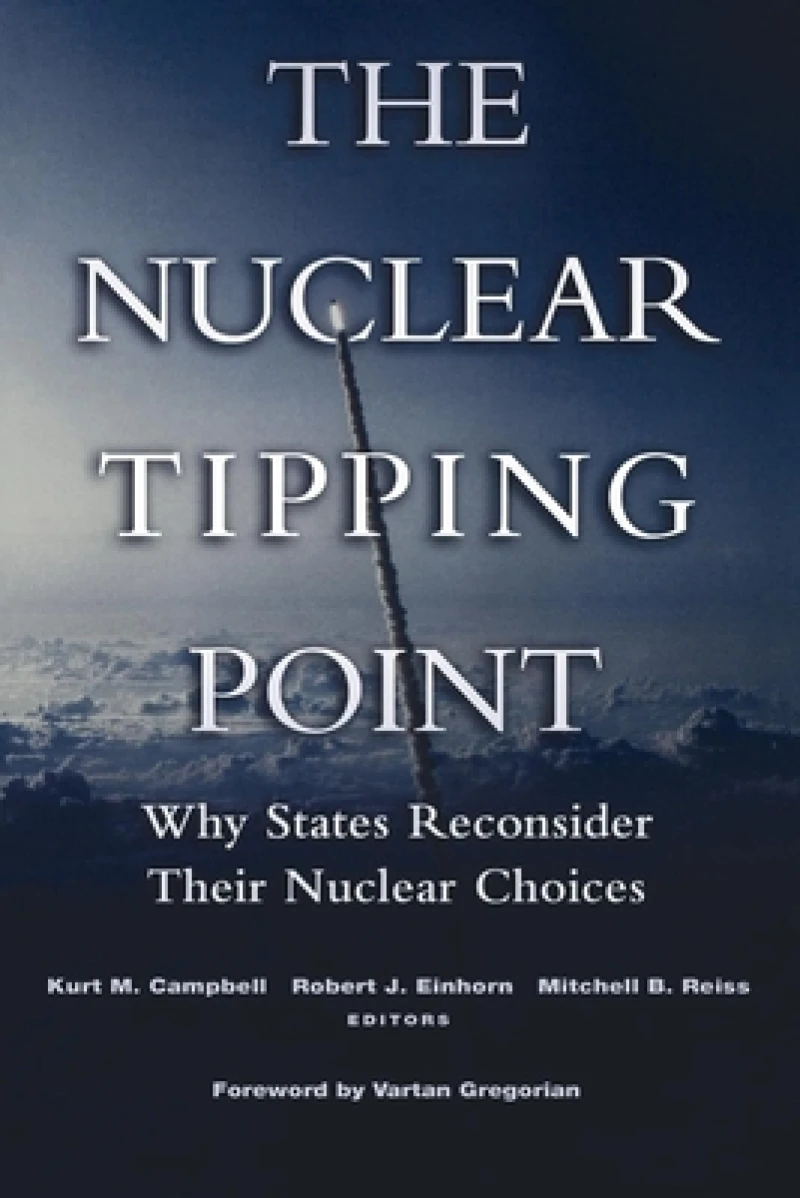
The Nuclear Tipping Point : Why States Reconsider Their Nuclear Choices

Book Details

Format Paperback / Softback
ISBN-10 0815713312
ISBN-13 9780815713319
Publisher Bloomsbury Publishing Plc
Imprint Brookings Institution
Country of Manufacture US
Country of Publication GB
Publication Date Jun 23rd, 2004
Print length 380 Pages
Weight 606 grams
Dimensions 15.40 x 23.00 x 3.00 cms
Ksh 4,950.00
Manufactured on Demand Delivery in 29 days

Delivery Location

Delivery fee: Select location

Delivery in 29 days

Secure
Quality
Fast
"More than half a century after the advent of the nuclear age, is the world approaching a tipping point that will unleash an epidemic of nuclear proliferation? Today many of the building blocks of a nuclear arsenal—scientific and engineering expertise, precision machine tools, software, design information—are more readily available than ever before. The nuclear pretensions of so-called rogue states and terrorist organizations are much discussed. But how firm is the resolve of those countries that historically have chosen to forswear nuclear weapons? A combination of changes in the international environment could set off a domino effect, with countries scrambling to develop nuclear weapons so as not to be left behind—or to develop nuclear ""hedge"" capacities that would allow them to build nuclear arsenals relatively quickly, if necessary. Th e Nuclear Tipping Point examines the factors, both domestic and transnational, that shape nuclear policy. The authors, distinguished scholars and foreign policy practitioners with extensive government experience, develop a framework for understanding why certain countries may originally have decided to renounce nuclear weapons—and pinpoint some more recent country-specific factors that could give them cause to reconsider. Case studies of eight long-term stalwarts of the nonproliferation regime—Egypt, Germany, Japan, Saudi Arabia, South Korea, Syria, Turkey, and Taiwan—flesh out this framework and show how even these countries might be pushed over the edge of a nuclear tipping point. The authors offer prescriptions that would both prevent such countries from reconsidering their nuclear option and avert proliferation by others. The stakes are enormous and success is far from assured. To keep the tipping point beyond reach, the authors argue, the international community will have to act with unity, imagination, and strength, and Washington's leadership will be essential. Contributors include Leon Feurth, George Washington University; Ellen Laipson, Stimson Center; Thomas W. Lippman, Middle East Institute; Jenifer Mackby, Center for Strategic and International Studies; Derek J. Mitchell, Center for Strategic and International Studies; Jonathan D. Pollack, U.S. Naval War College; Walter B. Slocombe, Caplin and Drysdale; and Tsuyoshi Sunohara, Center for Strategic and International Studies. "
"

More than half a century after the advent of the nuclear age, is the world approaching a tipping point that will unleash an epidemic of nuclear proliferation? Today many of the building blocks of a nuclear arsenal—scientific and engineering expertise, precision machine tools, software, design information—are more readily available than ever before. The nuclear pretensions of so-called rogue states and terrorist organizations are much discussed. But how firm is the resolve of those countries that historically have chosen to forswear nuclear weapons? A combination of changes in the international environment could set off a domino effect, with countries scrambling to develop nuclear weapons so as not to be left behind—or to develop nuclear ""hedge"" capacities that would allow them to build nuclear arsenals relatively quickly, if necessary. Th e Nuclear Tipping Point examines the factors, both domestic and transnational, that shape nuclear policy. The authors, distinguished scholars and foreign policy practitioners with extensive government experience, develop a framework for understanding why certain countries may originally have decided to renounce nuclear weapons—and pinpoint some more recent country-specific factors that could give them cause to reconsider. Case studies of eight long-term stalwarts of the nonproliferation regime—Egypt, Germany, Japan, Saudi Arabia, South Korea, Syria, Turkey, and Taiwan—flesh out this framework and show how even these countries might be pushed over the edge of a nuclear tipping point. The authors offer prescriptions that would both prevent such countries from reconsidering their nuclear option and avert proliferation by others. The stakes are enormous and success is far from assured. To keep the tipping point beyond reach, the authors argue, the international community will have to act with unity, imagination, and strength, and Washington''s leadership will be essential. Contributors include Leon Feurth, George Washington University; Ellen Laipson, Stimson Center; Thomas W. Lippman, Middle East Institute; Jenifer Mackby, Center for Strategic and International Studies; Derek J. Mitchell, Center for Strategic and International Studies; Jonathan D. Pollack, U.S. Naval War College; Walter B. Slocombe, Caplin and Drysdale; and Tsuyoshi Sunohara, Center for Strategic and International Studies.

"

Get The Nuclear Tipping Point by at the best price and quality guaranteed only at Werezi Africa's largest book ecommerce store. The book was published by Bloomsbury Publishing Plc and it has pages.


Mind, Body, & Spirit

Price

Ksh 4,950.00

Shopping Cart

Africa largest book store

Sub Total:
Ebooks

Digital Library
Coming Soon

Our digital collection is currently being curated to ensure the best possible reading experience on Werezi. We'll be launching our Ebooks platform shortly.