
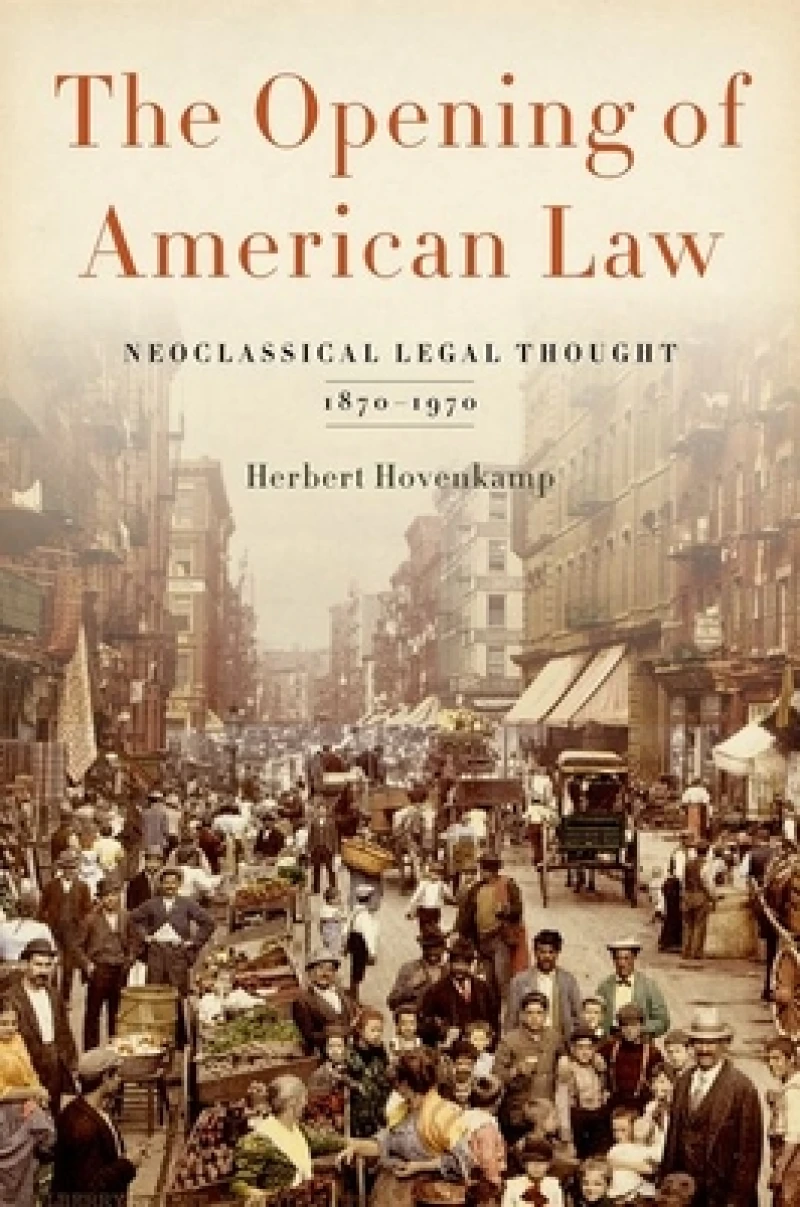
The Opening of American Law : Neoclassical Legal Thought, 1870-1970
Book Details
Format
Hardback or Cased Book
ISBN-10
0199331308
ISBN-13
9780199331307
Publisher
Oxford University Press Inc
Imprint
Oxford University Press Inc
Country of Manufacture
GB
Country of Publication
GB
Publication Date
Nov 13th, 2014
Print length
472 Pages
Weight
886 grams
Dimensions
15.60 x 24.30 x 3.30 cms
Product Classification:
Economic historyLaw & societyLegal history
Ksh 14,450.00
Manufactured on Demand
0 in stock
Delivery Location
Delivery fee: Select location
Secure
Quality
Fast
Two Victorian Era movements affected American legal thought: Darwinian natural selection and marginalist economics. Darwinism emphasized instinct and random selection. Marginalism emphasized rational choice. Notwithstanding profound differences in the assumptions and methodologies of these movements, legal theory accommodated both.
Two Victorian Era intellectual movements changed the course of American legal thought: Darwinian natural selection and marginalist economics. The two movements rested on fundamentally inconsistent premises. Darwinism emphasized instinct, random selection, and determinism. Marginalism emphasized rational choice. Legal theory managed to accommodate both, although to different degrees in different disciplines. The two movements also developed mutually exclusive scientific methodologies. Darwinism emphasizing external indicators of welfare such as productivity, education or health, while marginalists emphasized market choice. Historians have generally exaggerated the role of Darwinism in American legal thought, while understating the role of marginalist economics. This book explores these issues in several legal disciplines. One is Progressive Era movements for redistributive policies about taxation and public goods. Darwinian science also dominated the law of race relations, while criminal law reflected an inconsistent mixture of Darwinian and marginalist incentive-based theories. The common law, including family law, contract, property, and tort, moved from emphasis on correction of past harms to management of ongoing risk and relationship. A chapter on Legal Realism emphasizes the Realists'' indebtedness to institutional economics, a movement that powerfully influenced American legal theory long after it fell out of favor with economists. Five chapters on the corporation, innovation and competition policy show how marginalist economics transformed business policy. The ironic exception was patent law, which developed in relative insulation from economic concerns about innovation policy. The book concludes with three chapters on public law, emphasizing the role of institutionalist economics in policy making during and after the New Deal. A lengthy epilogue then explores the variety of postwar attempts to reconstruct a defensible and more market-oriented rule of law after the decline of Legal Realism and the New Deal.
Get The Opening of American Law by at the best price and quality guaranteed only at Werezi Africa's largest book ecommerce store. The book was published by Oxford University Press Inc and it has pages.

