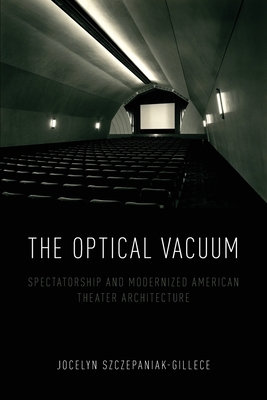
The Optical Vacuum : Spectatorship and Modernized American Theater Architecture
Book Details
Format
Hardback
ISBN-10
0190689358
ISBN-13
9780190689353
Publisher
Oxford University Press Inc
Imprint
Oxford University Press Inc
Country of Manufacture
US
Country of Publication
GB
Publication Date
Aug 30th, 2018
Print length
210 Pages
Weight
476 grams
Dimensions
16.00 x 23.60 x 1.80 cms
KSh 18,900.00
Currently unavailable
0 in stock
Delivery Location
Delivery fee: Select location
Secure
Quality
Fast
From the 1920s-1960s, American cinematic architecture underwent a seismic shift: movie theaters were neutralized for immersive watching, in large part by architect and writer Benjamin Schlanger. The Optical Vacuum examines how Schlanger reformed both theater and spectator, demonstrating that the essence of film viewing can be found in theatrical space.
Between the 1920s and the 1960s, American mainstream cinematic architecture underwent a seismic shift. From the massive movie palace to the intimate streamlined theater, movie theaters became neutralized spaces for calibrated, immersive watching. Leading this charge was New York architect Benjamin Schlanger, a fiery polemicist whose designs and essays reshaped how movies were watched. In its close examination of Schlanger''s work and of changing patterns of spectatorship, this book reveals that the essence of film viewing lies not only in the text, but in the spaces where movies are shown. The Optical Vacuum demonstrates that our changing models of cinephilia are always determined by physical structure: from the decorations of the palace to the black box of the contemporary auditorium, variations in movie theater design are icons for how viewing has similarly transformed.
Get The Optical Vacuum by Jocelyn Szczepaniak-Gillece at the best price and quality guaranteed only at Werezi Africa's largest book ecommerce store. The book was published by Oxford University Press Inc and it has 210 pages.
Customers Who Bought This Also Bought
Architecture – Form, Space, & Order
KSh 8,700.00
In Fine Detail: Perspective
KSh 3,700.00
Islamic Art and Architecture
KSh 3,600.00

Classical Architecture
KSh 8,700.00
The Sources of Modern Architecture and Design
KSh 3,400.00
An Ornament to the City
KSh 10,450.00

Frank Lloyd Wright Designs
KSh 18,550.00
International Space Station
KSh 11,700.00
Colorful Cities
KSh 2,050.00
The Culture Factory
KSh 3,600.00
American Renaissance
KSh 18,700.00

Zürich Primer
KSh 8,900.00