
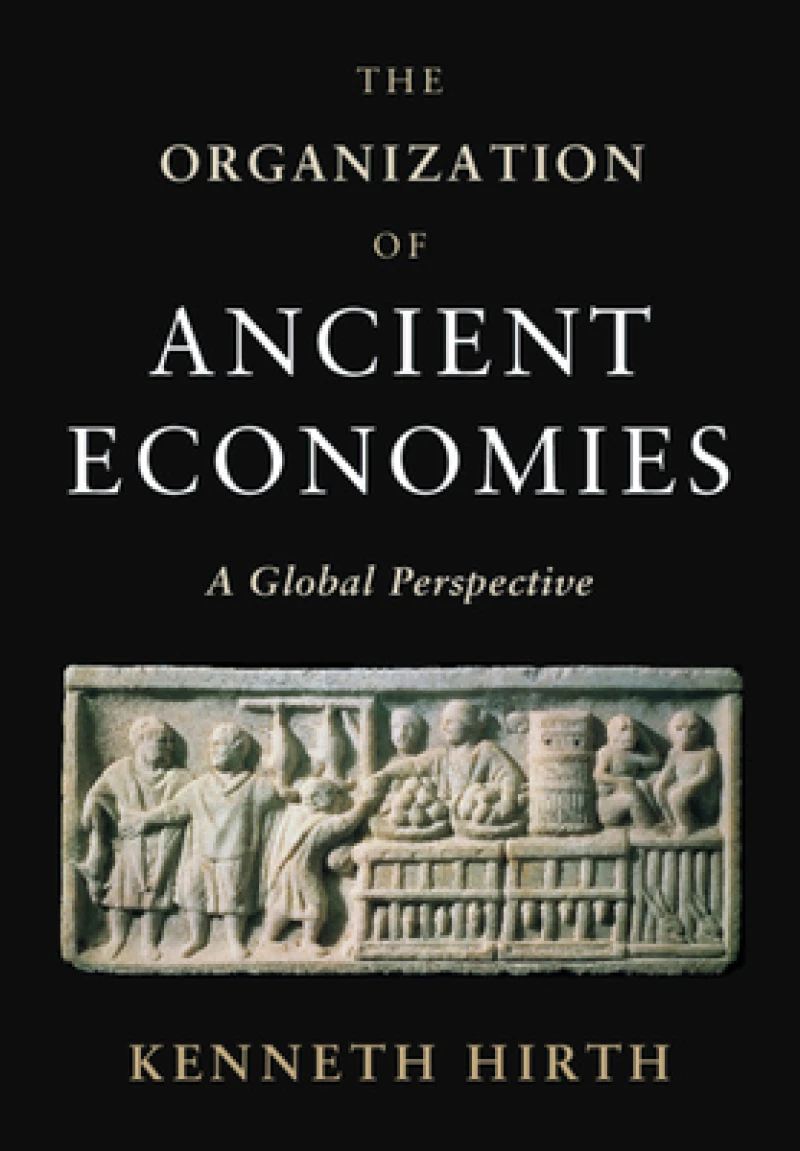
The Organization of Ancient Economies : A Global Perspective
Book Details
Format
Hardback or Cased Book
ISBN-10
1108494706
ISBN-13
9781108494700
Publisher
Cambridge University Press
Imprint
Cambridge University Press
Country of Manufacture
US
Country of Publication
GB
Publication Date
Sep 17th, 2020
Print length
462 Pages
Weight
1,142 grams
Dimensions
18.70 x 25.90 x 2.80 cms
Product Classification:
Ancient history: to c 500 CEEconomic history
Ksh 8,000.00
Manufactured on Demand
0 in stock
Delivery Location
Delivery fee: Select location
Secure
Quality
Fast
This book is about how ancient economies were organized to get work done. It is written for eclectic readers and life-long learners interested in the broad sweep of economic history. It explores how ancient economies developed and mobilized the resources necessary to support the institutions of civilization throughout antiquity.
In this book, Kenneth Hirth provides a comparative view of the organization of ancient and premodern society and economy. Hirth establishes that humans adapted to their environments, not as individuals but in the social groups where they lived and worked out the details of their livelihoods. He explores the variation in economic organization used by simple and complex societies to procure, produce, and distribute resources required by both individual households and the social and political institutions that they supported. Drawing on a wealth of archaeological, historic, and ethnographic information, he develops and applies an analytical framework for studying ancient societies that range from the hunting and gathering groups of native North America, to the large state societies of both the New and Old Worlds. Hirth demonstrates that despite differences in transportation and communication technologies, the economic organization of ancient and modern societies are not as different as we sometimes think.
Get The Organization of Ancient Economies by at the best price and quality guaranteed only at Werezi Africa's largest book ecommerce store. The book was published by Cambridge University Press and it has pages.

