
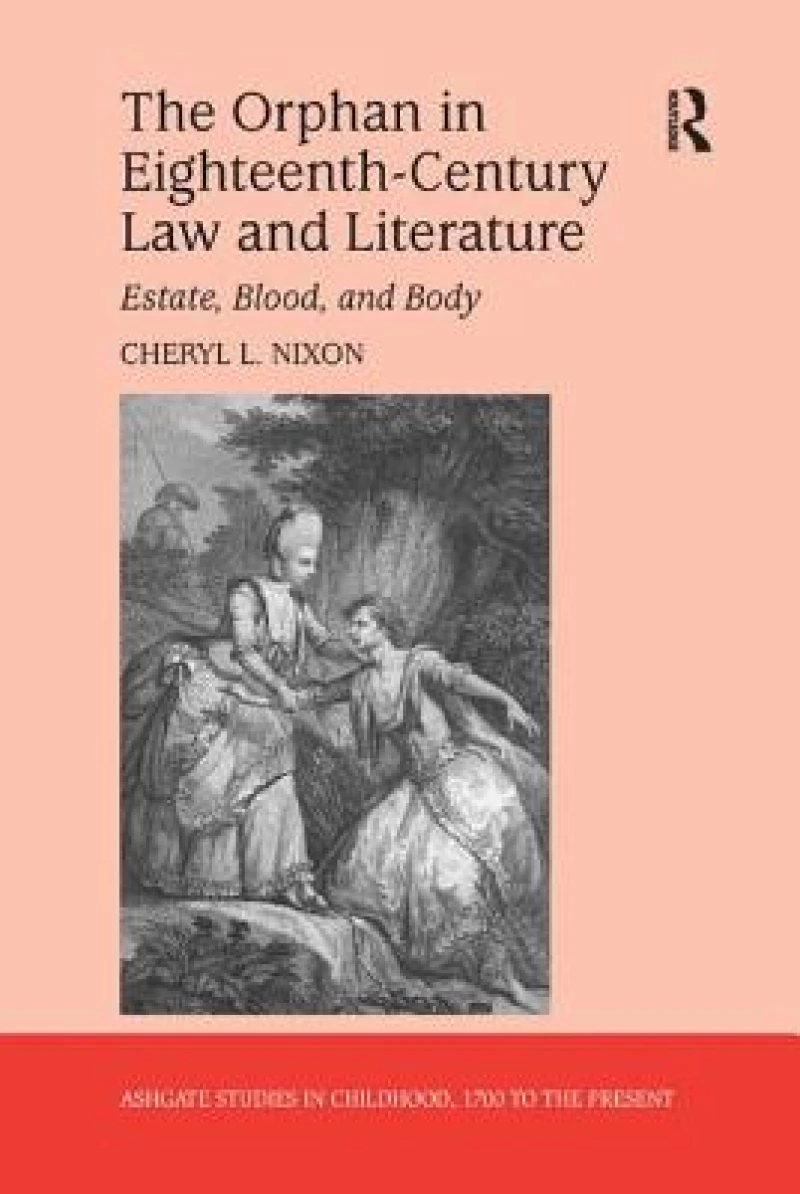
The Orphan in Eighteenth-Century Law and Literature : Estate, Blood, and Body
Book Details
Format
Paperback / Softback
Book Series
Studies in Childhood, 1700 to the Present
ISBN-10
113826184X
ISBN-13
9781138261846
Publisher
Taylor & Francis Ltd
Imprint
Routledge
Country of Manufacture
GB
Country of Publication
GB
Publication Date
Nov 15th, 2016
Print length
304 Pages
Weight
453 grams
Product Classification:
Literary studies: general
Ksh 10,100.00
Werezi Extended Catalogue
0 in stock
Delivery Location
Delivery fee: Select location
Secure
Quality
Fast
Examining novels by authors such as Haywood, Smollett, and Inchbald, and uncovering new manuscript and print case records, Cheryl Nixon compares tales of fictional orphans to narratives of legal orphans. Focusing on the eighteenth-century construction of the "valued" orphan, her book shows this figure''s centrality to the development of new novelistic subgenres, new ideologies of the individual, and new understandings of property, family, and gender.
Cheryl Nixon''s book is the first to connect the eighteenth-century fictional orphan and factual orphan, emphasizing the legal concepts of estate, blood, and body. Examining novels by authors such as Eliza Haywood, Tobias Smollett, and Elizabeth Inchbald, and referencing never-before analyzed case records, Nixon reconstructs the narratives of real orphans in the British parliamentary, equity, and common law courts and compares them to the narratives of fictional orphans. The orphan''s uncertain economic, familial, and bodily status creates opportunities to "plot" his or her future according to new ideologies of the social individual. Nixon demonstrates that the orphan encourages both fact and fiction to re-imagine structures of estate (property and inheritance), blood (familial origins and marriage), and body (gender and class mobility). Whereas studies of the orphan typically emphasize the poor urban foundling, Nixon focuses on the orphaned heir or heiress and his or her need to be situated in a domestic space. Arguing that the eighteenth century constructs the "valued" orphan, Nixon shows how the wealthy orphan became associated with new understandings of the individual. New archival research encompassing print and manuscript records from Parliament, Chancery, Exchequer, and King''s Bench demonstrate the law''s interest in the propertied orphan. The novel uses this figure to question the formulaic structures of narrative sub-genres such as the picaresque and romance and ultimately encourage the hybridization of such plots. As Nixon traces the orphan''s contribution to the developing novel and developing ideology of the individual, she shows how the orphan creates factual and fictional understandings of class, family, and gender.
Get The Orphan in Eighteenth-Century Law and Literature by at the best price and quality guaranteed only at Werezi Africa's largest book ecommerce store. The book was published by Taylor & Francis Ltd and it has pages.

