
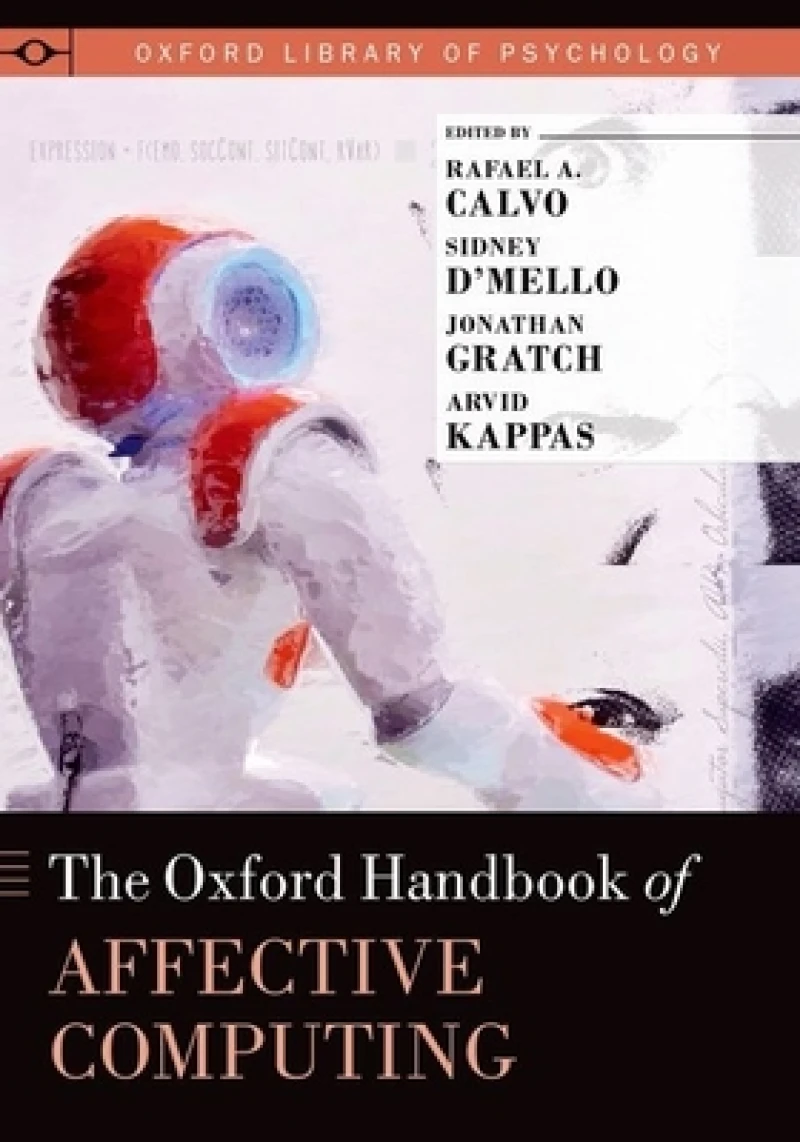
The Oxford Handbook of Affective Computing
Book Details
Format
Hardback or Cased Book
Book Series
Oxford Library of Psychology
ISBN-10
0199942234
ISBN-13
9780199942237
Publisher
Oxford University Press Inc
Imprint
Oxford University Press Inc
Country of Manufacture
US
Country of Publication
GB
Publication Date
Jan 15th, 2015
Print length
624 Pages
Weight
1,334 grams
Dimensions
19.10 x 26.70 x 4.00 cms
Product Classification:
Cognition & cognitive psychologyImpact of science & technology on societyComputer science
Ksh 35,450.00
Werezi Extended Catalogue
0 in stock
Delivery Location
Delivery fee: Select location
Secure
Quality
Fast
The Oxford Handbook of Affective Computing is the definitive reference for research in Affective Computing (AC), a growing multidisciplinary field encompassing computer science, engineering, psychology, education, neuroscience, and many other disciplines. The handbook explores how affective factors influence interactions between humans and technology, how affect sensing and affect generation techniques can inform our understanding of human affect, and on the design, implementation, and evaluation of systems that intricately involve affect at their core.
Affective Computing is a growing multidisciplinary field encompassing computer science, engineering, psychology, education, neuroscience, and many other disciplines. It explores how affective factors influence interactions between humans and technology, how affect sensing and affect generation techniques can inform our understanding of human affect, and on the design, implementation, and evaluation of systems that intricately involve affect at their core. The Oxford Handbook of Affective Computing will help both new and experienced researchers identify trends, concepts, methodologies, and applications in this burgeouning field. The volume features 41 chapters divided into five main sections: history and theory, detection, generation, methodologies, and applications. Section One begins with a look at the makings of AC and a historical review of the science of emotion. Chapters discuss the theoretical underpinnings of AC from an interdisciplinary perspective involving the affective, cognitive, social, media, and brain sciences. Section Two focuses on affect detection or affect recognition, which is one of the most commonly investigated areas in AC. Section Three examines aspects of affect generation including the synthesis of emotion and its expression via facial features, speech, postures and gestures. Cultural issues in affect generation are also discussed. Section Four features chapters on methodological issues in AC research, including data collection techniques, multimodal affect databases, emotion representation formats, crowdsourcing techniques, machine learning approaches, affect elicitation techniques, useful AC tools, and ethical issues in AC. Finally, Section Five highlights existing and future applications of AC in domains such as formal and informal learning, games, robotics, virtual reality, autism research, healthcare, cyberpsychology, music, deception, reflective writing, and cyberpsychology.With chapters authored by world leaders in each area, The Oxford Handbook of Affective Computing is suitable for use as a textbook in undergraduate or graduate courses in AC, and will serve as a valuable resource for students, researchers, and practitioners across the globe.
Get The Oxford Handbook of Affective Computing by at the best price and quality guaranteed only at Werezi Africa's largest book ecommerce store. The book was published by Oxford University Press Inc and it has pages.

