
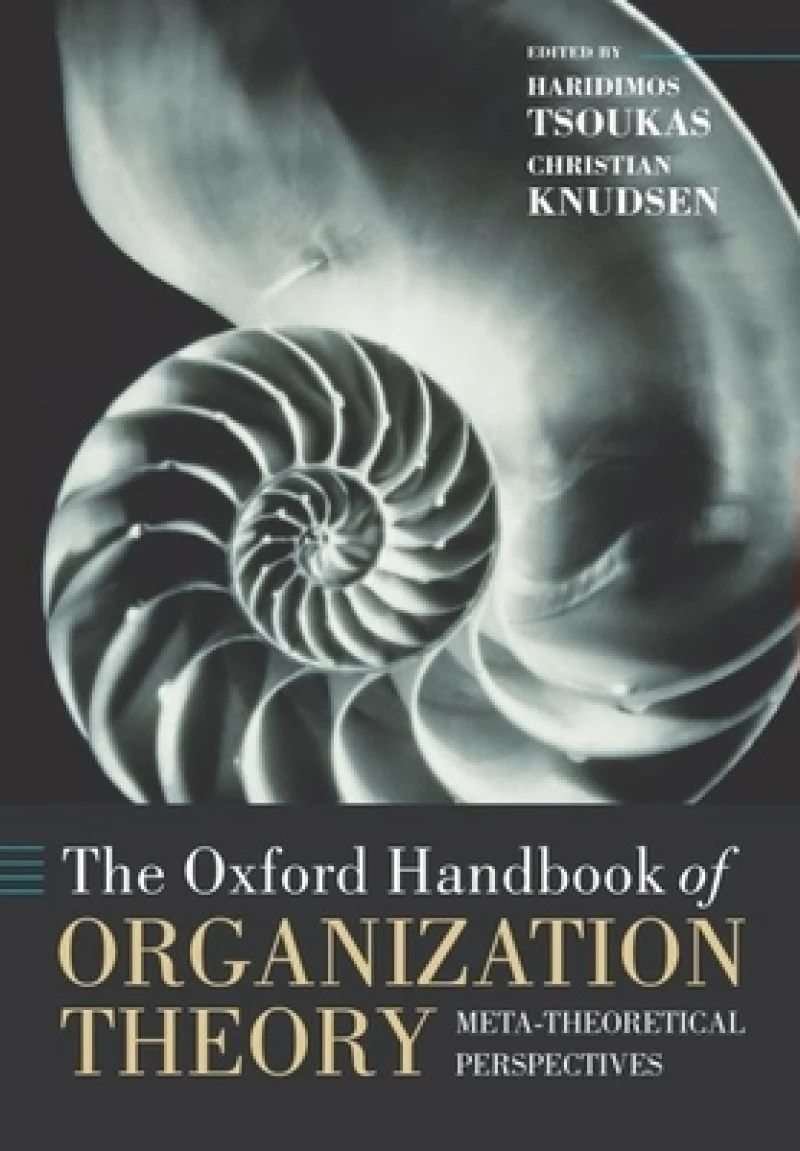
The Oxford Handbook of Organization Theory
Book Details
Format
Paperback / Softback
Book Series
Oxford Handbooks
ISBN-10
0199275254
ISBN-13
9780199275250
Publisher
Oxford University Press
Imprint
Oxford University Press
Country of Manufacture
GB
Country of Publication
GB
Publication Date
Mar 10th, 2005
Print length
672 Pages
Weight
1,114 grams
Dimensions
24.70 x 16.90 x 3.90 cms
Product Classification:
Business strategyOrganizational theory & behaviourOrganizational theory and behaviour
Ksh 12,450.00
Manufactured on Demand
0 in stock
Delivery Location
Delivery fee: Select location
Secure
Quality
Fast
Focusing on organization theory, the aim of this volume is to hold up for examination its assumptions and knowledge claims, the chief explanatory strategies used, its relationship with the world, and its direction. The sections include: Organization Theory as Science; The Construction of Organization Theory; and The Future of Organization Theory.
This book provides a forum for leading scholars in organization theory to engage in meta-theoretical reflection on the historical development, present state, and future prospects of organization theory as a scientific discipline. The central question explored is the epistemological status of organization theory as a policy science. This is a meta-theoretical question; the object of analysis and debate in this volume is not a set of organizational phenomena, but organization theory itself. By drawing attention to organization theory as a practical social activity, this handbook reviews and evaluates important epistemological developments in the discipline. More specifically, the focus is on issues related to the nature of knowledge claims put forward in organization theory and the controversies surrounding the generation, validation, and utilization of such knowledge.Five sets of questions are raised in the handbook, each one of which is dealt with in a separate section: 1) What does a science of organizations consist of? What counts as valid knowledge in organization theory and why? How do different paradigms view organization theory as a science? 2) How has organization theory developed over time, and what structure has the field taken? What assumptions does knowledge produced in organization theory incorporate, and what forms do its knowledge claims take as they are put forward for public adoption? 3) How have certain well-known controversies in organization theory, such as for example, the structure/agency dilemma, the study of organizational culture, the different modes of explanation, the micro/macro controversy, and the differnet explanations produced by organizational economists and sociologists, been dealt with? 4) How, and in what ways, is knowledge generated in organization theory related to action? What features must organization theory knowledge have in order to be actionable, and of relevance to the world ''out there''? How have ethical concerns been taken into account in organization theory?5) What is the future of organization theory? What direction should the field take? What must change in the way research is conducted and key theoretical terms are conceptualized so that organization theory enhances its capacity to generate valid and relevant knowledge?
Get The Oxford Handbook of Organization Theory by at the best price and quality guaranteed only at Werezi Africa's largest book ecommerce store. The book was published by Oxford University Press and it has pages.

