
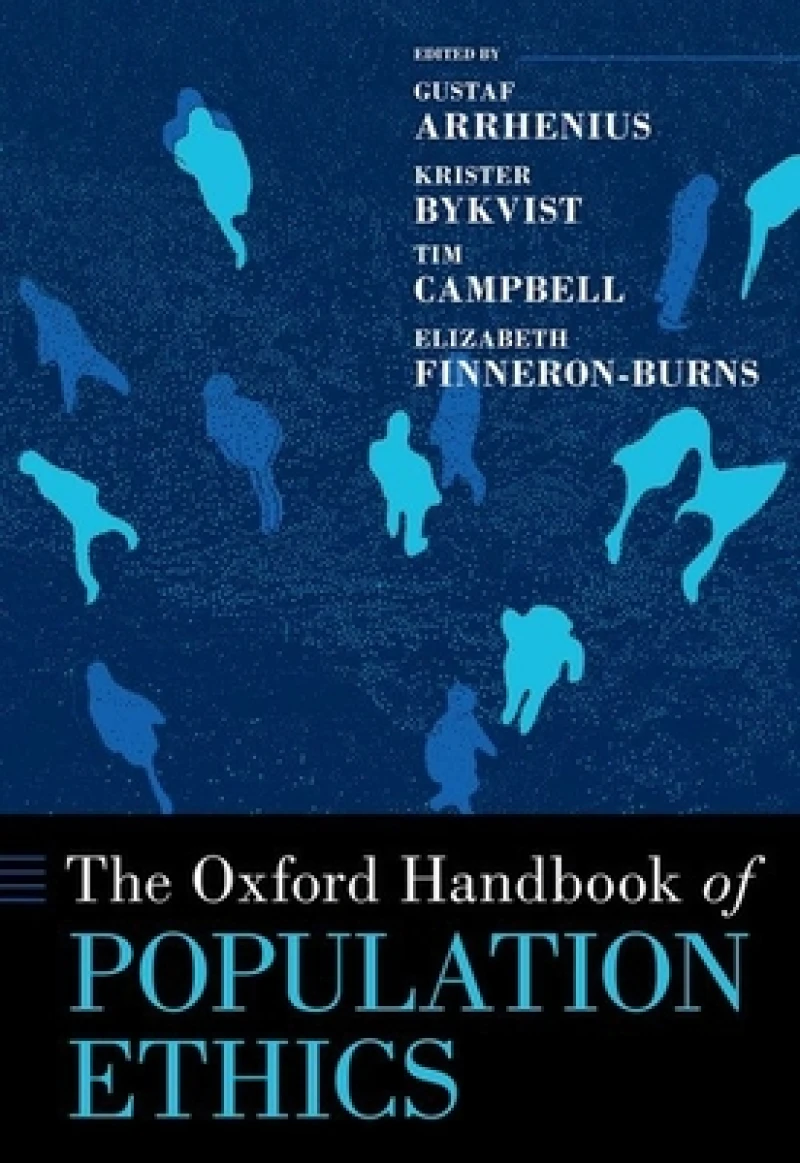
The Oxford Handbook of Population Ethics
Book Details
Format
Hardback or Cased Book
Book Series
Oxford Handbooks
ISBN-10
0190907681
ISBN-13
9780190907686
Publisher
Oxford University Press Inc
Imprint
Oxford University Press Inc
Country of Manufacture
GB
Country of Publication
GB
Publication Date
Jul 8th, 2022
Print length
648 Pages
Weight
1,356 grams
Dimensions
18.10 x 25.50 x 5.30 cms
Ksh 27,100.00
Manufactured on Demand
0 in stock
Delivery Location
Delivery fee: Select location
Secure
Quality
Fast
The Oxford Handbook of Population Ethics presents up-to-date theoretical analyses of various problems associated with the moral standing of future people and animals in current decision-making. The essays in this handbook shed light on the value of population change and the nature of our obligations to future generations. It brings together world-leading philosophers to introduce readers to some of the paradoxes of population ethics, challenge some fundamental assumptions that may be taken for granted in debates concerning the value of population change, and apply these problems and assumptions to real-world decisions.
The Oxford Handbook of Population Ethics presents up-to-date theoretical analyses of various problems associated with the moral standing of future people and animals in current decision-making. Future people pose an especially hard problem for our current decision-making, since their number and their identities are not fixed but depend on the choices the present generation makes. Do we make the world better by creating more people with good lives? What do we owe future generations in terms of justice? How should burdens and benefits be shared across generations so that justice prevails? These questions are philosophically difficult and important, but also directly relevant to many practical decisions and policies. Climate change policy provides an example, as the increasing global temperature will kill some people and prevent many others from ever existing. Many other policies also influence the size and make-up of future populations both directly and indirectly, for example those concerning family planning, child support, and prioritization in health-care. If we are to adequately assess these policies, we must be able to determine the value of differently sized populations. The essays in this handbook shed light on the value of population change and the nature of our obligations to future generations. It brings together world-leading philosophers to introduce readers to some of the paradoxes of population ethics, challenge some fundamental assumptions that may be taken for granted in the debate about the value of population change, and apply these problems and assumptions to real-world decisions.
Get The Oxford Handbook of Population Ethics by at the best price and quality guaranteed only at Werezi Africa's largest book ecommerce store. The book was published by Oxford University Press Inc and it has pages.

