
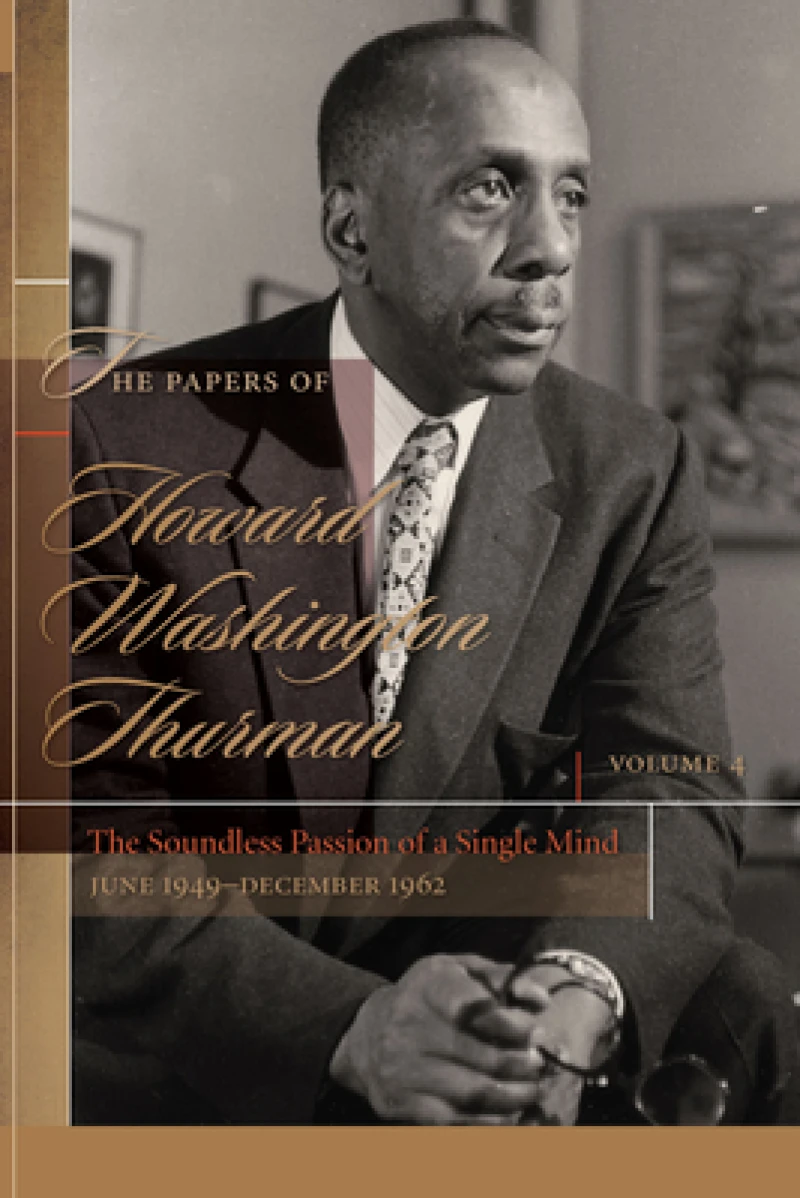
The Papers of Howard Washington Thurman, Volume 4 : The Soundless Passion of a Single Mind, June 1949–December 1962
Book Details
Format
Hardback or Cased Book
ISBN-10
1611178045
ISBN-13
9781611178043
Publisher
University of South Carolina Press
Imprint
University of South Carolina Press
Country of Manufacture
US
Country of Publication
GB
Publication Date
Dec 28th, 2017
Print length
440 Pages
Weight
736 grams
Dimensions
23.10 x 15.40 x 3.80 cms
Ksh 9,350.00
Werezi Extended Catalogue
0 in stock
Delivery Location
Delivery fee: Select location
Secure
Quality
Fast
The Papers of Howard Washington Thurman is a multivolume, chronologically arranged documentary edition spanning the long and productive career of the Reverend Howard Thurman, one of the most significant leaders in the intellectual and religious life of the United States in the mid–twentieth century. The first to lead a delegation of African Americans to meet with Mahatma Gandhi in 1936, Thurman later became one of the principal architects of the modern nonviolent civil rights movement and a key mentor to Dr. Martin Luther King, Jr., and others involved in the movement. In 1953 Life magazine named Thurman one of the twelve greatest preachers of the century.
In volume 4 (June 1949–December 1962), Walter Earl Fluker covers Thurman’s final years at the Fellowship Church in San Francisco and his years as the dean of Marsh Chapel at Boston University and professor of spiritual resources at Boston University School of Theology. In taking on these positions, Thurman became the first African American dean of chapel at a majority-white college or university in the United States and the first tenured African American professor at Boston University School of Theology.
During his time at Boston University, Thurman tirelessly advocated for dialogue and understanding between faiths. Although charged with serving the university’s Protestant community, Thurman preferred to pursue a broader ministry. He sought to use his status as dean of the chapel to bring people together, always acting out of a profound belief that no religion holds a monopoly on truth or holiness. Thurman sought to make Marsh Chapel a place where Protestants, Catholics, Jews, and all others could learn from each other as they shared a universal search for meaning and purpose, each drawing strength and insights from his or her own religious tradition. He sought to make the university a place where people who had found safety and comfort in “keeping to their own” would come to understand that intellectual, spiritual, and ethical progress can take place only when barriers between groups are broken down. His vision of interreligious cooperation is as timely as ever, as people of many faiths work to build bridges of understanding and hope to carry us through the challenges of the twenty-first century.
In volume 4 (June 1949–December 1962), Walter Earl Fluker covers Thurman’s final years at the Fellowship Church in San Francisco and his years as the dean of Marsh Chapel at Boston University and professor of spiritual resources at Boston University School of Theology. In taking on these positions, Thurman became the first African American dean of chapel at a majority-white college or university in the United States and the first tenured African American professor at Boston University School of Theology.
During his time at Boston University, Thurman tirelessly advocated for dialogue and understanding between faiths. Although charged with serving the university’s Protestant community, Thurman preferred to pursue a broader ministry. He sought to use his status as dean of the chapel to bring people together, always acting out of a profound belief that no religion holds a monopoly on truth or holiness. Thurman sought to make Marsh Chapel a place where Protestants, Catholics, Jews, and all others could learn from each other as they shared a universal search for meaning and purpose, each drawing strength and insights from his or her own religious tradition. He sought to make the university a place where people who had found safety and comfort in “keeping to their own” would come to understand that intellectual, spiritual, and ethical progress can take place only when barriers between groups are broken down. His vision of interreligious cooperation is as timely as ever, as people of many faiths work to build bridges of understanding and hope to carry us through the challenges of the twenty-first century.
Get The Papers of Howard Washington Thurman, Volume 4 by at the best price and quality guaranteed only at Werezi Africa's largest book ecommerce store. The book was published by University of South Carolina Press and it has pages.

