
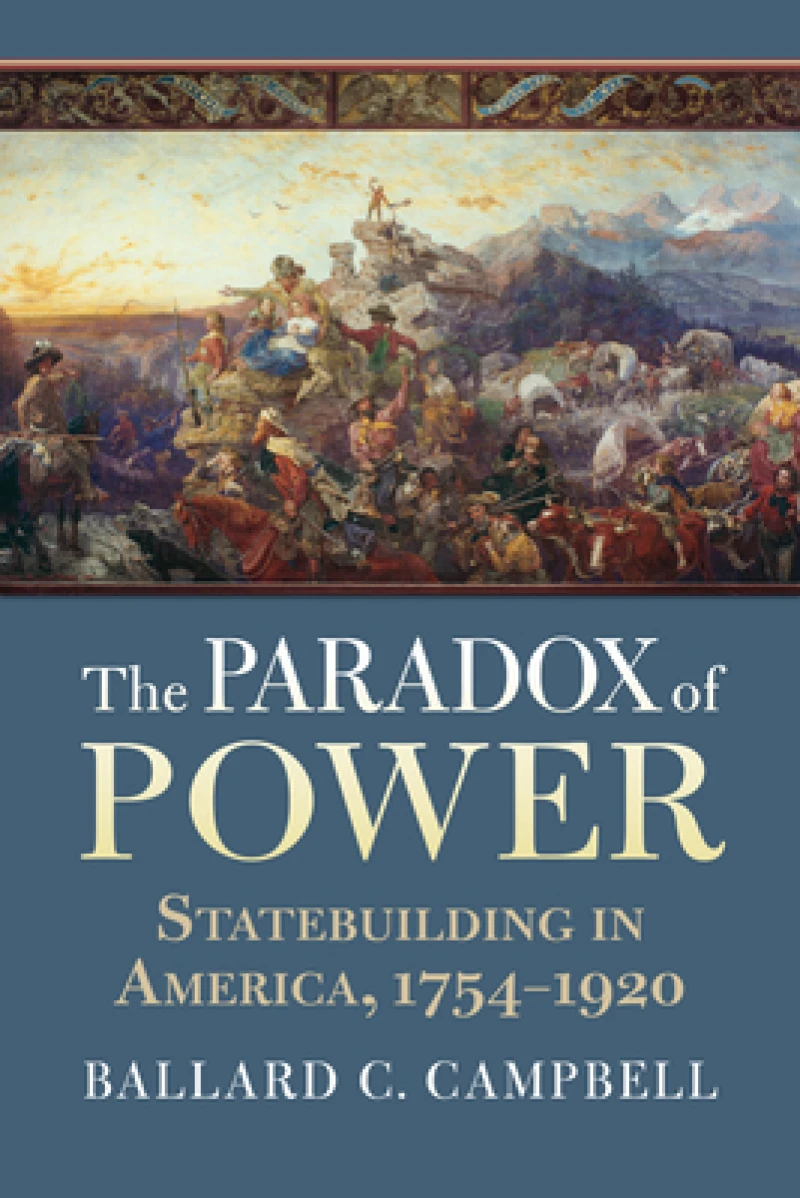
The Paradox of Power : Statebuilding in America, 1754-1920
Book Details
Format
Paperback / Softback
ISBN-10
0700632565
ISBN-13
9780700632565
Publisher
University Press of Kansas
Imprint
University Press of Kansas
Country of Manufacture
GB
Country of Publication
GB
Publication Date
Nov 22nd, 2021
Print length
392 Pages
Weight
532 grams
Dimensions
24.00 x 33.40 x 2.30 cms
Ksh 5,200.00
Werezi Extended Catalogue
0 in stock
Delivery Location
Delivery fee: Select location
Secure
Quality
Fast
Argues that the state in America is rooted in the country's colonial experience and analyses the evidence for this by reviewing governance at all levels of the American polity - local, state, and national - between 1754 and 1920.
America’s political history is a fascinating paradox. The United States was born with the admonition that government posed a threat to liberty. This apprehension became the foundation of the nation’s civic ideology and was embedded in its constitutional structure. Yet the history of public life in the United States records the emergence of an enormously powerful national state during the nineteenth century. By 1920, the United States was arguably the most powerful country in the world. In The Paradox of Power Ballard C. Campbell traces this evolution and offers an explanation for how it occurred.
Campbell argues that the state in America is rooted in the country’s colonial experience and analyzes the evidence for this by reviewing governance at all levels of the American polity—local, state, and national—between 1754 and 1920. Campbell poses five critical causal references: war, geography, economic development, culture and identity (including citizenship and nationalism), and political capacity. This last factor embraces law and constitutionalism, administration, and political parties. The Paradox of Power makes a major contribution to our understanding of American statebuilding by emphasizing the fundamental role of local and state governance to successfully integrate urban, state, and national governments to create a composite and comprehensive portrait of how governance evolved in America.
Campbell argues that the state in America is rooted in the country’s colonial experience and analyzes the evidence for this by reviewing governance at all levels of the American polity—local, state, and national—between 1754 and 1920. Campbell poses five critical causal references: war, geography, economic development, culture and identity (including citizenship and nationalism), and political capacity. This last factor embraces law and constitutionalism, administration, and political parties. The Paradox of Power makes a major contribution to our understanding of American statebuilding by emphasizing the fundamental role of local and state governance to successfully integrate urban, state, and national governments to create a composite and comprehensive portrait of how governance evolved in America.
Get The Paradox of Power by at the best price and quality guaranteed only at Werezi Africa's largest book ecommerce store. The book was published by University Press of Kansas and it has pages.

