
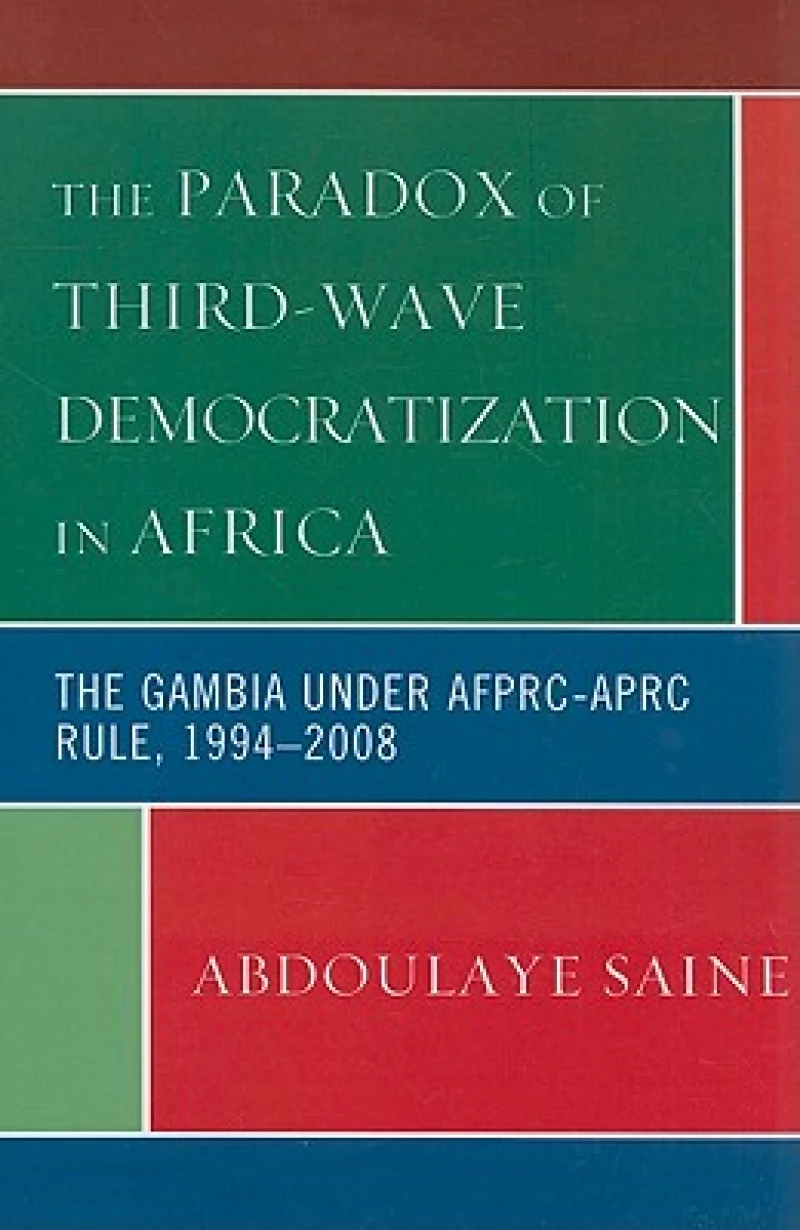
The Paradox of Third-Wave Democratization in Africa : The Gambia under AFPRC-APRC Rule, 1994-2008
Book Details
Format
Paperback / Softback
ISBN-10
0739129228
ISBN-13
9780739129227
Publisher
Bloomsbury Publishing Plc
Imprint
Lexington Books
Country of Manufacture
GB
Country of Publication
GB
Publication Date
Feb 19th, 2010
Print length
198 Pages
Weight
306 grams
Dimensions
22.80 x 15.40 x 1.50 cms
Product Classification:
Political structures: democracyDevelopment economics & emerging economiesPolitical economy
Ksh 9,750.00
Manufactured on Demand
0 in stock
Delivery Location
Delivery fee: Select location
Secure
Quality
Fast
This book is about the dilemma(s) of 'third-wave' 'democratization' in Africa. It teases out the general proposition that while the market is a necessary ingredient for development, it is not by itself a sufficient condition for prosperity_the state's role, policy framework, and leadership also matter. Using a counter-example, the book contends that in a poor governance environment, gross human rights violations result in poor economic performance and failure by repressive governments to provide basic needs for the poor in society. While this study is concerned primarily with The Gambia, it nonetheless has a lot to say about Zimbabwe, Zambia, Kenya, Nigeria, Ghana, Senegal, and other countries in the continent caught in the paralysis of externally driven political and economic transitions and globalization. Locating countries undergoing liberalization and democratization within the global economy_as well as their peripheral status within it_is important, as patterns of contemporary globalization are highly asymmetrical and often associated with a democratic deficit. Consequently, some groups, classes, and states enjoy numerous political and economic freedoms foreign to the vast majority of humanity, which lives in oppressive living conditions. The Paradox of Third-Wave Democratization in Africa is also a comprehensive account of the historical, political, and economic events since the onset of military and quasi-military rule in this West African mini-state of 1.5 million, once the longest surviving functioning democracy in Africa. Predictably, the book is about former President Dawda Jawara as much as it is about soldier-turned-president Yahya Jammeh, who in the last fourteen years has dominated the country's political and economic landscape. In the end, the book posits that various attempts to improve living standards of ordinary Gambians and Africans by client regimes using foisted conventional market-driven economic models alone are not likely to succeed until they are predicated on a basic-needs economic strategy and organically spawned political structures. Finally, the book highlights transnational political and economic ties Diaspora Gambians have established with The Gambia and their attempts to both shape and nudge politics in the second republic in a more democratic direction.
This book is about the dilemma(s) of ''third-wave'' ''democratization'' in Africa. It teases out the general proposition that while the market is a necessary ingredient for development, it is not by itself a sufficient condition for prosperity_the state''s role, policy framework, and leadership also matter. Using a counter-example, the book contends that in a poor governance environment, gross human rights violations result in poor economic performance and failure by repressive governments to provide basic needs for the poor in society. While this study is concerned primarily with The Gambia, it nonetheless has a lot to say about Zimbabwe, Zambia, Kenya, Nigeria, Ghana, Senegal, and other countries in the continent caught in the paralysis of externally driven political and economic transitions and globalization. Locating countries undergoing liberalization and democratization within the global economy_as well as their peripheral status within it_is important, as patterns of contemporary globalization are highly asymmetrical and often associated with a democratic deficit. Consequently, some groups, classes, and states enjoy numerous political and economic freedoms foreign to the vast majority of humanity, which lives in oppressive living conditions. The Paradox of Third-Wave Democratization in Africa is also a comprehensive account of the historical, political, and economic events since the onset of military and quasi-military rule in this West African mini-state of 1.5 million, once the longest surviving functioning democracy in Africa. Predictably, the book is about former President Dawda Jawara as much as it is about soldier-turned-president Yahya Jammeh, who in the last fourteen years has dominated the country''s political and economic landscape. In the end, the book posits that various attempts to improve living standards of ordinary Gambians and Africans by client regimes using foisted conventional market-driven economic models alone are not likely to succeed until they are predicated on a basic-needs economic strategy and organically spawned political structures. Finally, the book highlights transnational political and economic ties Diaspora Gambians have established with The Gambia and their attempts to both shape and nudge politics in the second republic in a more democratic direction.
Get The Paradox of Third-Wave Democratization in Africa by at the best price and quality guaranteed only at Werezi Africa's largest book ecommerce store. The book was published by Bloomsbury Publishing Plc and it has pages.

