
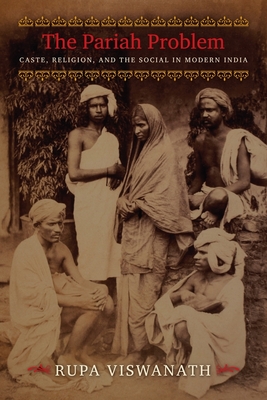
The Pariah Problem : Caste, Religion, and the Social in Modern India
Book Details
Format
Hardback
Book Series
Cultures of History
ISBN-10
0231163061
ISBN-13
9780231163064
Publisher
Columbia University Press
Imprint
Columbia University Press
Country of Manufacture
US
Country of Publication
GB
Publication Date
Jul 8th, 2014
Print length
416 Pages
Weight
776 grams
Dimensions
15.60 x 23.40 x 3.00 cms
Product Classification:
Hindu life & practiceSocial classes
KSh 11,150.00
Currently unavailable
0 in stock
Delivery Location
Delivery fee: Select location
Secure
Quality
Fast
Once known as "Pariahs," Dalits are primarily descendants of unfree agrarian laborers. They belong to India's most subordinated castes, face overwhelming poverty and discrimination, and provoke public anxiety. Drawing on a wealth of previously untapped sources, this book follows the conception and evolution of the "Pariah Problem" in public consciousness in the 1890s. It shows how high-caste landlords, state officials, and well-intentioned missionaries conceived of Dalit oppression, and effectively foreclosed the emergence of substantive solutions to the "Problem"-with consequences that continue to be felt today. Rupa Viswanath begins with a description of the everyday lives of Dalit laborers in the 1890s and highlights the systematic efforts made by the state and Indian elites to protect Indian slavery from public scrutiny. Protestant missionaries were the first non-Dalits to draw attention to their plight. The missionaries' vision of the Pariahs' suffering as being a result of Hindu religious prejudice, however, obscured the fact that the entire agrarian political-economic system depended on unfree Pariah labor. Both the Indian public and colonial officials came to share a view compatible with missionary explanations, which meant all subsequent welfare efforts directed at Dalits focused on religious and social transformation rather than on structural reform. Methodologically, theoretically, and empirically, this book breaks new ground to demonstrate how events in the early decades of state-sponsored welfare directed at Dalits laid the groundwork for the present day, where the postcolonial state and well-meaning social and religious reformers continue to downplay Dalits' landlessness, violent suppression, and political subordination.
Get The Pariah Problem by Rupa Viswanath at the best price and quality guaranteed only at Werezi Africa's largest book ecommerce store. The book was published by Columbia University Press and it has 416 pages.
Customers Who Bought This Also Bought

Thinking in Asana
KSh 5,400.00

Sweetening and Intensification
KSh 17,100.00

Hinduism
KSh 6,100.00

Hindu Ecological Liberation Theology
KSh 3,950.00

On Meaning and Mantras
KSh 7,100.00

Immortal Love
KSh 2,200.00

Hindu Customs and their Origins
KSh 6,250.00

Guru & Disciple Book
KSh 2,700.00

Authenticity, Legitimacy and the Transglobal Yoga Industry
KSh 8,650.00

Shiva
KSh 6,650.00

Hinduism
KSh 1,800.00

Breathtaking Revelations
KSh 3,800.00
