
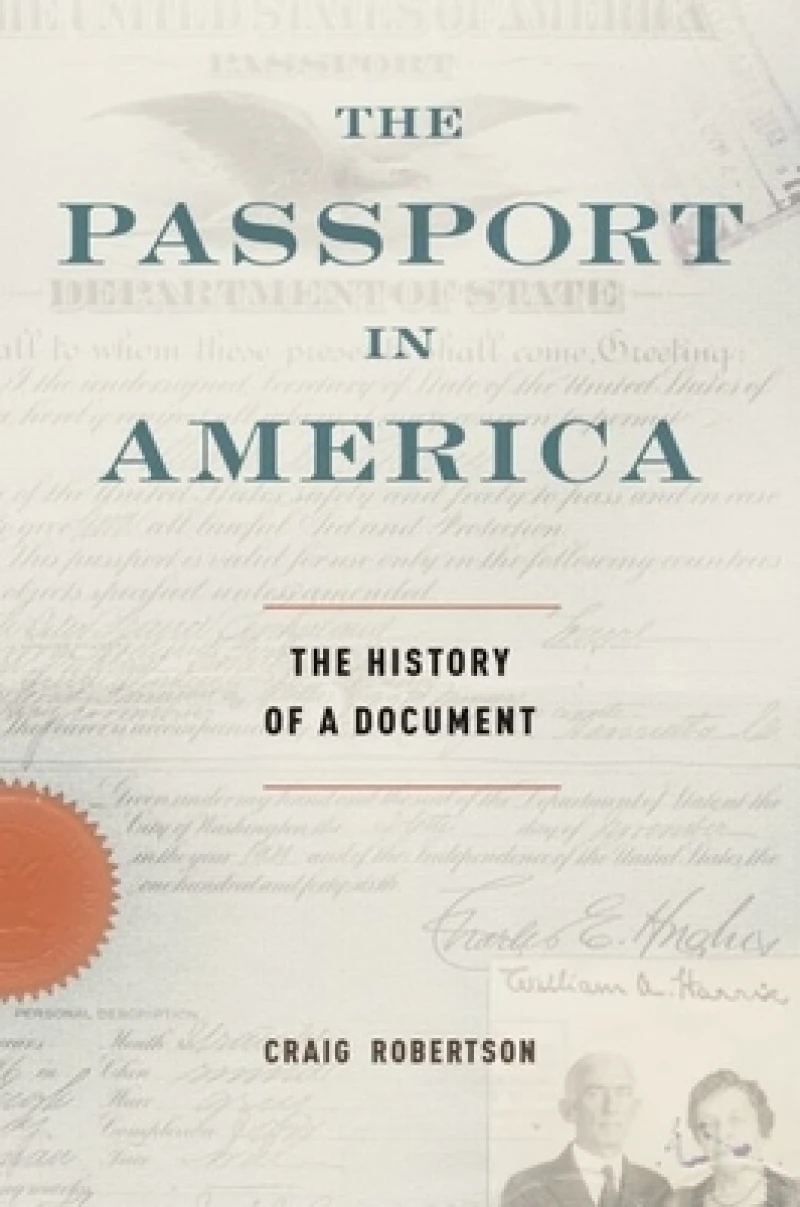
The Passport in America : The History of a Document
Book Details
Format
Hardback or Cased Book
ISBN-10
0199733422
ISBN-13
9780199733422
Publisher
Oxford University Press Inc
Imprint
Oxford University Press Inc
Country of Manufacture
US
Country of Publication
GB
Publication Date
Jul 29th, 2010
Print length
352 Pages
Weight
640 grams
Dimensions
24.30 x 16.60 x 2.80 cms
Ksh 9,050.00
Manufactured on Demand
0 in stock
Delivery Location
Delivery fee: Select location
Secure
Quality
Fast
How the passport developed as a document speaks to migration studies, diplomatic and legal history, and, more generally, to those interested in the history and development of surveillance technologies. Craig Robertson explains how Americans learned to document an identity, who can establish such an identity, and to what purpose such an identity can be put.
In today''s world of constant identification checks, it''s difficult to recall that there was ever a time when "proof of identity" was not a part of everyday life. And as anyone knows who has ever lost a passport, or let one expire on the eve of international travel, the passport has become an indispensable document. But how and why did this form of identification take on such a crucial role? In the first history of the passport in the United States, Craig Robertson offers an illuminating account of how this document, above all others, came to be considered a reliable answer to the question: who are you? Historically, the passport originated as an official letter of introduction addressed to foreign governments on behalf of American travelers, but as Robertson shows, it became entangled in contemporary negotiations over citizenship and other forms of identity documentation. Prior to World War I, passports were not required to cross American borders, and while some people struggled to understand how a passport could accurately identify a person, others took advantage of this new document to advance claims for citizenship. From the strategic use of passport applications by freed slaves and a campaign to allow married women to get passports in their maiden names, to the "passport nuisance" of the 1920s and the contested addition of photographs and other identification technologies on the passport, Robertson sheds new light on issues of individual and national identity in modern U.S. history. In this age of heightened security, especially at international borders, Robertson''s The Passport in America provides anyone interested in questions of identification and surveillance with a richly detailed, and often surprising, history of this uniquely important document.
Get The Passport in America by at the best price and quality guaranteed only at Werezi Africa's largest book ecommerce store. The book was published by Oxford University Press Inc and it has pages.

