
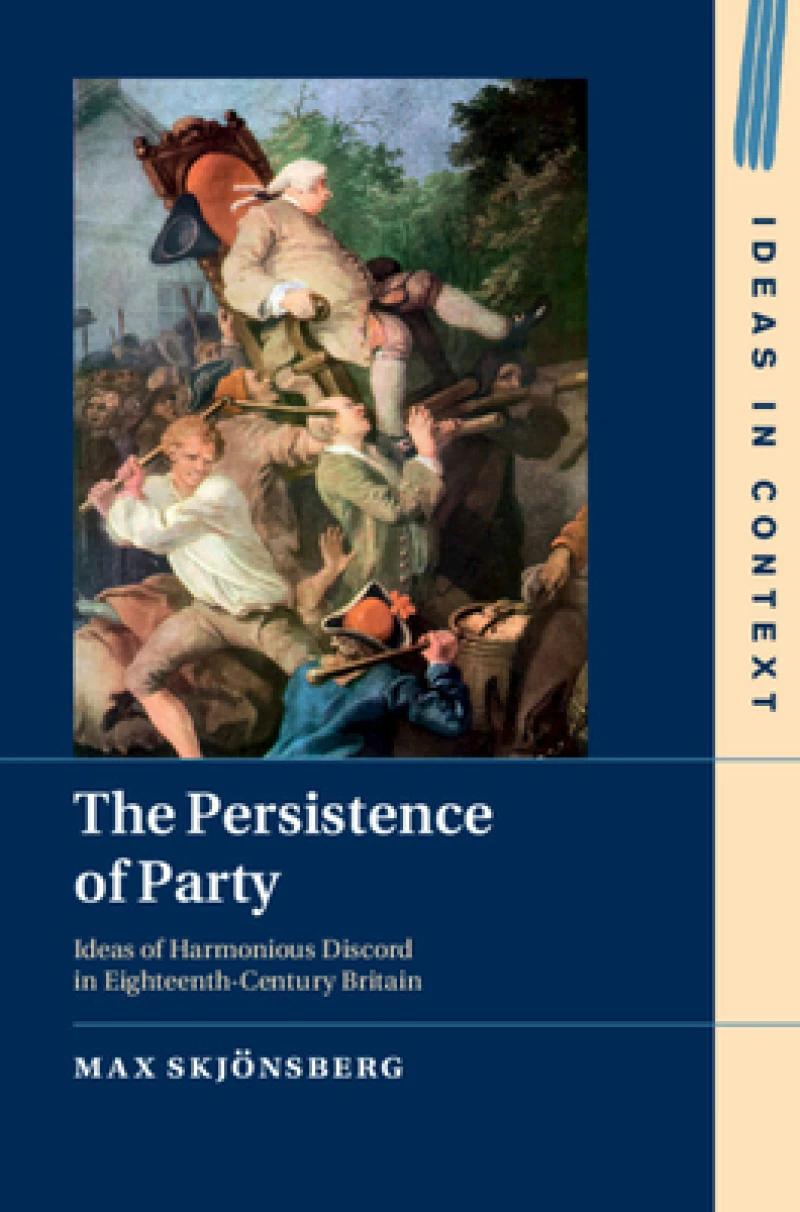
The Persistence of Party : Ideas of Harmonious Discord in Eighteenth-Century Britain
Book Details
Format
Hardback or Cased Book
Book Series
Ideas in Context
ISBN-10
1108841635
ISBN-13
9781108841634
Publisher
Cambridge University Press
Imprint
Cambridge University Press
Country of Manufacture
GB
Country of Publication
GB
Publication Date
Jan 28th, 2021
Print length
350 Pages
Weight
706 grams
Dimensions
15.90 x 23.50 x 3.00 cms
Product Classification:
European historySocial & political philosophyPolitical science & theoryPolitical parties
Ksh 15,650.00
Manufactured on Demand
0 in stock
Delivery Location
Delivery fee: Select location
Secure
Quality
Fast
This fundamental re-evaluation of the origins and importance of the idea of 'party' in British political thought and politics in the eighteenth century draws on the writings of Rapin, Bolingbroke, David Hume, John Brown and Edmund Burke to demonstrate that attitudes to party were more complex and penetrating than previously thought.
Political parties are taken for granted today, but how was the idea of party viewed in the eighteenth century, when core components of modern, representative politics were trialled? From Bolingbroke to Burke, political thinkers regarded party as a fundamental concept of politics, especially in the parliamentary system of Great Britain. The paradox of party was best formulated by David Hume: while parties often threatened the total dissolution of the government, they were also the source of life and vigour in modern politics. In the eighteenth century, party was usually understood as a set of flexible and evolving principles, associated with names and traditions, which categorised and managed political actors, voters, and commentators. Max Skjönsberg thus demonstrates that the idea of party as ideological unity is not purely a nineteenth- or twentieth-century phenomenon but can be traced to the eighteenth century.
Get The Persistence of Party by at the best price and quality guaranteed only at Werezi Africa's largest book ecommerce store. The book was published by Cambridge University Press and it has pages.

