
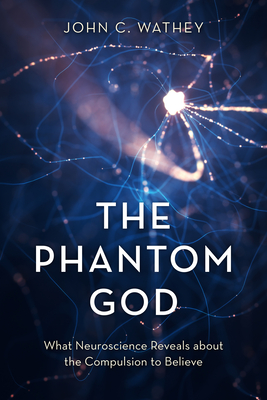
The Phantom God : What Neuroscience Reveals about the Compulsion to Believe
Book Details
Delivery Location
Delivery fee: Select location
Does neuroscience have anything to say about religious belief or the existence of God? Some have tried to answer this question, but, in doing so, most have strayed from the scientific method. In The Phantom God, computational biologist and neuroscientist John C. Wathey, Ph.D., tackles this problem head-on, exploring religious feelings not as the direct perception by the brain of some supernatural realm, nor as the pathological misfiring of neurons, but as a natural consequence of how our brains are wired. Unlike other neurobiological studies of religion and spirituality, The Phantom God treats mysticism not as something uniquely human and possibly supernatural in origin, but as a completely natural phenomenon that has behavioral and evolutionary roots that can be traced far back into our vertebrate ancestry. Grounded in evolutionary and behavioral biology, this highly original and compelling book takes the reader on a journey through the neural circuitry of crying, innate knowledge, reinforcement learning, emotional bonding, embodiment, interpersonal perception, and the ineffable feeling of certainty that characterizes faith. Wathey argues that the feeling of God’s presence is spawned by innate neural circuitry, similar to the mechanism that compels an infant to cry out for its mother. In an adult, this circuitry can be activated under conditions that mimic the extreme desperation and helplessness of infancy, generating the compelling illusion of the presence of a loving, powerful, and all-knowing savior. When seen from this perspective, the illusion also appears remarkably like one that has long been familiar to neurologists: the phantom limb of the amputee, spawned by the expectation of the patient’s brain that the missing limb should still be there. Including a primer on the basic concepts and terminology of neuroscience, The Phantom God details the neural mechanisms behind the illusions and emotions of spiritual experience. |
Get The Phantom God by John C. Wathey at the best price and quality guaranteed only at Werezi Africa's largest book ecommerce store. The book was published by Prometheus Books and it has 304 pages.
Customers Who Bought This Also Bought
Return of the God Hypothesis
KSh 4,500.00

Ethics for the Coming Storm
KSh 4,250.00

You Are the Universe
KSh 2,700.00

Ethics for the Coming Storm
KSh 17,300.00

The Metaverse and Religion
KSh 21,600.00

The Metaverse and Religion
KSh 9,900.00

Recent Themes in the History of Science and Religion
KSh 3,250.00

Deus in Machina
KSh 5,600.00

In the Beginning...God or Dirt?
KSh 2,000.00
Science and the Doctrine of Creation
KSh 4,150.00

Ecotheology in the Humanities
KSh 9,900.00

Against Methodology in Science and Religion
KSh 30,950.00
