
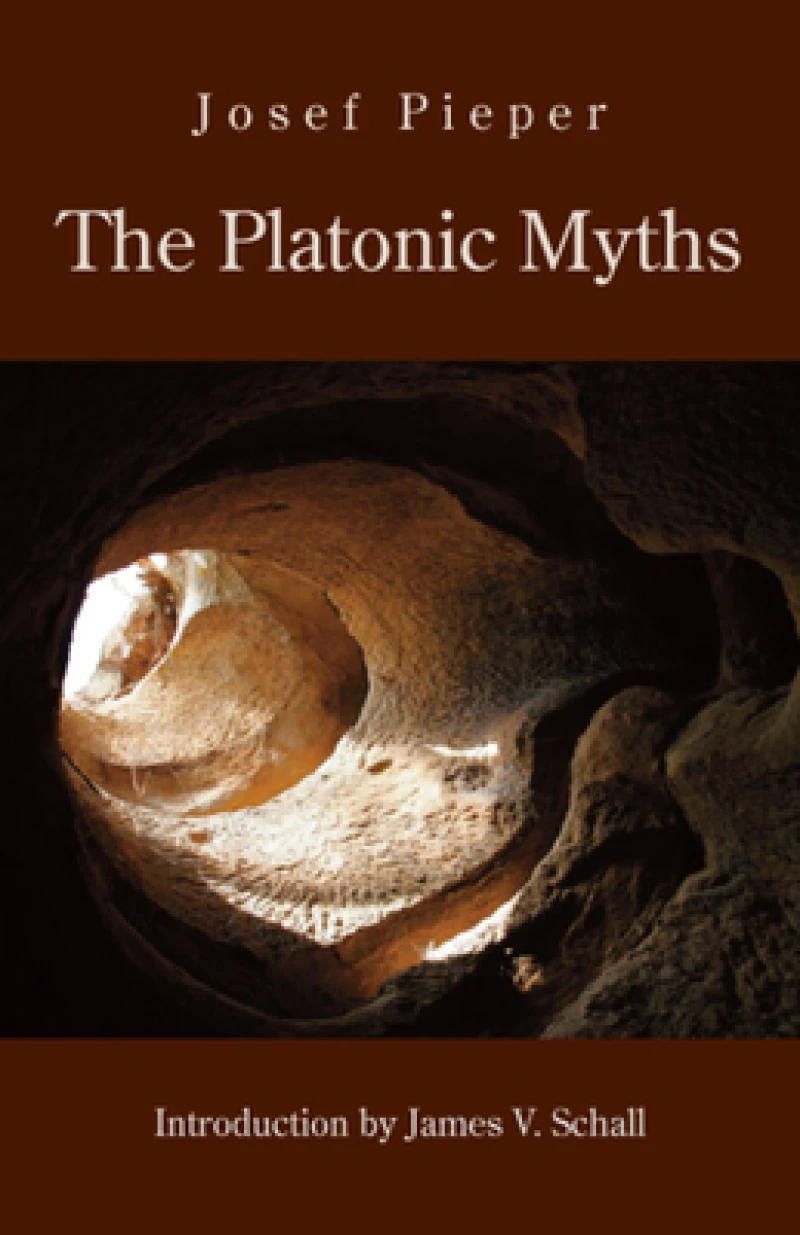
The Platonic Myths
Book Details
Format
Hardback or Cased Book
ISBN-10
1587316366
ISBN-13
9781587316364
Publisher
St Augustine's Press
Imprint
St Augustine's Press
Country of Manufacture
GB
Country of Publication
GB
Publication Date
Mar 30th, 2011
Print length
96 Pages
Weight
238 grams
Dimensions
22.80 x 14.30 x 1.10 cms
Product Classification:
Western philosophy: Ancient, to c 500Philosophy of religion
Ksh 3,000.00
Werezi Extended Catalogue
0 in stock
Delivery Location
Delivery fee: Select location
Secure
Quality
Fast
Josef Pieper’s The Platonic Myths is the work of a scholar and philosopher whose search for the level of truth contained in the myths is carried out with a series of careful distinctions between the kinds of myths told by Plato. In the Platonic stories Plato crystallizes mythical fragments from the mere stories which contain them, and in the genuine Platonic myths he purifies the proper mythical elements, freeing them of the non-mythical elements which tend to obscure them. In examining the ‘accepted’ scholarly interpretations of the myths, Pieper succeeds in establishing the case for a truth, found particularly in the eschatological myths, that is not reducible to the rational truth normally sought by philosophers. While it is not purely rational truth, it is not inferior. It is different. It stems from tradition, which reaches back to the ultimate beginnings of man’s existence – back into our pre-history and to events of which, naturally, we have no experience. The only access we have to this truth is through ‘hearing’ (ex akoés), which is not dependent on mere ‘hearsay,’ but which, in Pieper’s interpretation, reflects the handing on, in stories, of what the gods first communicated to man about the creation of the world and about the afterlife. These truths are to be found – long before the New Testament (or even the Old Testament) – in the myths of a variety of civilizations and give evidence of an extraordinary consensus: that there was a creating hand, that primeval man incurred guilt in the eyes of the gods; that he could be saved; that there is an afterlife in which man is rewarded or punished; that he can undergo a kind of purgatory for lesser offenses; and that in the afterlife he can dwell with the gods. What is the basis for accepting such truth as is contained in the myths? No purely rational argument will suffice. What man cannot experience himself he either tends to reject or, if he accepts it, he does so on the authority of another – ex akoés. Even before – or even without – Christian revelation, men have based their lives on a conviction, for instance, that there is an afterlife. They have this conviction not from experience or from some rational philosophical argument. They have it on the basis of ‘belief.’ With the coming of Christian revelation, the logos, or word, of the myth is seen – to the believer – to be the Logos of the New Testament. But even here the ‘believer’ can depend neither on purely rational argument nor on satisfactorily verifiable fact. He has only – belief.
Get The Platonic Myths by at the best price and quality guaranteed only at Werezi Africa's largest book ecommerce store. The book was published by St Augustine's Press and it has pages.

