
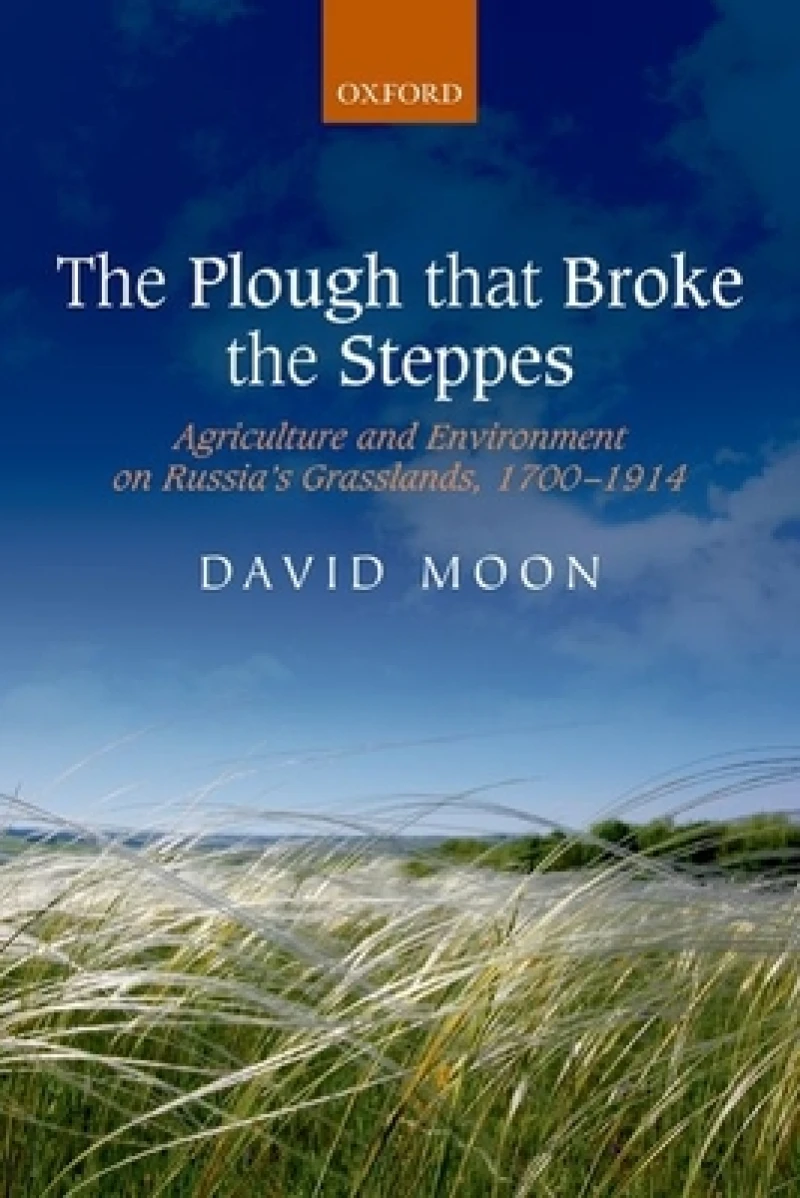
The Plough that Broke the Steppes : Agriculture and Environment on Russia's Grasslands, 1700-1914
by
David Moon
Book Details
Format
Paperback / Softback
Book Series
Oxford Studies in Modern European History
ISBN-10
0198722877
ISBN-13
9780198722878
Publisher
Oxford University Press
Imprint
Oxford University Press
Country of Manufacture
GB
Country of Publication
GB
Publication Date
Oct 9th, 2014
Print length
340 Pages
Weight
512 grams
Dimensions
23.40 x 15.80 x 1.90 cms
Product Classification:
18th century, c 1700 to c 179919th century, c 1800 to c 1899European historyModern history to 20th century: c 1700 to c 1900Social & cultural historyHistorical geographyHistoryEuropean historySocial and cultural historyHistorical geographyThe environmentPollution & threats to the environmentPollution and threats to the environment
Ksh 11,000.00
Manufactured on Demand
Delivery in 14 days
1 copies in stock
Delivery Location
Delivery fee: Select location
Delivery in 14 days
Secure
Quality
Fast
This is the first environmental history of Russia's steppes. David Moon focuses on the settlement of migrants from central Russia, Ukraine, and central Europe, and analyses how naturalists and scientists came to understand the steppe environment, including the origins of the fertile black earth.
This is the first environmental history of Russia''s steppes. From the early-eighteenth century, settlers moved to the semi-arid but fertile grasslands from wetter, forested regions in central and northern Russia and Ukraine, and from central Europe. By the late-nineteenth century, they had turned the steppes into the bread basket of the Russian Empire and parts of Europe. But there was another side to this story. The steppe region was hit by recurring droughts, winds from the east whipped up dust storms, the fertile black earth suffered severe erosion, crops failed, and in the worst years there was famine. David Moon analyses how naturalists and scientists came to understand the steppe environment, including the origins of the fertile black earth. He also analyses how scientists tried to understand environmental change, including climate change. Farmers, and the scientists who advised them, tried different ways to deal with the recurring droughts: planting trees, irrigation, and cultivating the soil. More sustainable, however, were techniques of cultivation to retain scarce moisture in the soil. Among the pioneers were Mennonite settlers. Such approaches aimed to work with the environment, rather than trying to change it by planting trees or supplying more water artificially. The story is similar to the Dust Bowl on the Great Plains of the USA, which share a similar environment and environmental history. David Moon places the story of the steppes in the wider context of the environmental history of European colonialism around the globe.
Get The Plough that Broke the Steppes by at the best price and quality guaranteed only at Werezi Africa's largest book ecommerce store. The book was published by Oxford University Press and it has pages.

