
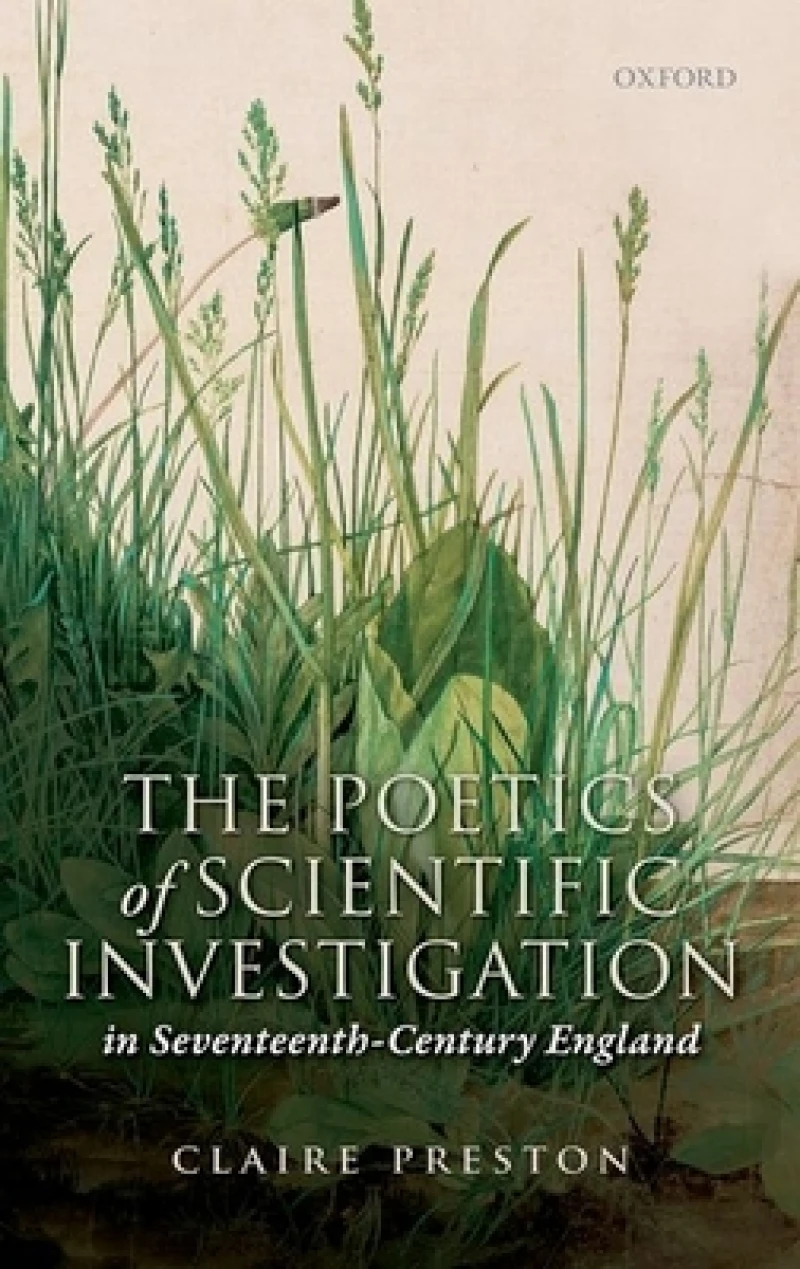
The Poetics of Scientific Investigation in Seventeenth-Century England
Book Details
Format
Hardback or Cased Book
ISBN-10
0198704801
ISBN-13
9780198704805
Publisher
Oxford University Press
Imprint
Oxford University Press
Country of Manufacture
GB
Country of Publication
GB
Publication Date
Dec 17th, 2015
Print length
310 Pages
Weight
494 grams
Dimensions
14.50 x 22.40 x 2.50 cms
Product Classification:
Literary studies: c 1500 to c 1800Early modern history: c 1450/1500 to c 1700History of science
Ksh 22,950.00
Manufactured on Demand
0 in stock
Delivery Location
Delivery fee: Select location
Secure
Quality
Fast
This study examines the way that scientists in the 16th and 17th centuries, who had not studied 'science' formally, used the tools of their literary education to formulate ideas about science and, at the same time, how the remarkableseventeenth-century scientific developments inspired non-scientific writers to make new fictions of discovery.
The writing of science in the period 1580-1700 is artfully, diffidently, carelessly, boldly, and above all self-consciously literary. The Poetics of Scientific Investigation in Seventeenth-Century English Literature considers the literary textures of science writing -- its rhetorical figures, neologisms, its uses of parody, romance, and various kinds of verse. The experimental and social practices of science are examined through literary representations of the laboratory, of collaborative retirement, of virtual, epistolary conversation, and of an imagined paradise of investigative fellowship and learning. Claire Preston argues that the rhetorical, generic, and formal qualities of scientific writing are also the intellectual processes of early-modern science itself. How was science to be written in this period? That question, which piqued natural philosophers who were searching for apt conventions of scientific language and report, was initially resolved by the humanist rhetorical and generic skills in which they were already highly trained. At the same time non-scientific writers, enthralled by the developments of science, were quick to deploy ideas and images from astronomy, optics, chemistry, biology, and medical practices. Practising scientists and inspired laymen or quasi-scientists produced new, adjusted, or hybrid literary forms, often collapsing the distinction between the factual and the imaginative, between the rhetorically ornate and the plain. Early-modern science and its literary vehicles are frequently indistinguishable, scientific practice and scientific expression mutually involved. Among the major writers discussed are Montaigne, Bacon, Donne, Browne, Lovelace, Boyle, Sprat, Oldenburg, Evelyn, Cowley, and Dryden.
Get The Poetics of Scientific Investigation in Seventeenth-Century England by at the best price and quality guaranteed only at Werezi Africa's largest book ecommerce store. The book was published by Oxford University Press and it has pages.

