
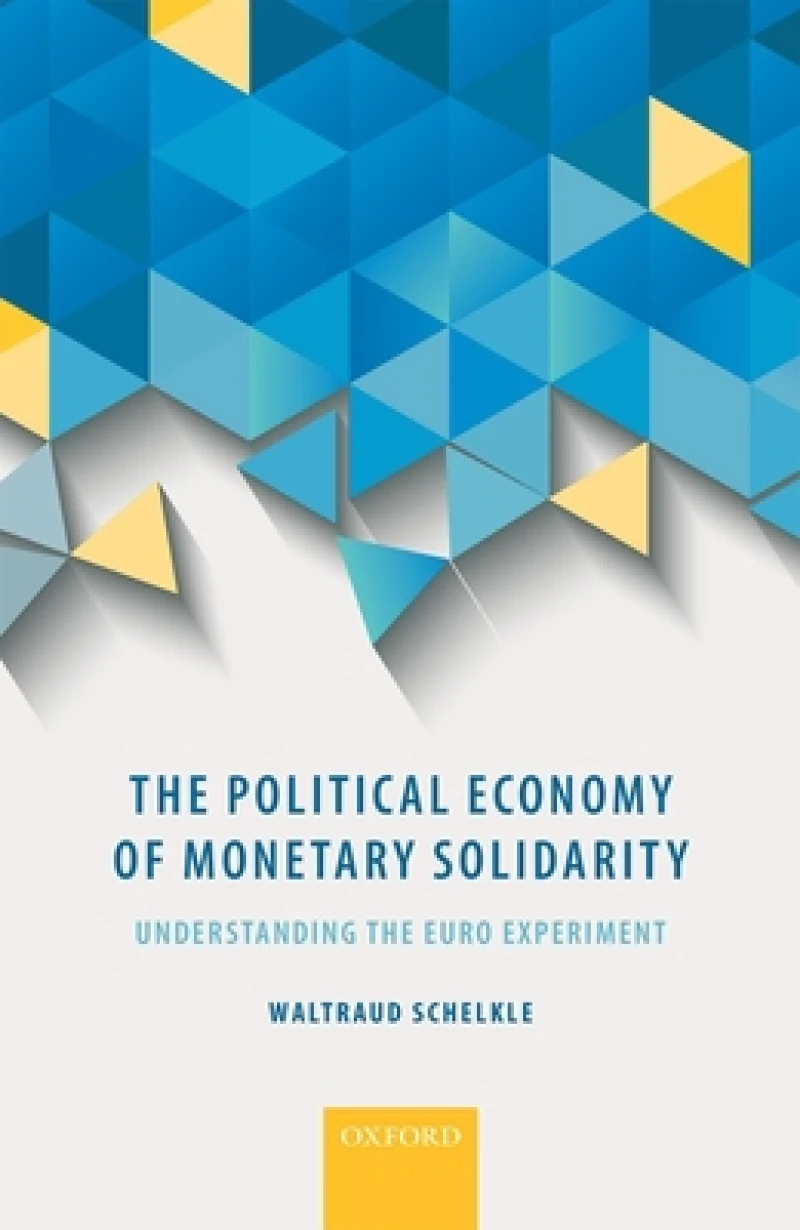
The Political Economy of Monetary Solidarity : Understanding the Euro Experiment
Book Details
Format
Hardback or Cased Book
ISBN-10
0198717938
ISBN-13
9780198717935
Publisher
Oxford University Press
Imprint
Oxford University Press
Country of Manufacture
GB
Country of Publication
GB
Publication Date
Apr 20th, 2017
Print length
388 Pages
Weight
694 grams
Dimensions
16.20 x 24.30 x 2.80 cms
Product Classification:
Monetary economicsPolitical economy
Ksh 18,800.00
Manufactured on Demand
0 in stock
Delivery Location
Delivery fee: Select location
Secure
Quality
Fast
This volume provides a political economy approach to examine how the euro experiment came about and was sustained despite a severe crisis.
Creating the European monetary union between diverse and unequal nation states is arguably one of the biggest social experiments in history. This book offers an explanation of how the euro experiment came about and was sustained despite a severe crisis, and provides a comparison with the monetary-financial history of the US.The euro experiment can be understood as risk-sharing through a currency that is issued by a supranational central bank. A single currency shares liquidity risks by creating larger markets for all financial assets. A single monetary policy responds to business cycles in the currency area as a whole rather than managing the path of one dominant economy. Mechanisms of risk-sharing become institutions of monetary solidarity if they are consciously maintained, but they will periodically face opposition in member states. This book argues that diversity of membership is not an economic obstacle to the success of the euro, as diversity increases the potential gains from risk sharing. But political cooperation is needed to realize this potential, and such cooperation is up against collective action problems which become more intractable as the parties become more diverse. Hence, risk-sharing usually comes about as a collective by-product of national incentives. This political-economic tension can explain why the gains from risk-sharing are not more fully exploited, both in the euro area and in the US dollar area. This approach to monetary integration is based on the theory of collective action when hierarchy is not available as a solution to inter-state cooperation. The theory originates with Keohane and Ostrom (1995) and it is applied in this book, taking into account the latest research on the inherent instability of financial market integration.
Get The Political Economy of Monetary Solidarity by at the best price and quality guaranteed only at Werezi Africa's largest book ecommerce store. The book was published by Oxford University Press and it has pages.

