
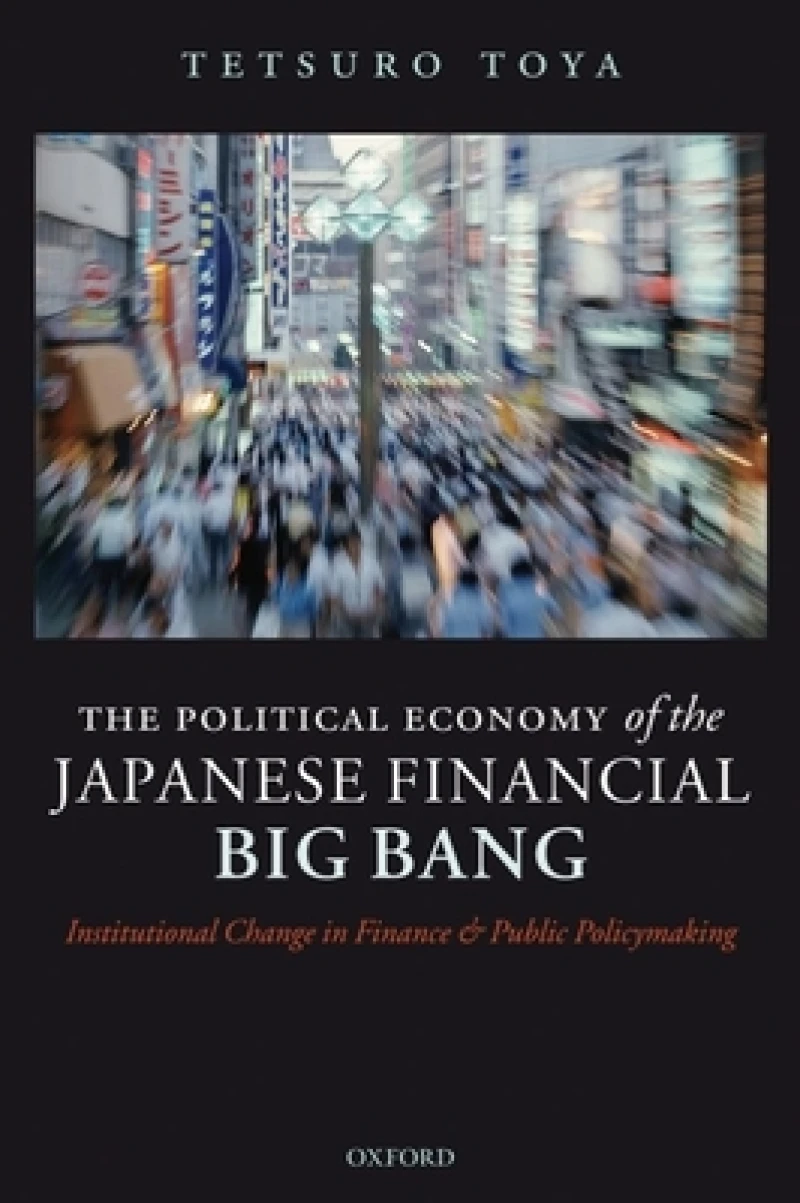
The Political Economy of the Japanese Financial Big Bang : Institutional Change in Finance and Public Policymaking
by
Tetsuro Toya
Book Details
Format
Hardback or Cased Book
ISBN-10
0199292396
ISBN-13
9780199292394
Publisher
Oxford University Press
Imprint
Oxford University Press
Country of Manufacture
GB
Country of Publication
GB
Publication Date
Apr 6th, 2006
Print length
208 Pages
Weight
646 grams
Dimensions
24.30 x 16.60 x 2.40 cms
Ksh 11,550.00
Manufactured on Demand
0 in stock
Delivery Location
Delivery fee: Select location
Secure
Quality
Fast
This book emphasizes change over continuity in Japanese policymaking. It argues that Japan's Big Bang financial reforms emerged out of a policymaking process that deviated radically from past patterns. Performance failures, scandals and fluidity in party politics led the Ministry of Finance to promote reforms that otherwise would have been opposed.
In 1996, the Japanese government introduced a policy package initiating massive deregulation and liberalization in the nation''s financial sector, referred to as Japan''s financial ''Big Bang.'' This book argues that the emergence of the Big Bang Initiative poses numerous challenges to conventional interpretations of Japanese politics and represents a clear case of institutional change in Japanese finance. Whereas many observers stress continuity in Japanese politics, this book argues that the emergence in the 1990s of performance failures and scandals attributed to the bureaucracy, as well as the increase in the likelihood of a change in government in this period, led policymaking patterns surrounding the Big Bang to differ radically from those dominating public policymaking in the past. These developments led to change in the nature of the alliance between the ruling Liberal Democratic Party (LDP) and the Ministry of Finance (MOF), to a shift in priorities within the MOF, and to a heightened role for the public in policymaking. The result was that the MOF, long perceived as ''entrenched'' and seeking to maximize tangible tokens of organizational power, became more than willing to launch the Big Bang, despite the fact that these reforms would strip the ministry of many of its regulatory tools and sever the ministry''s close ties with the financial sector. The book also argues that these new developments prevented financial industry actors from forestalling these reforms, as they had done in the past with other reforms similarly threatening the viability of weaker firms. The findings reveal that not only politicians, but also bureaucrats and interest groups, have reasons to pursue public support to enhance their respective political influence. Consequently, well-organized groups do not always prevail over the unorganized public.
Get The Political Economy of the Japanese Financial Big Bang by at the best price and quality guaranteed only at Werezi Africa's largest book ecommerce store. The book was published by Oxford University Press and it has pages.

