
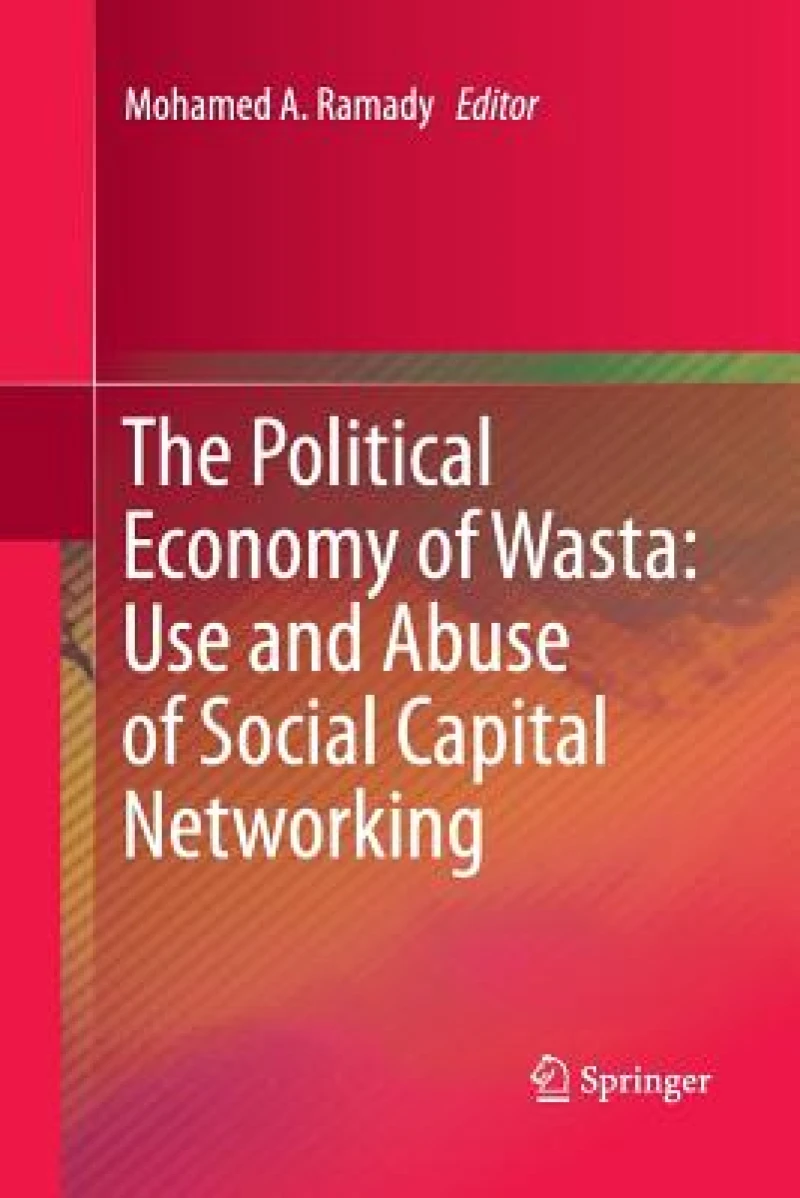
The Political Economy of Wasta: Use and Abuse of Social Capital Networking
Softcover reprint of the original 1st ed. 2016
Book Details
Format
Paperback / Softback
ISBN-10
3319369512
ISBN-13
9783319369518
Edition
Softcover reprint of the original 1st ed. 2016
Publisher
Springer International Publishing AG
Imprint
Springer International Publishing AG
Country of Manufacture
CH
Country of Publication
GB
Publication Date
Aug 23rd, 2016
Print length
204 Pages
Product Classification:
Economics
Ksh 16,200.00
Werezi Extended Catalogue
0 in stock
Delivery Location
Delivery fee: Select location
Secure
Quality
Fast
The term ‘wasta stems from the Arabic root for ‘middle’ or ‘medium’ and describes the phenomenon of using ‘connections’ to find job, government services or other favors to circumvent bureaucracy or bypass the system as a whole. The effects of ‘wasta’ may be both positive or negative, and is not a phenomenon that is particular to the Arab or Muslim world, but also to many other cultures and regions of the world, with similar concepts popularly known as ubuntu, guanxi, harambee, naoberschop, or “old boy network” used in African, Chinese and European societies. By its very nature ‘wasta’ is an area of grey or even black information, and, like corruption to which it is most often associated, is hard to assess although country corruption perception indexes attempt to provide a quantifiable basis. In the final analysis such ratings are based on perceptions of corruption, and this perception may vary strongly depending on different societal structures and cultural modes, whether these are extended family systems, tribal, clans or more atomized societies where relationships are essentially transactional and rule based. In a western perspective where ‘wasta’ may be considered as a form of corruption, in other societies it may be perceived as something ‘natural’ and not criminal, and using one's ‘wasta’ in tribal societies to help clan members is seen as a duty. The difference stems from the 'innocent ' use of ‘wasta’ to make introductions, as opposed to its abuse in placing unqualified persons in positions .The volume brings together academics and professional experts to examine a range of multi-faceted social, economic and political issues raised by the use and abuse of social networking, covering various topics like:‘wasta’ interpersonal connections in family and business ties,The relationship between inequality-adjusted human development and corruption perception indexes in the Gulf region,‘wasta’ and business networking, assessing the economic cost of ‘wasta’,‘wasta’ and its impact on quality oriented education reform and the perceptions of young people,The use of ‘wasta’ to overcome socio-cultural barriers for women and men The volume also offers insights into social relations and ethics, and how the use of ‘wasta’ contradicts with common held religious principles, along with some country studies on Islamic principles and the use of ‘wasta’. Mohamed Ramady is a Visiting Associate Professor, King Fahd University of Petroleum and Minerals, Saudi Arabia.
Get The Political Economy of Wasta: Use and Abuse of Social Capital Networking by at the best price and quality guaranteed only at Werezi Africa's largest book ecommerce store. The book was published by Springer International Publishing AG and it has pages.

