
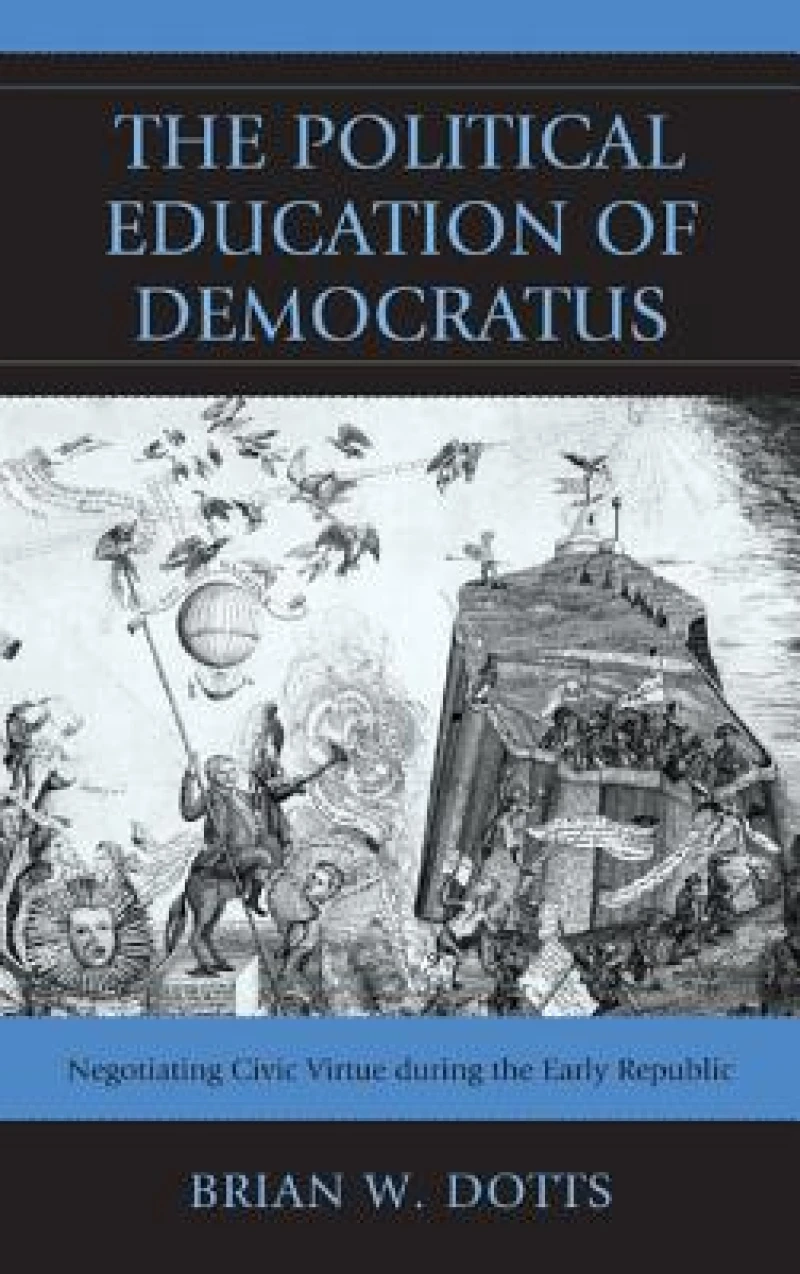
The Political Education of Democratus : Negotiating Civic Virtue during the Early Republic
Book Details
Format
Hardback or Cased Book
ISBN-10
0739167200
ISBN-13
9780739167205
Publisher
Bloomsbury Publishing Plc
Imprint
Lexington Books
Country of Manufacture
GB
Country of Publication
GB
Publication Date
Mar 15th, 2012
Print length
276 Pages
Weight
585 grams
Dimensions
23.80 x 16.60 x 2.40 cms
Ksh 21,350.00
Manufactured on Demand
0 in stock
Delivery Location
Delivery fee: Select location
Secure
Quality
Fast
Thomas Paine described the American Revolution as educative. However, as examined in Brian W. Dotts’ The Political Education of Democratus: Negotiating Civic Virtue during the Early Republic, what was learned was neither standardized nor uniform. The Federalists, for example, viewed the revolution as a triumph for representative government, but one intended to maintain many remnants of the colonial experience. Anti-Federalists saw a confirmation of representative government at the state and local levels and considered the revolution as authenticating Montesquieu’s theories of republicanism. A third, more extreme interpretation of the revolution emerged from radical democrats who viewed the revolution as a fundamental break with mainstream thinking about republicanism. These radicals helped turn conventional understanding of representative government upside down, taking part in unconventional or extra-constitutional action during their negotiation of citizen virtue during the 1790s. Members of each of the societies took an active part in trying to fulfill their expectations for the new American experiment by contributing to the democratization of republicanism.The Political Education of Democratus illuminates the emergence of democratic thought from Aristotle and Machiavelli to more contemporary influences from the British Commonwealth tradition. Dotts examines how the radical ideas of Algernon Sidney, James Harrington, John Milton, Joseph Priestley, and Thomas Paine develop a rich tapestry among the democratic society’s correspondence, constitutions, resolutions, and early media. Individual members of the Democratic-Republican Societies, including Philip Freneau, Robert Coram, Benjamin Bache, George Logan, and others energized these radical interpretations of civic republican thought and plunged headlong into party politics, educating early Americans about the practical potentialities of democratic action.
Thomas Paine described the American Revolution as educative. However, as examined in Brian W. Dotts’ The Political Education of Democratus: Negotiating Civic Virtue during the Early Republic, what was learned was neither standardized nor uniform. The Federalists, for example, viewed the revolution as a triumph for representative government, but one intended to maintain many remnants of the colonial experience. Anti-Federalists saw a confirmation of representative government at the state and local levels and considered the revolution as authenticating Montesquieu’s theories of republicanism. A third, more extreme interpretation of the revolution emerged from radical democrats who viewed the revolution as a fundamental break with mainstream thinking about republicanism. These radicals helped turn conventional understanding of representative government upside down, taking part in unconventional or extra-constitutional action during their negotiation of citizen virtue during the 1790s. Members of each of the societies took an active part in trying to fulfill their expectations for the new American experiment by contributing to the democratization of republicanism. The Political Education of Democratus illuminates the emergence of democratic thought from Aristotle and Machiavelli to more contemporary influences from the British Commonwealth tradition. Dotts examines how the radical ideas of Algernon Sidney, James Harrington, John Milton, Joseph Priestley, and Thomas Paine develop a rich tapestry among the democratic society’s correspondence, constitutions, resolutions, and early media. Individual members of the Democratic-Republican Societies, including Philip Freneau, Robert Coram, Benjamin Bache, George Logan, and others energized these radical interpretations of civic republican thought and plunged headlong into party politics, educating early Americans about the practical potentialities of democratic action.
Get The Political Education of Democratus by at the best price and quality guaranteed only at Werezi Africa's largest book ecommerce store. The book was published by Bloomsbury Publishing Plc and it has pages.

