
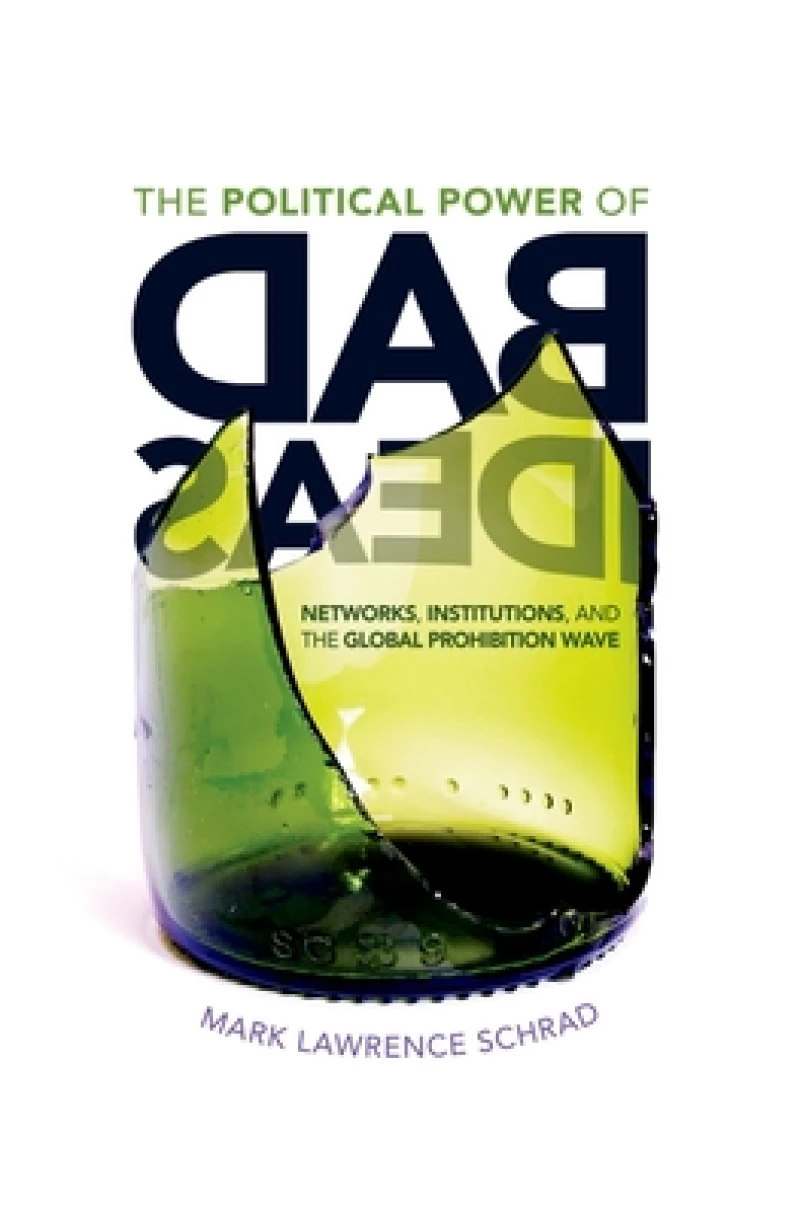
The Political Power of Bad Ideas : Networks, Institutions, and the Global Prohibition Wave
Book Details
Format
Hardback or Cased Book
ISBN-10
0195391233
ISBN-13
9780195391237
Publisher
Oxford University Press Inc
Imprint
Oxford University Press Inc
Country of Manufacture
US
Country of Publication
GB
Publication Date
Apr 8th, 2010
Print length
320 Pages
Weight
598 grams
Dimensions
24.20 x 15.70 x 2.70 cms
Product Classification:
European historyHistory of the AmericasComparative politicsInternational relations
Ksh 7,900.00
Manufactured on Demand
0 in stock
Delivery Location
Delivery fee: Select location
Secure
Quality
Fast
In The Political Power of Bad Ideas, Mark Lawrence Schrad looks on an oddity of modern history--the broad diffusion of temperance legislation in the early twentieth century--to make a broad argument about how bad policy ideas achieve international success. His root question is this: how could a bad policy idea--one that was widely recognized by experts as bad before adoption, and which ultimately failed everywhere--come to be adopted throughout the world? To answer it, Schrad uses an institutionalist approach, and focuses in particular on the US, Russia/USSR (ironically, one of the only laws the Soviets kept on the books was the Tsarist temperance law), and Sweden. Conventional wisdom, based largely on the U.S. experience, blames evangelical zealots for the success of the temperance movement. Yet as Schrad shows, "prohibition was adopted in ten countries other than the United States, as well as countless colonial possessions-all with similar disastrous consequences, and in every case followed by repeal." Schrad focuses on the dynamic interaction of ideas and political institutions, tracing the process through which concepts of dubious merit gain momentum and achieve credibility as they wend their way through institutional structures. And while he focuses on one episode, his historical argument applies far more broadly, and even can tell us a great deal about how today's policy failures, such as reasons proffered for invading Iraq, became acceptable.
In The Political Power of Bad Ideas, Mark Lawrence Schrad looks on an oddity of modern history--the broad diffusion of temperance legislation in the early twentieth century--to make a broad argument about how bad policy ideas achieve international success. His root question is this: how could a bad policy idea--one that was widely recognized by experts as bad before adoption, and which ultimately failed everywhere--come to be adopted throughout the world? To answer it, Schrad uses an institutionalist approach, and focuses in particular on the US, Russia/USSR (ironically, one of the only laws the Soviets kept on the books was the Tsarist temperance law), and Sweden. Conventional wisdom, based largely on the U.S. experience, blames evangelical zealots for the success of the temperance movement. Yet as Schrad shows, "prohibition was adopted in ten countries other than the United States, as well as countless colonial possessions-all with similar disastrous consequences, and in every case followed by repeal." Schrad focuses on the dynamic interaction of ideas and political institutions, tracing the process through which concepts of dubious merit gain momentum and achieve credibility as they wend their way through institutional structures. And while he focuses on one episode, his historical argument applies far more broadly, and even can tell us a great deal about how today''s policy failures, such as reasons proffered for invading Iraq, became acceptable.
Get The Political Power of Bad Ideas by at the best price and quality guaranteed only at Werezi Africa's largest book ecommerce store. The book was published by Oxford University Press Inc and it has pages.

