
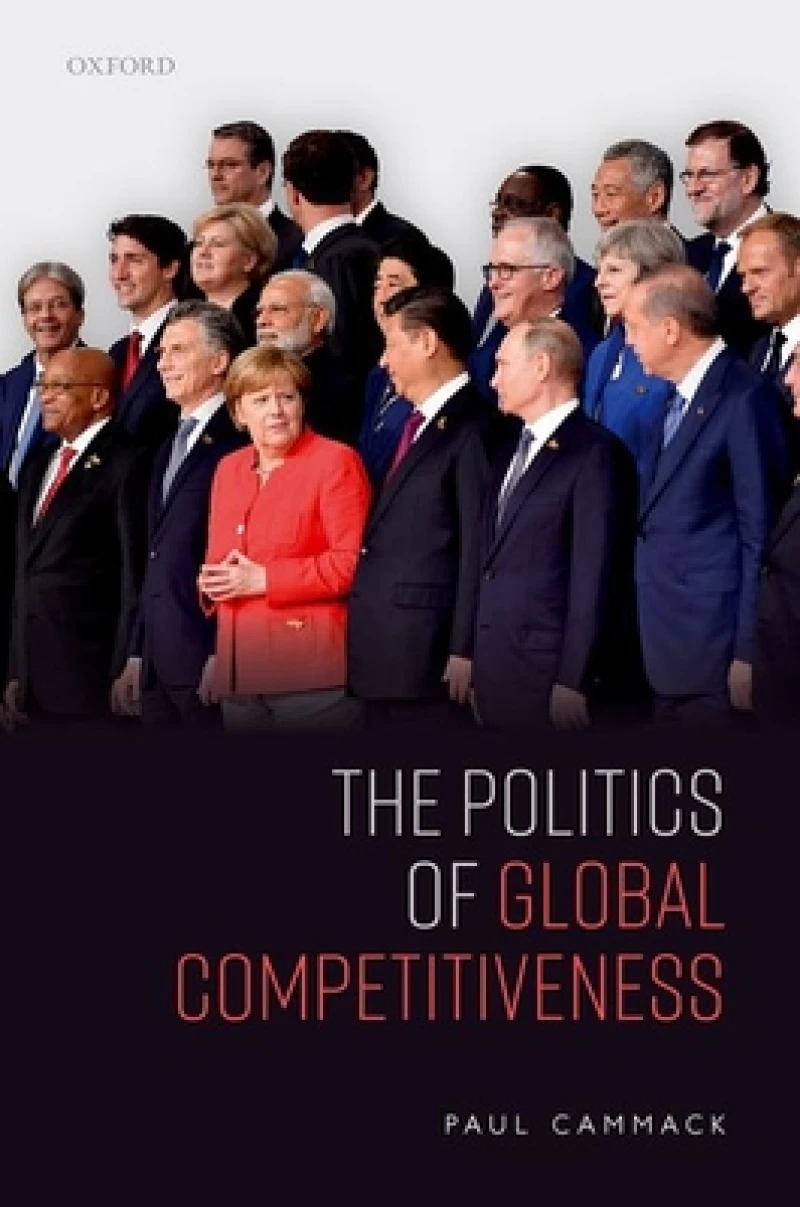
The Politics of Global Competitiveness
by
Paul Cammack
Book Details
Format
Hardback or Cased Book
ISBN-10
0192847864
ISBN-13
9780192847867
Publisher
Oxford University Press
Imprint
Oxford University Press
Country of Manufacture
GB
Country of Publication
GB
Publication Date
Feb 3rd, 2022
Print length
224 Pages
Weight
490 grams
Dimensions
16.50 x 24.10 x 2.20 cms
Ksh 18,050.00
Werezi Extended Catalogue
0 in stock
Delivery Location
Delivery fee: Select location
Secure
Quality
Fast
This book documents the recent developments of what Marx called the 'general law of social production', and the leading roles of the Organisation for Economic Cooperation and Development and the World Bank as advocates of a single global model of capitalist development.
Marx predicted in Capital (1867) that as capitalism became global, patterns of work would be transformed, and workers would need to develop versatility, flexibility, and mobility. This ''general law of social production'', as he called it, is now in evidence all around us, in global value chains, ''zero hours'' contracts, and contract work organised through digital platforms. It results from competition between capitalists, scientific and technological revolutions in production, and incessant advances in the division of labour as production processes are broken down into ever smaller steps. This book documents the leading roles of the Paris-based Organisation for Economic Cooperation and Development and the Washington-based World Bank as advocates of these developments. They do not, as generally supposed, simply represent the interests of the advanced economies or the ''West'' and their transnational corporations. They promote a single global model of capitalist development, without limits and on a genuinely global scale. It calls upon all states to ''adjust'' continually to the structural and social demands of competitiveness, which they see as essential to the global hegemony of capital over labour. The OECD and the World Bank propose policies that give girls and women equal access to education and paid work, reform welfare to ''make work pay'', introduce flexible labour contracts that make ''hiring and firing'' easier, focus education on skills that boost employability, and draw workers in the developing world from the ''informal'' sector into the formal sector, where they can be more productive. This is the politics of global competitiveness.
Get The Politics of Global Competitiveness by at the best price and quality guaranteed only at Werezi Africa's largest book ecommerce store. The book was published by Oxford University Press and it has pages.

