
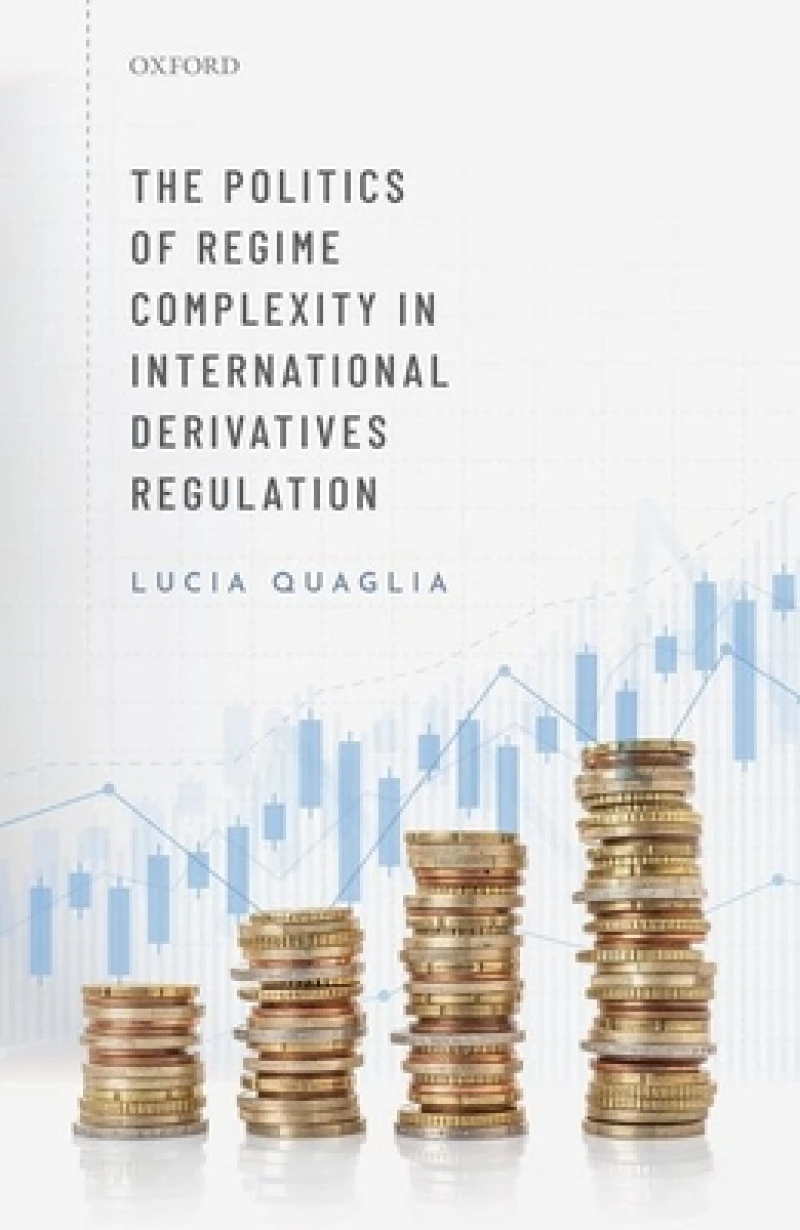
The Politics of Regime Complexity in International Derivatives Regulation
Book Details
Format
Hardback or Cased Book
ISBN-10
0198866070
ISBN-13
9780198866077
Publisher
Oxford University Press
Imprint
Oxford University Press
Country of Manufacture
GB
Country of Publication
GB
Publication Date
Nov 13th, 2020
Print length
256 Pages
Weight
514 grams
Dimensions
16.20 x 24.10 x 2.30 cms
Ksh 17,300.00
Werezi Extended Catalogue
0 in stock
Delivery Location
Delivery fee: Select location
Secure
Quality
Fast
This book examines the post-crisis international regulation of derivatives by bringing together the international relations literature on regime complexity and the international political economy literature on financial regulation.
This book provides the first comprehensive account of post-crisis international regulation of derivatives by bringing together the international relations literature on regime complexity and the international political economy literature on financial regulation. It addresses three questions: What factors drove international standard-setting on derivatives post-crisis? Why did international regime complexity emerge? And how was it managed and with what outcomes? This research innovatively combines a state-centric, a transgovernmental, and business-led explanations. It examines all the main sets of standards (or elemental regimes) concerning various aspects of derivatives markets, namely: trading, clearing, and reporting of derivatives; resilience, recovery and resolution of central counterparties; capital requirements for bank exposures to central counterparties and derivatives; margins for derivatives non-centrally cleared. It is argued that regime complexity in derivatives ensued from the multi-dimensionality and the interlinkages of the problems to tackle, especially given the fact that it was a new policy area without a focal international standard-setter. Despite these challenges, international cooperation resulted in relatively precise, stringent, and consistent rules, even though there was variation across standards. The main jurisdictions played an important role in managing regime complexity, but their effectiveness was constrained by limited domestic coordination. Networks of regulators gathered in international standard-setting bodies deployed a variety of formal and informal coordination tools to deal with regime complexity. The financial industry, at times, lobbied for less precise and stringent rules and engaged in ''venue shopping'', whereas, other times, it contributed to the quest for regulatory consistency.
Get The Politics of Regime Complexity in International Derivatives Regulation by at the best price and quality guaranteed only at Werezi Africa's largest book ecommerce store. The book was published by Oxford University Press and it has pages.

