
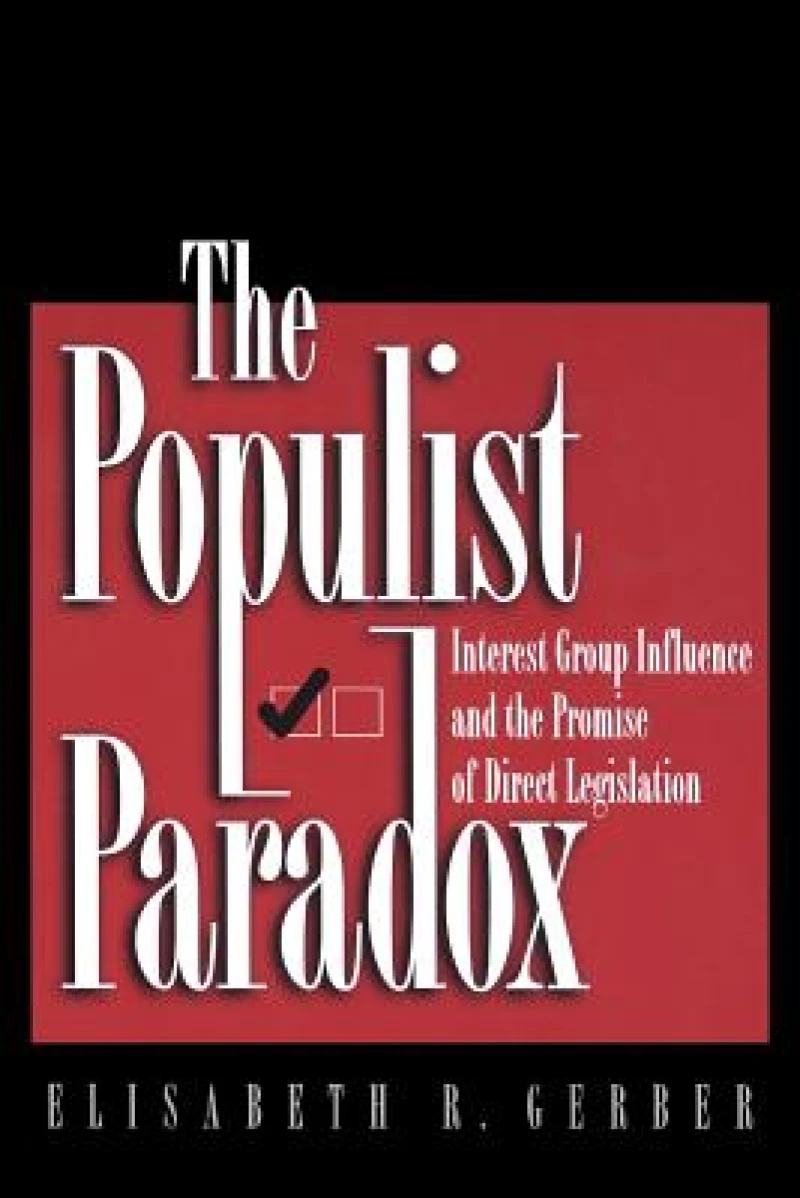
The Populist Paradox – Interest Group Influence and the Promise of Direct Legislation : Interest Group Influence and the Promise of Direct Legislation
Book Details
Format
Paperback / Softback
ISBN-10
0691002673
ISBN-13
9780691002675
Publisher
Princeton University Press
Imprint
Princeton University Press
Country of Manufacture
GB
Country of Publication
GB
Publication Date
Jul 21st, 1999
Print length
176 Pages
Weight
304 grams
Product Classification:
United States of America, USAPolitical science & theoryPolitical science and theoryElections & referendaElections and referenda / suffragePolitical control & freedomsPolitical control and freedomsPressure groups & lobbyingPressure groups, protest movements and non-violent action
Ksh 7,550.00
Werezi Extended Catalogue
0 in stock
Delivery Location
Delivery fee: Select location
Secure
Quality
Fast
A study of how money and interest group power actually affect direct legislation, this book reveals that big spending does not necessarily mean big influence. This book is a theoretical and empirical contribution to our understanding of the role of citizens and organized interests in the American legislative process.
Do small but wealthy interest groups influence referendums, ballot initiatives, and other forms of direct legislation at the expense of the broader public interest? Many observers argue that they do, often lamenting that direct legislation has, paradoxically, been captured by the very same wealthy interests whose power it was designed to curb. Elisabeth Gerber, however, challenges that argument. In this first systematic study of how money and interest group power actually affect direct legislation, she reveals that big spending does not necessarily mean big influence. Gerber bases her findings on extensive surveys of the activities and motivations of interest groups and on close examination of campaign finance records from 168 direct legislation campaigns in eight states. Her research confirms what such wealthy interests as the insurance industry, trial lawyer associations, and tobacco companies have learned by defeats at the ballot box: if citizens do not like a proposed new law, even an expensive, high-profile campaign will not make them change their mind. She demonstrates, however, that these economic interest groups have considerable success in using direct legislation to block initiatives that others are proposing and to exert pressure on politicians. By contrast, citizen interest groups with broad-based support and significant organizational resources have proven to be extremely effective in using direct legislation to pass new laws. Clearly written and argued, this is a major theoretical and empirical contribution to our understanding of the role of citizens and organized interests in the American legislative process.
Get The Populist Paradox – Interest Group Influence and the Promise of Direct Legislation by at the best price and quality guaranteed only at Werezi Africa's largest book ecommerce store. The book was published by Princeton University Press and it has pages.

