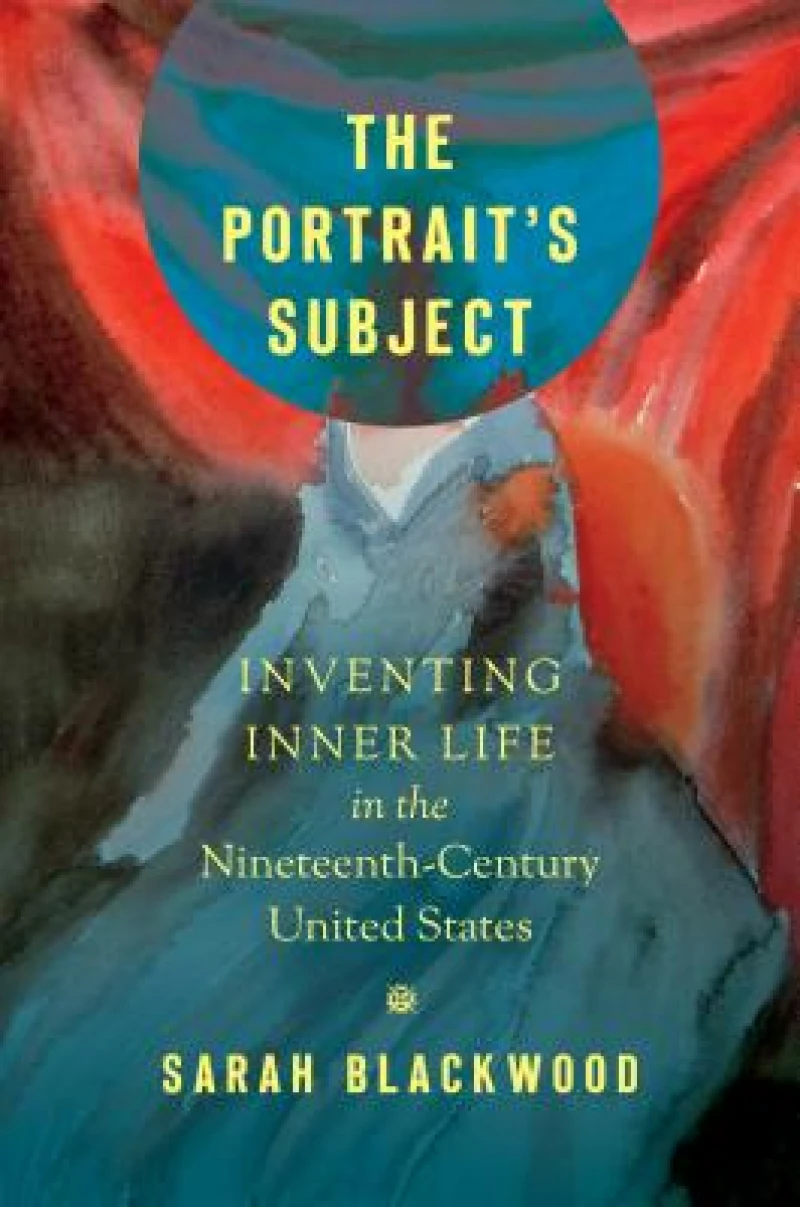
The Portrait''s Subject : Inventing Inner Life in the Nineteenth-Century United States
Book Details
Format
Hardback or Cased Book
Book Series
Studies in United States Culture
ISBN-10
1469652587
ISBN-13
9781469652580
Publisher
The University of North Carolina Press
Imprint
The University of North Carolina Press
Country of Manufacture
US
Country of Publication
GB
Publication Date
Dec 16th, 2019
Print length
216 Pages
Weight
500 grams
Dimensions
23.30 x 15.50 x 1.60 cms
Product Classification:
Literary studies: generalHistory of the AmericasHistory of the Americas
Ksh 15,100.00
Werezi Extended Catalogue
0 in stock
Delivery Location
Delivery fee: Select location
Secure
Quality
Fast
Between the invention of photography in 1839 and the end of the nineteenth century, portraiture became one of the most popular and common art forms in the United States. Sarah Blackwood tells a wide-ranging story about how images of human surfaces became understood as expressions of human depth during this era.
Between the invention of photography in 1839 and the end of the nineteenth century, portraiture became one of the most popular and common art forms in the United States. In The Portrait's Subject, Sarah Blackwood tells a wide-ranging story about how images of human surfaces became understood as expressions of human depth during this era. Combining visual theory, literary close reading, and in-depth archival research, Blackwood examines portraiture's changing symbolic and aesthetic practices, from daguerreotype to X-ray. Considering painting, photography, illustration, and other visual forms alongside literary and cultural representations of portrait making and viewing, Blackwood argues that portraiture was a provocative art form used by writers, artists, and early psychologists to imagine selfhood as hidden, deep, and in need of revelation, ideas that were then taken up by the developing discipline of psychology.
Blackwood reveals the underappreciated connections between portraiture's representations of the material human body and developing modern ideas about the human mind. It encouraged figures like Frederick Douglass, Nathaniel Hawthorne, Thomas Eakins, Harriet Jacobs, and Henry James to reimagine how we might see inner life, offering a rich array of metaphors and aesthetic approaches that ultimately reconfigured the relationship between body and mind, exterior and interior. In the end, Blackwood shows how nineteenth-century psychological discourse developed as much through aesthetic fabulation as through scientific experimentation.
Blackwood reveals the underappreciated connections between portraiture's representations of the material human body and developing modern ideas about the human mind. It encouraged figures like Frederick Douglass, Nathaniel Hawthorne, Thomas Eakins, Harriet Jacobs, and Henry James to reimagine how we might see inner life, offering a rich array of metaphors and aesthetic approaches that ultimately reconfigured the relationship between body and mind, exterior and interior. In the end, Blackwood shows how nineteenth-century psychological discourse developed as much through aesthetic fabulation as through scientific experimentation.
Get The Portrait''s Subject by at the best price and quality guaranteed only at Werezi Africa's largest book ecommerce store. The book was published by The University of North Carolina Press and it has pages.