

The Postcolonial Intellectual : Ngugi wa Thiong’o in Context
Book Details
Format
Hardback
ISBN-10
1409409007
ISBN-13
9781409409007
Publisher
Taylor & Francis Ltd
Imprint
Routledge
Country of Manufacture
GB
Country of Publication
GB
Publication Date
Mar 27th, 2015
Print length
248 Pages
Weight
600 grams
Dimensions
16.40 x 24.20 x 2.00 cms
KSh 30,950.00
Currently unavailable
0 in stock
Delivery Location
Delivery fee: Select location
Secure
Quality
Fast
Addressing a neglected dimension in postcolonial scholarship, the author examines the figure of the postcolonial intellectual as repeatedly evoked by the fabled troika of Said, Spivak, and Bhabha and by members of the pan-African diaspora such as Cabral, Fanon, and James.
Addressing a neglected dimension in postcolonial scholarship, Oliver Lovesey examines the figure of the postcolonial intellectual as repeatedly evoked by the fabled troika of Said, Spivak, and Bhabha and by members of the pan-African diaspora such as Cabral, Fanon, and James. Lovesey’s primary focus is NgÅ©gÄ© wa Thiong’o, one of the greatest writers of post-independence Africa. NgÅ©gÄ© continues to be a vibrant cultural agitator and innovator who, in contrast to many other public intellectuals, has participated directly in grassroots cultural renewal, enduring imprisonment and exile as a consequence of his engagement in political action. Lovesey’s comprehensive study concentrates on NgÅ©gÄ©’s non-fictional prose writings, including his largely overlooked early journalism and his most recent autobiographical and theoretical work. He offers a postcolonial critique that acknowledges NgÅ©gÄ©’s complex position as a virtual spokesperson for the oppressed and global conscience who now speaks from a location of privilege. NgÅ©gÄ©’s writings, Lovesey shows, display a seemingly paradoxical consistency in their concerns over nearly five decades at the same time that there have been enormous transformations in his ideology and a shift in his focus from Africa’s holocaust to Africa’s renaissance. Lovesey argues that NgÅ©gÄ©’s view of the intellectual has shifted from an alienated, nearly neocolonial stance to a position that allows him to celebrate intellectual activism and a return to the model of the oral vernacular intellectual even as he challenges other global intellectuals. Tracing the development of this notion of the postcolonial intellectual, Lovesey argues for NgÅ©gÄ©’s rightful position as a major postcolonial theorist who helped establish postcolonial studies.
Get The Postcolonial Intellectual by Oliver Lovesey at the best price and quality guaranteed only at Werezi Africa's largest book ecommerce store. The book was published by Taylor & Francis Ltd and it has 248 pages.
Customers Who Bought This Also Bought
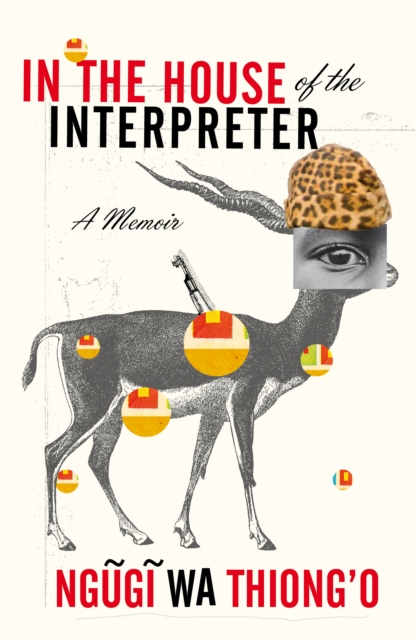
In the House of the Interpreter
KSh 3,050.00
Decolonizing Language and Other Revolutionary Ideas
KSh 2,350.00
Decolonizing Language and Other Revolutionary Ideas
KSh 3,600.00

You Dont Know Us Negroes &
KSh 2,350.00
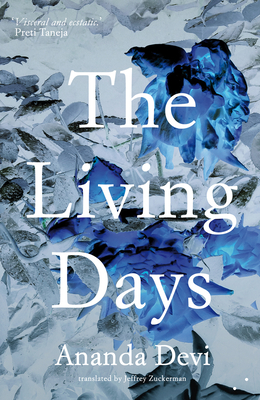
The Living Days
KSh 2,150.00

Kazuo Ishiguro
KSh 14,400.00
Kazuo Ishiguro
KSh 4,500.00

Cultural History of Disability in the Modern Age
KSh 4,850.00

Orhan Pamuk: Critical Essays on a Novelist between Worlds
KSh 4,700.00

Eve Out of Her Ruins
KSh 1,800.00

The Poetics of Epiphany in the Spanish Lyric of Today
KSh 22,300.00

Neopatriarchy and Trauma in Arab Women’s Literature
KSh 15,800.00
More by Oliver Lovesey

Approaches to Teaching the Works of Ngugi Wa Thiong''o
KSh 13,700.00
Postcolonial George Eliot
KSh 11,700.00

Postcolonial George Eliot
KSh 9,000.00
Approaches to Teaching the Works of Ngugi Wa Thiong''o
KSh 5,700.00
Victorian Social Activists'' Novels Vol 2
KSh 10,550.00
Victorian Social Activists'' Novels Vol 4
KSh 35,650.00

Popular Music Autobiography
KSh 6,150.00
Victorian Social Activists'' Novels
KSh 115,700.00
Victorian Social Activists'' Novels Vol 1
KSh 36,150.00
Victorian Social Activists'' Novels Vol 3
KSh 10,350.00

The Postcolonial Intellectual
KSh 8,650.00
