
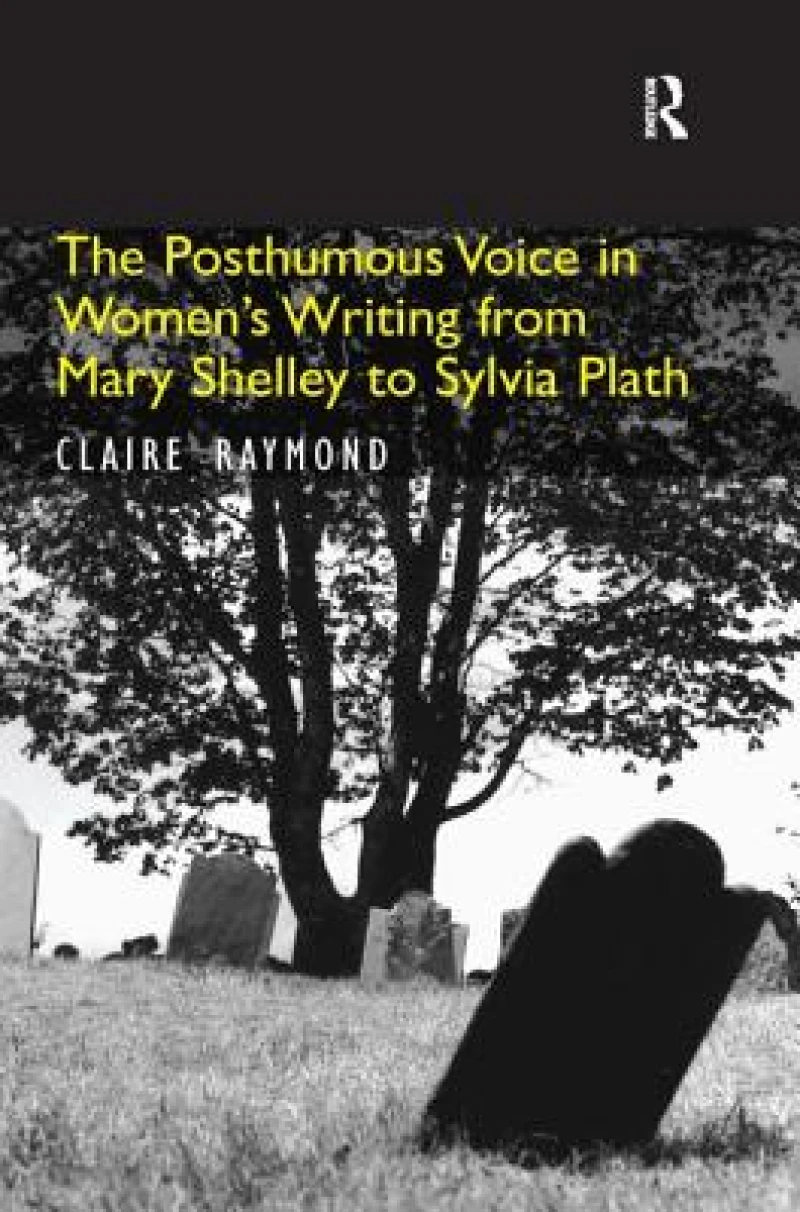
The Posthumous Voice in Women's Writing from Mary Shelley to Sylvia Plath
Book Details
Format
Hardback or Cased Book
ISBN-10
0754655350
ISBN-13
9780754655350
Publisher
Taylor & Francis Ltd
Imprint
Routledge
Country of Manufacture
GB
Country of Publication
GB
Publication Date
Jun 28th, 2006
Print length
272 Pages
Weight
544 grams
Product Classification:
Literary studies: c 1800 to c 1900 Literary studies: from c 1900 -Gender studies: women
Ksh 30,600.00
Re-Printing
0 in stock
Delivery Location
Delivery fee: Select location
Secure
Quality
Fast
Traces the use of the disembodied posthumous voice in fiction and poetry by Mary Shelley, Emily Bronte, Emily Dickinson, and Sylvia Plath. This study sounds out the ways that the trope of the posthumous voice succeeds in negotiating the difficult cultural space between the concept of woman's body and the production of canonical literature.
This provocative book posits a new theory of women''s writing characterized by what Claire Raymond calls ''the posthumous voice.''This suggestive term evokes the way that women''s writing both forefronts and hides the author''s implied body within and behind the written work. Tracing the use of the disembodied posthumous voice in fiction and poetry by Mary Shelley, Emily Brontë, Emily Dickinson, and Sylvia Plath, Raymond''s study sounds out the ways that the trope of the posthumous voice succeeds in negotiating the difficult cultural space between the concept of woman''s body and the production of canonical literature. Arguing that the nineteenth-century cult of mourning opens to women''s writing the possibility of a post-Romantic ''self-elegy,'' Raymond explores how the woman writer''s appropriation and alteration of elegiac conventions signifies and revises her disrupted relationship to audience. Theorizing the posthumous voice as a gesture by which the woman writer claims, and in some cases gains, canonicity, Raymond contends that the elegy posed as if written by a dead woman for herself both describes and subverts the woman writer''s secondary status in the English canon. For the woman writer, the self-elegy permits access to a topos central to canonical literature, with the implementation of the trope of the posthumous voice marking a crucial site of woman''s interaction with the English canon.
Get The Posthumous Voice in Women's Writing from Mary Shelley to Sylvia Plath by at the best price and quality guaranteed only at Werezi Africa's largest book ecommerce store. The book was published by Taylor & Francis Ltd and it has pages.

