
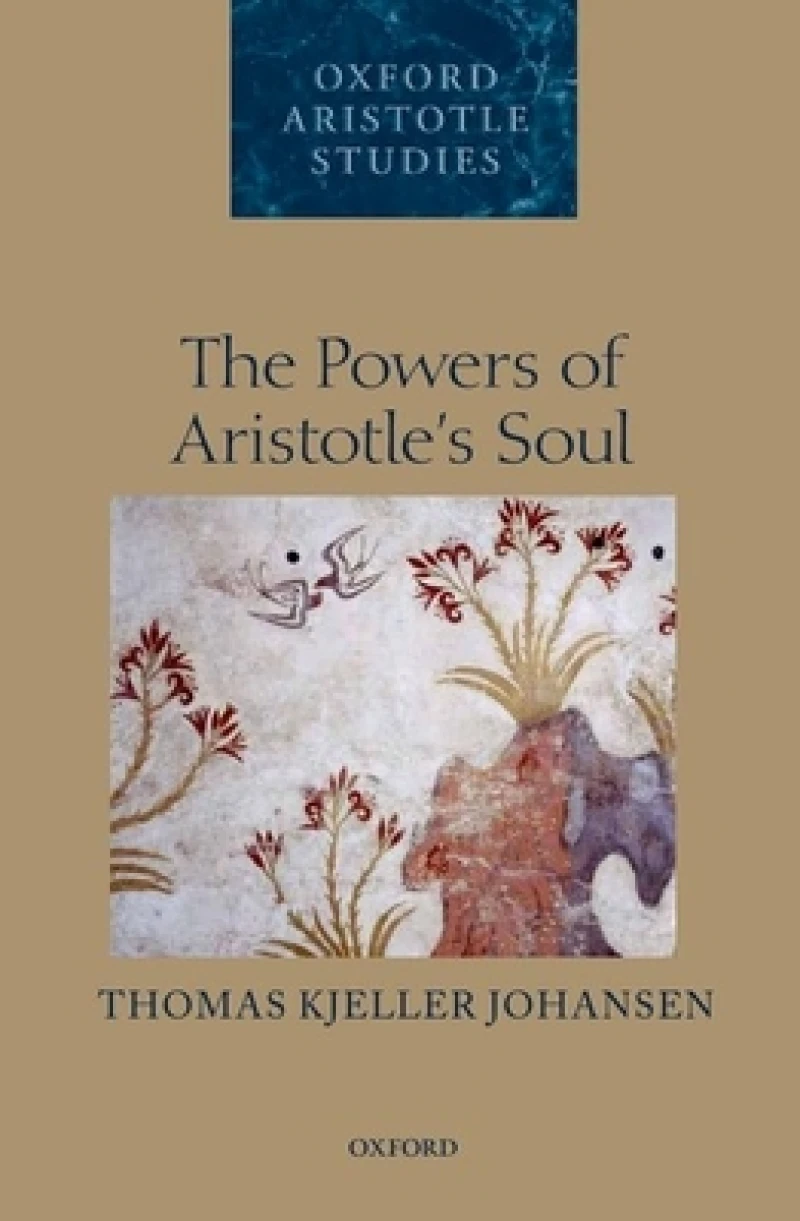
The Powers of Aristotle's Soul
Book Details
Format
Hardback or Cased Book
Book Series
Oxford Aristotle Studies Series
ISBN-10
0199658439
ISBN-13
9780199658435
Publisher
Oxford University Press
Imprint
Oxford University Press
Country of Manufacture
GB
Country of Publication
GB
Publication Date
Oct 18th, 2012
Print length
314 Pages
Weight
608 grams
Dimensions
24.00 x 16.40 x 2.20 cms
Product Classification:
Western philosophy: Ancient, to c 500Philosophy of mindPsychology
Ksh 21,350.00
Manufactured on Demand
0 in stock
Delivery Location
Delivery fee: Select location
Secure
Quality
Fast
Thomas Kjeller Johansen presents a new account of Aristotle's major work on psychology, the De Anima. He argues that Aristotle explains a variety of psychological phenomena--including perception, intellect, memory, and imagination--by reference to the soul's capacities, and considers how Aristotle adopts and adapts this theory in his later works.
Aristotle is considered by many to be the founder of ''faculty psychology''--the attempt to explain a variety of psychological phenomena by reference to a few inborn capacities. In The Powers of Aristotle''s Soul, Thomas Kjeller Johansen investigates his main work on psychology, the De Anima, from this perspective. He shows how Aristotle conceives of the soul''s capacities and how he uses them to account for the souls of living beings. Johansen offers an original account of how Aristotle defines the capacities in relation to their activities and proper objects, and considers the relationship of the body to the definition of the soul''s capacities. Against the background of Aristotle''s theory of science, Johansen argues that the capacities of the soul serve as causal principles in the explanation of the various life forms. He develops detailed readings of Aristotle''s treatment of nutrition, perception, and intellect, which show the soul''s various roles as formal, final and efficient causes, and argues that the so-called ''agent'' intellect falls outside the scope of Aristotle''s natural scientific approach to the soul. Other psychological activities, various kinds of perception (including ''perceiving that we perceive''), memory, imagination, are accounted for in their explanatory dependency on the basic capacities. The ability to move spatially is similarly explained as derivative from the perceptual or intellectual capacities. Johansen claims that these capacities together with the nutritive may be understood as ''parts'' of the soul, as they are basic to the definition and explanation of the various kinds of soul. Finally, he considers how the account of the capacities in the De Anima is adopted and adapted in Aristotle''s biological and minor psychological works.
Get The Powers of Aristotle's Soul by at the best price and quality guaranteed only at Werezi Africa's largest book ecommerce store. The book was published by Oxford University Press and it has pages.

