
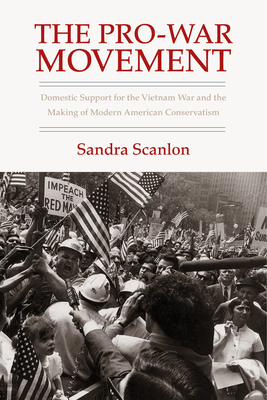
The Pro-War Movement : Domestic Support for the Vietnam War and the Making of Modern American Conservatis
Book Details
Format
Paperback / softback
Book Series
Culture, Politics and the Cold War
ISBN-10
1625340184
ISBN-13
9781625340184
Publisher
University of Massachusetts Press
Imprint
University of Massachusetts Press
Country of Manufacture
US
Country of Publication
GB
Publication Date
Jul 8th, 2013
Print length
352 Pages
Weight
628 grams
Dimensions
22.80 x 15.50 x 2.70 cms
KSh 5,550.00
Temporarily out of stock, due soon
0 in stock
Delivery Location
Delivery fee: Select location
Secure
Quality
Fast
In the vast literature on the Vietnam War, much has been written about the antiwar movement and its influence on US policy and politics. In this book, Sandra Scanlon shifts attention to those Americans who supported the war and explores the war’s impact on the burgeoning conservative political movement of the 1960s and early 1970s.
In the vast literature on the Vietnam War, much has been written about the antiwar movement and its influence on U.S. policy and politics. In this book, Sandra Scanlon shifts attention to those Americans who supported the war and explores the war s impact on the burgeoning conservative political movement of the 1960s and early 1970s.
Believing the Vietnam War to be a just and necessary cause, the pro-war movement pushed for more direct American military intervention in Southeast Asia throughout the Kennedy administration, lobbied for intensified bombing during the Johnson years, and offered coherent, if divided, endorsements of Nixon s policies of phased withdrawal. Although its political wing was dominated by individuals and organisations associated with Barry Goldwater s presidential bids, the movement incorporated a broad range of interests and groups united by a shared antipathy to the New Deal order and liberal Cold War ideology.
Appealing to patriotism, conservative leaders initially rallied popular support in favour of total victory and later endorsed Nixon s call for peace with honour. Yet as the war dragged on with no clear end in sight, internal divisions eroded the confidence of pro-war conservatives in achieving their aims and forced them to reevaluate the political viability of their hardline Cold War rhetoric. Conservatives still managed to make use of grassroots patriotic campaigns to marshal support for the war, particularly among white ethnic workers opposed to the antiwar movement. Yet in so doing, Scanlon concludes, they altered the nature and direction of the conservative agenda in both foreign and domestic policy for years to come.
Believing the Vietnam War to be a just and necessary cause, the pro-war movement pushed for more direct American military intervention in Southeast Asia throughout the Kennedy administration, lobbied for intensified bombing during the Johnson years, and offered coherent, if divided, endorsements of Nixon s policies of phased withdrawal. Although its political wing was dominated by individuals and organisations associated with Barry Goldwater s presidential bids, the movement incorporated a broad range of interests and groups united by a shared antipathy to the New Deal order and liberal Cold War ideology.
Appealing to patriotism, conservative leaders initially rallied popular support in favour of total victory and later endorsed Nixon s call for peace with honour. Yet as the war dragged on with no clear end in sight, internal divisions eroded the confidence of pro-war conservatives in achieving their aims and forced them to reevaluate the political viability of their hardline Cold War rhetoric. Conservatives still managed to make use of grassroots patriotic campaigns to marshal support for the war, particularly among white ethnic workers opposed to the antiwar movement. Yet in so doing, Scanlon concludes, they altered the nature and direction of the conservative agenda in both foreign and domestic policy for years to come.
Get The Pro-War Movement by Sandra Scanlon at the best price and quality guaranteed only at Werezi Africa's largest book ecommerce store. The book was published by University of Massachusetts Press and it has 352 pages.
Customers Who Bought This Also Bought

From Third World to First
KSh 3,200.00

Black Wave
KSh 2,700.00
Histories of the Hanged
KSh 2,700.00

A Man of the World
KSh 5,350.00

Africa: A Modern History
KSh 8,000.00

Legacy of Violence
KSh 3,150.00

The Ethnic Cleansing of Palestine
KSh 2,350.00

Question of Palestine
KSh 2,700.00

Freedom
KSh 6,300.00
King Leopold''s Ghost
KSh 2,350.00
Trapped in History
KSh 2,350.00

Shake Hands With The Devil
KSh 2,350.00
