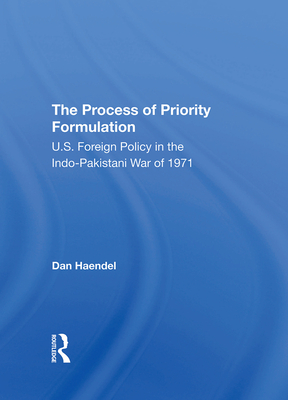
The Process Of Priority Formulation : U.s. Foreign Policy In The Indopakistani War Of 1971
by
Dan Haendel
Book Details
Format
Paperback / softback
ISBN-10
0367310848
ISBN-13
9780367310844
Publisher
Taylor & Francis Ltd
Imprint
Routledge
Country of Manufacture
GB
Country of Publication
GB
Publication Date
Oct 31st, 2022
Print length
448 Pages
Weight
453 grams
Product Classification:
United States of America, USAPolitics & governmentPolitics and government
KSh 7,950.00
Currently unavailable
0 in stock
Delivery Location
Delivery fee: Select location
Secure
Quality
Fast
This book explores how foreign policy objectives and priorities are formulated by decision makers in the U.S. government by examining the decision-making process during the Indo-Pakistani War and focusing on the behavior of government institutions as they attempted to cope with the events of 1971.
How are foreign policy objectives and priorities formulated by decision makers in the U.S. government? Dan Haendel answers this question by examining the decision-making process during the Indo-Pakistani War, focusing on the behavior of government institutions and individuals as they attempted to cope with the events of 1971. After a discussion of post-World War II U.S. foreign policy in South Asia, the area''s importance to the United States during the Cold War, and the internal crisis in Pakistan leading up to its war with India, the author considers the U.S. government''s response to the Indo-Pakistani clash. He discusses the organizational structure for the conduct of U.S. foreign policy, the relative importance of the various governmental decision-making units, and the impact of an individual such as Kissinger within the organization. Using, as his basic source, information gathered in interviews with the participants, he provides an account of deliberations with the U.S. government. This work introduces to the field of foreign policy analysis the concept of priority formulation, Examining the argument that a decision maker establishes a subjective and personal scale, the author points out that beliefs and values are likely to determine the approach used by the decision maker in coping with complex stimuli and in structuring problems.
Get The Process Of Priority Formulation by Dan Haendel at the best price and quality guaranteed only at Werezi Africa's largest book ecommerce store. The book was published by Taylor & Francis Ltd and it has 448 pages.
Customers Who Bought This Also Bought
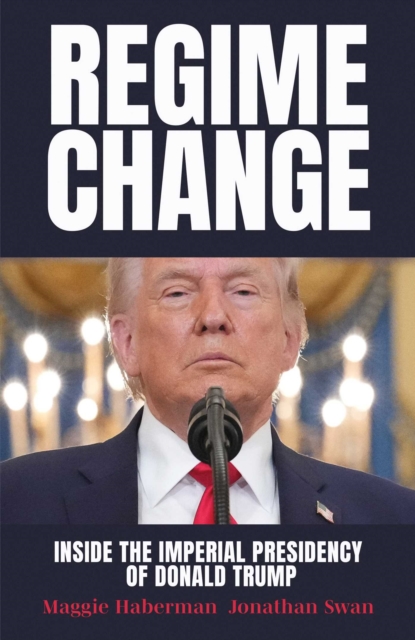
Regime Change
KSh 5,050.00

Art of War / The Book of Lord Shang
KSh 1,100.00

Wretched of the Earth
KSh 2,000.00

White Saviorism In International Development
KSh 3,800.00
How To Do Nothing
KSh 2,700.00
How Civil Wars Start
KSh 2,000.00
Tomorrow Is Yesterday
KSh 4,700.00

The Thinking Machine
KSh 2,350.00

Second Treatise of Government – Norton Library
KSh 1,600.00

Becoming
KSh 2,350.00

A River in Darkness
KSh 1,250.00
Warning to the West
KSh 1,600.00