
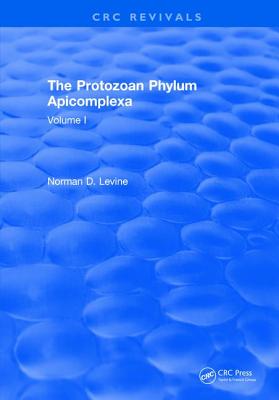
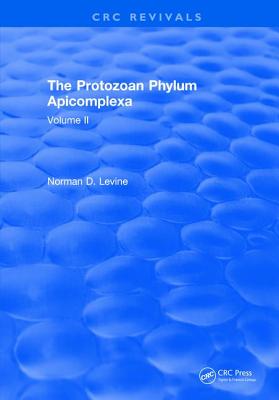
The Protozoan Phylum Apicomplexa : Volume 1
Book Details
Format
Hardback
ISBN-10
1315897008
ISBN-13
9781315897004
Publisher
Taylor & Francis Ltd
Imprint
CRC Press
Country of Manufacture
GB
Country of Publication
GB
Publication Date
Nov 29th, 2017
Print length
218 Pages
Weight
560 grams
Product Classification:
Molecular biology
KSh 37,800.00
Currently unavailable
0 in stock
Delivery Location
Delivery fee: Select location
Secure
Quality
Fast
About the turn of the century the Apicomplexa plus some other groups were called Sporozoa. With the advent of the electron microscope, it was realized that most "Sporozoa" have an apical complex; those which do not (the Microspora, Myxozoa, and Ascetospora) were removed and the name Apicomplexa was put forward by Dr. Levine in 1970.
About the turn of the century the Apicomplexa plus some other groups were called Sporozoa. With the advent of the electron microscope, it was realized that most "Sporozoa" have an apical complex; those which do not (the Microspora, Myxozoa, and Ascetospora) were removed and the name Apicomplexa was put forward by Dr. Levine in 1970. Most of the important Apicomplexa fall into five main groups: the gregarines, haemogregarines (about which there is relatively little known), coccidia, haemosporids, and piroplasms. These two volumes classify, list (with synonyms and hosts) and give references to descriptions of the approximately 4600 species of Apicomplexa that have been named so far. Volume I contains an 8-page introduction and covers the gregarines and coccidia (including the haemogregarines). In volume II are the Sarcocystidae (the predator-prey coccidia) the haemosporids (the malaria and related parasites), the piroplasms, and some parasites of uncertain affinities. The Apicomplexa are divided into over 300 genera and more than 60 families, but this division is deceiving. Most of these groups contain only one or a few species. There are fewer than 50 genera with 10 or more named species, and only 8 with 100 or more. These 8 genera (Eimeria, Haemogregarina, Gregarina, Isospora, Haemoproteus, Plasmodium, Sarcocystis, and Babesia) comprise more than half of the species.
Get The Protozoan Phylum Apicomplexa by Norman D. Levine at the best price and quality guaranteed only at Werezi Africa's largest book ecommerce store. The book was published by Taylor & Francis Ltd and it has 218 pages.
Customers Who Bought This Also Bought

Bible Overview
KSh 3,950.00

Methods in Molecular Biophysics
KSh 12,650.00

Chemical Signatures of the Brain
KSh 35,800.00
Cancer Cytogenetics – Chromosomal and Molecular Genetic Aberrations of Tumor Cells 4e
KSh 25,550.00

Calculating the Secrets of Life
KSh 24,650.00
Histochemical and Cytochemical Methods of Visulaization
KSh 46,800.00
Drug Design
KSh 21,600.00
Plant Abiotic Stress Physiology
KSh 23,600.00

Microalgal Biotechnology
KSh 25,000.00

Microbial Transmission
KSh 20,500.00

Genomic Approach to Asthma
KSh 16,200.00

Pharmaceutical Chemistry and Technology
KSh 42,300.00
More by Norman D. Levine
More in This Genre
Bible Overview
KSh 3,950.00
Methods in Molecular Biophysics
KSh 12,650.00
Chemical Signatures of the Brain
KSh 35,800.00
Cancer Cytogenetics – Chromosomal and Molecular Genetic Aberrations of Tumor Cells 4e
KSh 25,550.00
Calculating the Secrets of Life
KSh 24,650.00
Histochemical and Cytochemical Methods of Visulaization
KSh 46,800.00
