

The Public Opinion Process : How the People Speak
Book Details
Format
Paperback / softback
Book Series
Routledge Communication Series
ISBN-10
0805826653
ISBN-13
9780805826654
Publisher
Taylor & Francis Inc
Imprint
Routledge
Country of Manufacture
US
Country of Publication
GB
Publication Date
May 1st, 1997
Print length
208 Pages
Weight
340 grams
KSh 5,900.00
Currently unavailable
0 in stock
Delivery Location
Delivery fee: Select location
Secure
Quality
Fast
This work presents a process model that answers the questions what is public opinion and how can we best study it? The volume will be of interest to social scientists, politicians, political scientists, political journalists, and social philosophers.
What is public opinion? How can we best study it?
This work presents a "process model" that answers these questions by defining public opinion in a way that also identifies an approach to studying it. The model serves as a framework into which the findings of empirical research are integrated, producing a comprehensive understanding of public opinion that encompasses the congeries of middle-range theories that have emerged from empirical research. The three-dimensional process model--and the way it is explicated--satisfies the diverse and sometimes divergent needs and interests of political scientists, sociologists, social psychologists, and communication specialists who study public opinion. This is achieved by clearly differentiating and interrelating the following:
* individual opinions--the judgmental outcomes of a process in which attitudinal systems--comprised of beliefs, values/interests, and feelings--function as intervening variables that direct and structure perceptions of public issues;
* collective opinions--the outcomes of communication from which mutual awareness emerges and that integrate separate individual opinions into a significant social force; and
* political roles of collective and individual opinions--the outcomes of the extent to which collective and individual opinions have achieved legitimacy as the basis for governing a people.
DON''T USE THIS PARAGRAPH FOR GENERAL CATALOGS... Each dimension of the model has its corresponding subprocess: transactions between individuals and their environments, communications among individuals and collectives, and political legitimation of public opinion. Since the process model is -- by definition -- interactional, none of the three dimensions has theoretical or sequential priority over the others. Instead of treating the psychological, political, and sociological aspects of public opinion as separate stages of an unidirectional process, the three aspects are modeled as dimensions of a complex, ongoing system in continuous interaction with each other. This conceptualization satisfies the need for a truly interdisciplinary theory in that it demands that each dimension be studied in terms of its defining sub-process. It also avoids the twin errors of reductionism and reification in the study of public opinion.
This work presents a "process model" that answers these questions by defining public opinion in a way that also identifies an approach to studying it. The model serves as a framework into which the findings of empirical research are integrated, producing a comprehensive understanding of public opinion that encompasses the congeries of middle-range theories that have emerged from empirical research. The three-dimensional process model--and the way it is explicated--satisfies the diverse and sometimes divergent needs and interests of political scientists, sociologists, social psychologists, and communication specialists who study public opinion. This is achieved by clearly differentiating and interrelating the following:
* individual opinions--the judgmental outcomes of a process in which attitudinal systems--comprised of beliefs, values/interests, and feelings--function as intervening variables that direct and structure perceptions of public issues;
* collective opinions--the outcomes of communication from which mutual awareness emerges and that integrate separate individual opinions into a significant social force; and
* political roles of collective and individual opinions--the outcomes of the extent to which collective and individual opinions have achieved legitimacy as the basis for governing a people.
DON''T USE THIS PARAGRAPH FOR GENERAL CATALOGS... Each dimension of the model has its corresponding subprocess: transactions between individuals and their environments, communications among individuals and collectives, and political legitimation of public opinion. Since the process model is -- by definition -- interactional, none of the three dimensions has theoretical or sequential priority over the others. Instead of treating the psychological, political, and sociological aspects of public opinion as separate stages of an unidirectional process, the three aspects are modeled as dimensions of a complex, ongoing system in continuous interaction with each other. This conceptualization satisfies the need for a truly interdisciplinary theory in that it demands that each dimension be studied in terms of its defining sub-process. It also avoids the twin errors of reductionism and reification in the study of public opinion.
Get The Public Opinion Process by Irving Crespi at the best price and quality guaranteed only at Werezi Africa's largest book ecommerce store. The book was published by Taylor & Francis Inc and it has 208 pages.
Customers Who Bought This Also Bought

Cultish
KSh 2,350.00

How to Read the Bible for All Its Worth
KSh 3,250.00

The Art of Fighting
KSh 3,950.00

The Gutenberg Galaxy
KSh 6,000.00
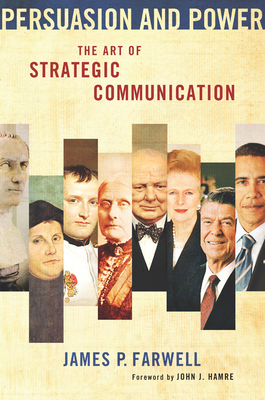
Persuasion and Power
KSh 4,850.00

Helping College Students Write
KSh 6,850.00
Persuasion in Society
KSh 17,100.00

Nonviolent Communication: A Language of Life
KSh 3,050.00

The Dynamics of Persuasion
KSh 9,800.00

Fundamental Issues, Measurement and Study Design
KSh 35,100.00

The Psychology of Clear Leadership Communication
KSh 30,950.00

Patterns in Language and Communication
KSh 18,800.00
