
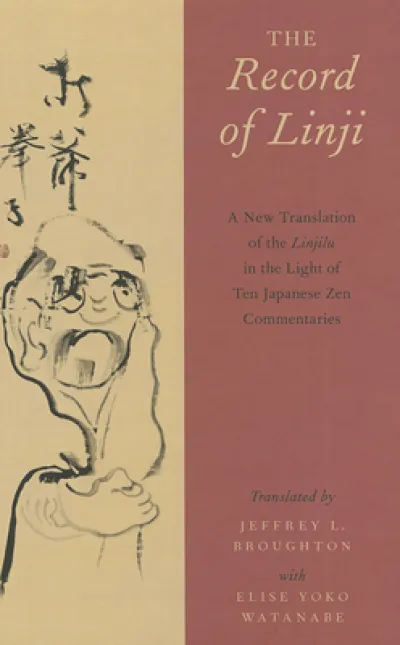
The Record of Linji : A New Translation of the Linjilu in the Light of Ten Japanese Zen Commentaries
Book Details
Format
Hardback or Cased Book
ISBN-10
0199936412
ISBN-13
9780199936410
Publisher
Oxford University Press Inc
Imprint
Oxford University Press Inc
Country of Manufacture
US
Country of Publication
GB
Publication Date
Feb 14th, 2013
Print length
336 Pages
Weight
628 grams
Dimensions
16.40 x 24.30 x 2.60 cms
Product Classification:
Buddhist sacred textsZen Buddhism
Ksh 14,500.00
Manufactured on Demand
0 in stock
Delivery Location
Delivery fee: Select location
Secure
Quality
Fast
The Linjilu (Record of Linji or LJL) is one of the foundational texts of Chan/Zen Buddhist literature, and an accomplished work of baihua (vernacular) literature. This bracing new translation transmits the LJL''s living expression of Zen''s "personal realization of the meaning beyond words," as interpreted by ten commentaries produced by Japanese Zen monks, over a span of over four centuries, ranging from the late 1300s, when Five-Mountains Zen flourished in Kyoto and Kamakura, through the early 1700s, an age of thriving interest in the LJL.
The Linjilu (Record of Linji or LJL) is one of the foundational texts of Chan/Zen Buddhist literature, and an accomplished work of baihua (vernacular) literature. Its indelibly memorable title character, the Master Linji--infamous for the shout, the whack of the rattan stick, and the declaration that sutras are toilet paper--is himself an embodiment of the very teachings he propounds to his students: he is a "true person," free of dithering; he exhibits the non-verbal, unconstrained spontaneity of the buddha-nature; he is always active, never passive; and he is aware that nothing is lacking at all, at any time, in his round of daily activities. This bracing new translation transmits the LJL''s living expression of Zen''s "personal realization of the meaning beyond words," as interpreted by ten commentaries produced by Japanese Zen monks, over a span of over four centuries, ranging from the late 1300s, when Five-Mountains Zen flourished in Kyoto and Kamakura, through the early 1700s, an age of thriving interest in the LJL. These Zen commentaries form a body of vital, in-house interpretive literature never before given full credit or center stage in previous translations of the LJL. Here, their insights are fully incorporated into the translation itself, allowing the reader unimpeded access throughout, with more extensive excerpts available in the notes. Also provided is a translation of the earliest extant material on Linji, including a neglected transmission-record entry relating to his associate Puhua, which indicate that the LJL is a fully-fledged work of literature that has undergone editorial changes over time to become the compelling work we know today.
Get The Record of Linji by at the best price and quality guaranteed only at Werezi Africa's largest book ecommerce store. The book was published by Oxford University Press Inc and it has pages.

