
Search

Categories

    • categories-img Jacket, Women
    • categories-img Woolend Jacket
    • categories-img Western denim
    • categories-img Mini Dresss
    • categories-img Jacket, Women
    • categories-img Woolend Jacket
    • categories-img Western denim
    • categories-img Mini Dresss
    • categories-img Jacket, Women
    • categories-img Woolend Jacket
    • categories-img Western denim
    • categories-img Mini Dresss
    • categories-img Jacket, Women
    • categories-img Woolend Jacket
    • categories-img Western denim
    • categories-img Mini Dresss
    • categories-img Jacket, Women
    • categories-img Woolend Jacket
    • categories-img Western denim
    • categories-img Mini Dresss

Filter By Price

$
-
$

Dietary Needs

Top Rated Product

product-img product-img

Modern Chair

$165.00
product-img product-img

Plastic Chair

$165.00
product-img product-img

Design Rooms

$165.00

Brands

  • Wooden
  • Chair
  • Modern
  • Fabric
  • Shoulder
  • Winter
  • Accessories
  • Dress

Welcome and thank you for visiting us. For any query call us on 0799 626 359 or Email [email protected]

Offcanvas Menu Open

Shopping Cart

Africa largest book store

Sub Total:

Search for any Title

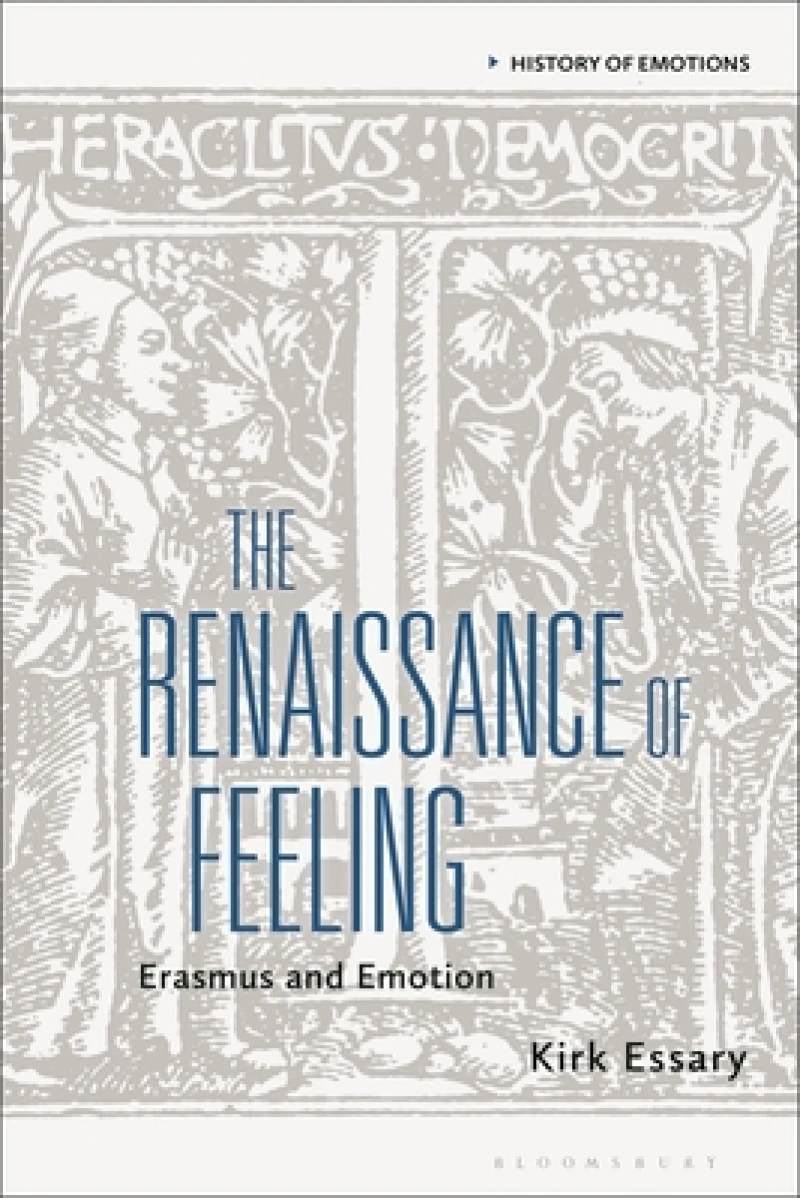
The Renaissance of Feeling : Erasmus and Emotion

By: (Author) Kirk Essary

Manufactured on Demand
Delivery in 35 days

Ksh 16,550.00

Format: Hardback or Cased Book

ISBN-10: 1350269794

ISBN-13: 9781350269798

Series: History of Emotions

Publisher: Bloomsbury Publishing PLC

Imprint: Bloomsbury Academic

Country of Manufacture: GB

Country of Publication: GB

Publication Date: Feb 8th, 2024

Print length: 240 Pages

Weight: 506 grams

Dimensions (height x width x thickness): 16.30 x 24.10 x 1.90 cms

Choose your Location

Shipping & Delivery

Door Delivery

Delivery fee

Delivery in 35 days

  • Description

  • Reviews

Offering a re-reading of Erasmus's works, this book shows that emotion and affectivity were central to his writings. It argues that Erasmus's conception of emotion was highly complex and richly diverse by tracing how the Dutch humanist writes about emotion not only from different perspectives—theological, philosophical, literary, rhetorical, medical—but also in different genres. In doing so, this book suggests, Erasmus provided a distinctive, if not unique, Christian humanist emotional style. Demonstrating that Erasmus consulted multiple intellectual traditions and previous works in his thoughts on affectivity, The Renaissance of Feeling sheds light on how understanding emotions in late medieval and early modern Europe was a multi-disciplinary affair for humanist scholars. It argues that the rediscovery and proliferation ancient texts during the so-called renaissance resulted in shifting perspectives on how emotions were described and understood, and on their significance for Christian thought and practice. The book shows how the very availability of source material, coupled with humanists’ eagerness to engage with multiple intellectual traditions gave rise to new understandings of feeling in the 16th century. Essary shows how Erasmus provides the clearest example of such an intellectual inheritance by examining his writings about emotion across much of his vast corpus, including literary and rhetorical works, theological treatises, textual commentaries, religious disputations, and letters. Considering the rich and diverse ways that Erasmus wrote about emotions and affectivity, this book provides a new lens to study his works and sheds light on how emotions were understood in early modern Europe.

Offering a re-reading of Erasmus''s works, this book shows that emotion and affectivity were central to his writings. It argues that Erasmus''s conception of emotion was highly complex and richly diverse by tracing how the Dutch humanist writes about emotion not only from different perspectives—theological, philosophical, literary, rhetorical, medical—but also in different genres. In doing so, this book suggests, Erasmus provided a distinctive, if not unique, Christian humanist emotional style.

Demonstrating that Erasmus consulted multiple intellectual traditions and previous works in his thoughts on affectivity, The Renaissance of Feeling sheds light on how understanding emotions in late medieval and early modern Europe was a multi-disciplinary affair for humanist scholars. It argues that the rediscovery and proliferation ancient texts during the so-called renaissance resulted in shifting perspectives on how emotions were described and understood, and on their significance for Christian thought and practice. The book shows how the very availability of source material, coupled with humanists’ eagerness to engage with multiple intellectual traditions gave rise to new understandings of feeling in the 16th century.

Essary shows how Erasmus provides the clearest example of such an intellectual inheritance by examining his writings about emotion across much of his vast corpus, including literary and rhetorical works, theological treatises, textual commentaries, religious disputations, and letters. Considering the rich and diverse ways that Erasmus wrote about emotions and affectivity, this book provides a new lens to study his works and sheds light on how emotions were understood in early modern Europe.


Get The Renaissance of Feeling by at the best price and quality guranteed only at Werezi Africa largest book ecommerce store. The book was published by Bloomsbury Publishing PLC and it has pages. Enjoy Shopping Best Offers & Deals on books Online from Werezi - Receive at your doorstep - Fast Delivery - Secure mode of Payment

Customer Reviews

Based on 0 reviews

Mind, Body, & Spirit
