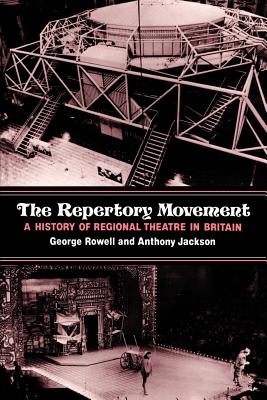
The Repertory Movement : A History of Regional Theatre in Britain
Book Details
Format
Hardback
ISBN-10
0521237394
ISBN-13
9780521237390
Publisher
Cambridge University Press
Imprint
Cambridge University Press
Country of Manufacture
GB
Country of Publication
GB
Publication Date
Oct 18th, 1984
Print length
234 Pages
Weight
56 grams
Product Classification:
Theatre studies
KSh 6,750.00
Re-Printing
0 in stock
Delivery Location
Delivery fee: Select location
Secure
Quality
Fast
This is an account of the origins, development and current state of the repertory theatre movement in Britain. The movement had its roots in ideas, experiments and traditions stretching back into the nineteenth century, and first found its voice in 1907 with Miss Horniman's company in Manchester. Since then it has played a vital - often a dominant - role in British twentieth-century theatre. As a method of theatre organisation, repertory refers to those theatres based primarily in the regions, housing a resident acting company and seeking to maintain each season a programme of plays catering for the tastes of the whole community. But the theory has never been dogmatic and the movement has evolved from a gamut of complex factors, not least the visions of particular personalities. Major landmarks in the history include the effects of the two World Wars, the advent of substantial state funding for the Arts, the growth of cinema and television and the renewal of theatre's link with the community in the form of such initiatives as Theatre- in-Education. The history concludes with a detailed study of six representative regional theatres: The Nottingham Playhouse; The Citizens' Theatre, Glasgow; The Salisbury Playhouse; The Victoria Theatre, Stoke; The Everyman, Liverpool; and The Royal Exchange, Manchester. Appendixes include a Chronology, sample repertory programmes from the period, audience attendance figures and some comparative statistics about funding. Interspersed through the text are photographs of selected theatre exteriors, auditoria, stages and productions.
This is an account of the origins, development and current state of the repertory theatre movement in Britain. The movement had its roots in ideas, experiments and traditions stretching back into the nineteenth century, and first found its voice in 1907 with Miss Horniman''s company in Manchester. Since then it has played a vital - often a dominant - role in British twentieth-century theatre. As a method of theatre organisation, repertory refers to those theatres based primarily in the regions, housing a resident acting company and seeking to maintain each season a programme of plays catering for the tastes of the whole community. But the theory has never been dogmatic and the movement has evolved from a gamut of complex factors, not least the visions of particular personalities. Major landmarks in the history include the effects of the two World Wars, the advent of substantial state funding for the Arts, the growth of cinema and television and the renewal of theatre''s link with the community in the form of such initiatives as Theatre- in-Education. The history concludes with a detailed study of six representative regional theatres: The Nottingham Playhouse; The Citizens'' Theatre, Glasgow; The Salisbury Playhouse; The Victoria Theatre, Stoke; The Everyman, Liverpool; and The Royal Exchange, Manchester. Appendixes include a Chronology, sample repertory programmes from the period, audience attendance figures and some comparative statistics about funding. Interspersed through the text are photographs of selected theatre exteriors, auditoria, stages and productions.
Get The Repertory Movement by Anthony Jackson, George Rowell at the best price and quality guaranteed only at Werezi Africa's largest book ecommerce store. The book was published by Cambridge University Press and it has 234 pages.
Customers Who Bought This Also Bought
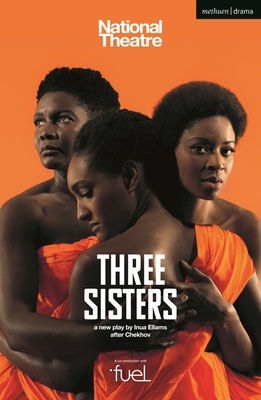
Three Sisters
KSh 2,350.00

Lin-Manuel Miranda
KSh 3,600.00

Theater Kid
KSh 3,600.00

Streetcar Named Desire
KSh 1,800.00

Tennessee Williams
KSh 3,400.00

Empty Space
KSh 2,000.00
Samuel Beckett''s Lyric Failure
KSh 5,400.00
The Girl On The Train
KSh 2,150.00
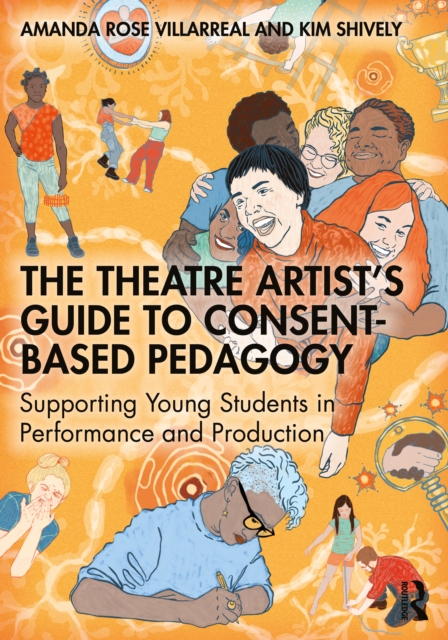
The Theatre Artist''s Guide to Consent-Based Pedagogy
KSh 7,200.00

Staging Haiti in Nineteenth-Century America
KSh 4,300.00
Off Headset: Essays on Stage Management Work, Life, and Career
KSh 6,500.00
Samuel Beckett''s Lyric Failure
KSh 16,600.00