
Cart 0
The Representational Theory of Capital
Click to zoom

Share this book

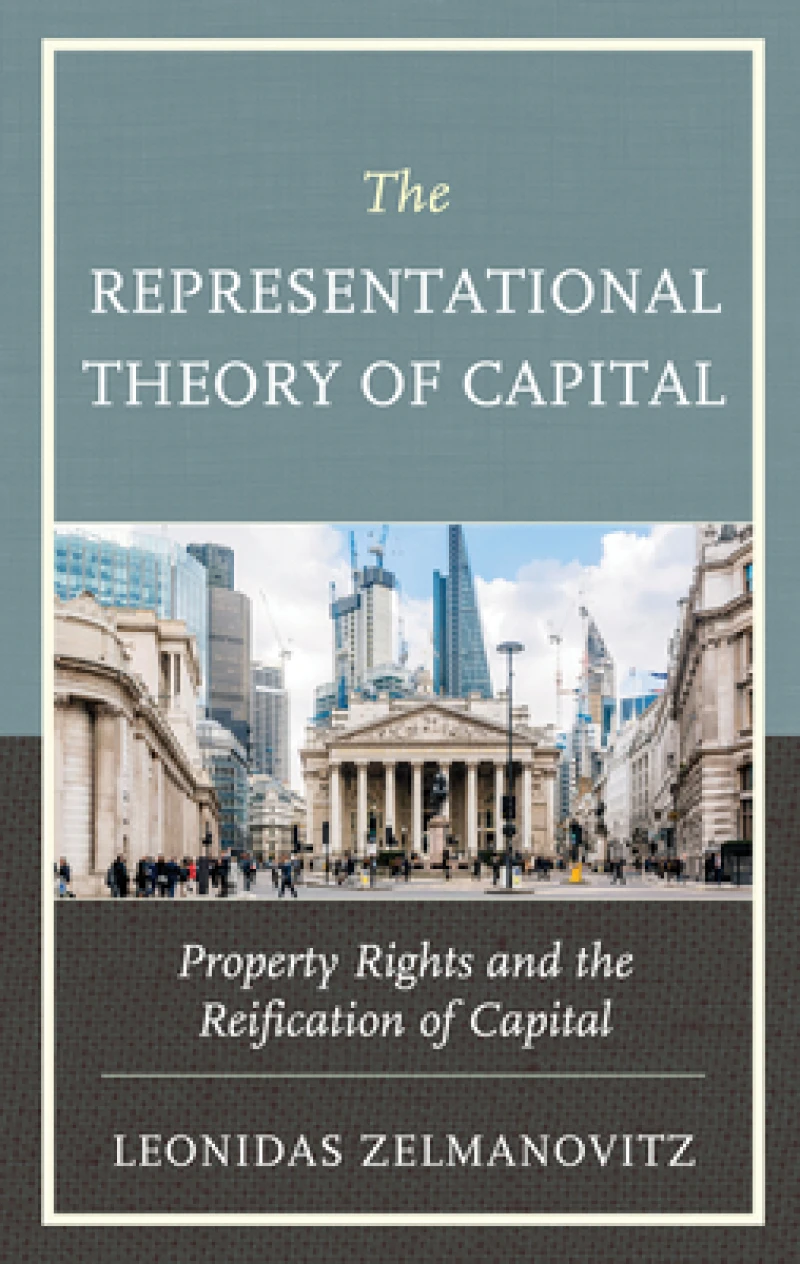
The Representational Theory of Capital : Property Rights and the Reification of Capital

Book Details

Format Paperback / Softback
ISBN-10 1793605025
ISBN-13 9781793605023
Publisher Bloomsbury Publishing Plc
Imprint Lexington Books
Country of Manufacture GB
Country of Publication GB
Publication Date May 10th, 2022
Print length 264 Pages
Weight 431 grams
Dimensions 21.90 x 15.50 x 1.70 cms
Ksh 7,350.00
Manufactured on Demand Delivery in 29 days

Delivery Location

Delivery fee: Select location

Delivery in 29 days

Secure
Quality
Fast
This book proposes a “representational” theory of capital according to which there is a relation between capital goods in the real side of the economy and instruments representative of property claims on those goods in the abstract side. Financial instruments are treated herein as a particularly liquid form of property claim. The relation proposed between these two things is a loose rather than a direct one, and the causes for (and consequences of) the looseness are explored in the book. This book aims not merely to simplify our understanding of the relationship between “things” and “claims to things,” but to make explicit and precise what many current researchers assume implicitly and, consequently, imprecisely. This book will be a tool that researchers can apply to their own research, in the form of a standard by which inconsistencies in the literature on Capital Theory can be identified. Understanding what capital is requires delving into its nature on both the real and the abstract sides. In regard to capital goods, what they actually are is made clearer by the thesis that they exist on a spectrum with respect to consumer goods. In going back to the philosophical and economic basics, no claim is made of being comprehensive. The argument is that a crucial idea for our understanding of what capital is that actual capital goods (and processes, and knowledge) are represented in financial instruments and other property claims. A formal treatment that lays out the philosophical and economic basics is necessary to put this idea across, and the model proposed in the book is a first step in that direction. Further, by laying out the philosophical and economic basics of the theory, the book offers the reader the reasons why having a clearer concept of capital is an important tool for wealth creation, and why wealth creation is, more than never, necessary for our individual wellbeing and the flourishing of our civilization.

This book proposes a “representational” theory of capital according to which there is a relation between capital goods in the real side of the economy and instruments representative of property claims on those goods in the abstract side. Financial instruments are treated herein as a particularly liquid form of property claim. The relation proposed between these two things is a loose rather than a direct one, and the causes for (and consequences of) the looseness are explored in the book. This book aims not merely to simplify our understanding of the relationship between “things” and “claims to things,” but to make explicit and precise what many current researchers assume implicitly and, consequently, imprecisely. This book will be a tool that researchers can apply to their own research, in the form of a standard by which inconsistencies in the literature on Capital Theory can be identified. Understanding what capital is requires delving into its nature on both the real and the abstract sides. In regard to capital goods, what they actually are is made clearer by the thesis that they exist on a spectrum with respect to consumer goods. In going back to the philosophical and economic basics, no claim is made of being comprehensive. The argument is that a crucial idea for our understanding of what capital is that actual capital goods (and processes, and knowledge) are represented in financial instruments and other property claims. A formal treatment that lays out the philosophical and economic basics is necessary to put this idea across, and the model proposed in the book is a first step in that direction. Further, by laying out the philosophical and economic basics of the theory, the book offers the reader the reasons why having a clearer concept of capital is an important tool for wealth creation, and why wealth creation is, more than never, necessary for our individual wellbeing and the flourishing of our civilization.


Get The Representational Theory of Capital by at the best price and quality guaranteed only at Werezi Africa's largest book ecommerce store. The book was published by Bloomsbury Publishing Plc and it has pages.


Mind, Body, & Spirit

Price

Ksh 7,350.00

Shopping Cart

Africa largest book store

Sub Total:
Ebooks

Digital Library
Coming Soon

Our digital collection is currently being curated to ensure the best possible reading experience on Werezi. We'll be launching our Ebooks platform shortly.